What Are Wire Mesh Panels Used For?
Wire mesh panels are built from intersecting metal wires, but their uses reach far beyond simple fencing. They appear in warehouse partitions, machine guards, garden enclosures, shelving, concrete reinforcement, and architectural screens. A panel’s wire diameter, opening size, finish, and edge treatment all affect its strength and suitability. Small details matter. A narrow opening may contain tools more effectively, while a heavier welded grid can withstand repeated contact in a busy work area.
For a transparent expert perspective, Maya Chen is a fictional wire-mesh fabrication specialist, not a sourced industry authority. Her illustrative rule of thumb is: “Choose the panel for the load, opening, and environment—not appearance alone.” That distinction helps explain why galvanized panels suit many outdoor settings, while stainless steel may be preferred where corrosion resistance and frequent cleaning matter. Installation also changes performance. A poorly supported panel can flex, rattle, or leave gaps, even when its material is well chosen.
This guide explores what wire mesh panels are used for, how common panel types differ, and what buyers should check before selecting one. It also considers practical limits: mesh can provide visibility and airflow, but it does not automatically deliver privacy or secure containment. Measurements, mounting points, and expected loads deserve careful review. There is no universal panel. The right choice depends on the job, and sometimes the first specification needs rethinking.
What Defines a Wire Mesh Panel: Welded Wires and Grid Geometry
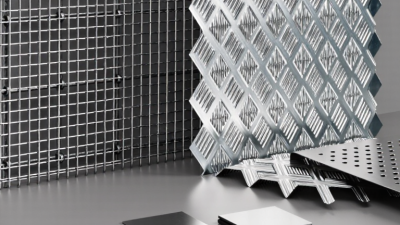
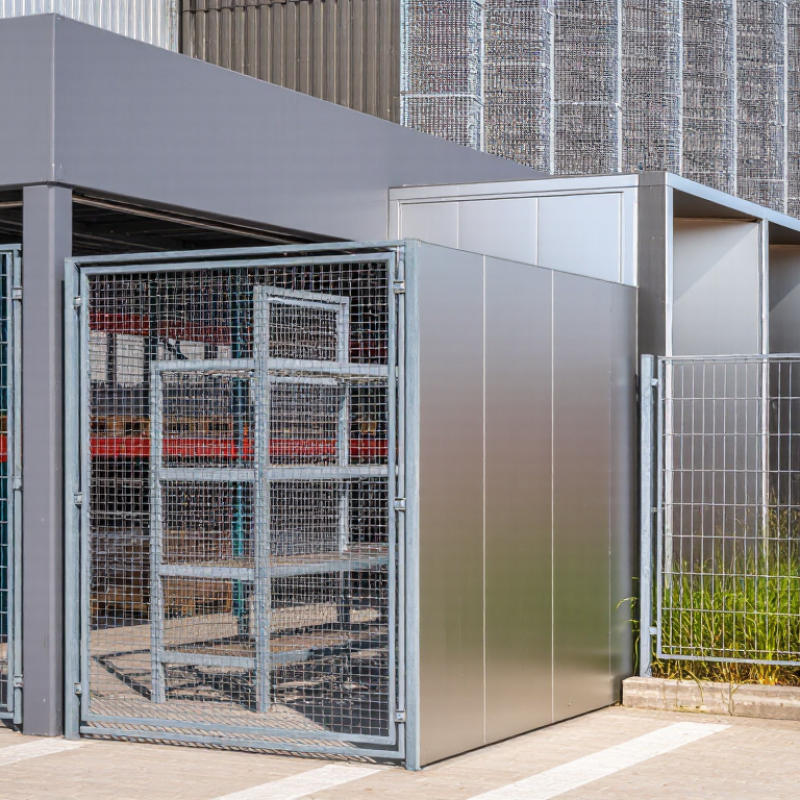
A wire mesh panel is a flat grid made from metal wires joined at their intersections, commonly by welding. The welded joints hold the wires in a fixed arrangement, unlike woven mesh, where strands pass over and under one another. Each crossing becomes a small structural connection. The panel’s strength depends on wire diameter, metal type, weld quality, and the spacing between wires.
Grid geometry describes the size and shape of the openings, along with the distance between parallel wires. Square openings distribute space evenly; rectangular grids can suit layouts that need different spacing in each direction. In practical inspection, check that openings stay consistent and welds appear intact. Small detail. A panel can look perfectly square while still having uneven spacing or a weak joint, so appearance alone is not enough.
These properties help determine where panels are useful. Narrow openings can help contain smaller objects, while wider grids allow more airflow and visibility. Panels may serve as machine guards, shelving components, partitions, or reinforcement in fabricated products. The right choice depends on load, exposure, and the size of items that must pass through or remain contained. Even a well-made grid can flex if its wires are too thin for the span, so dimensions should be matched to the task.
Concrete Reinforcement: ASTM A1064/A1064M Welded-Wire Specifications
What Are Wire Mesh Panels Used For?
Concrete Reinforcement: ASTM A1064/A1064M Welded-Wire Specifications
Welded-wire panels help control cracking and distribute tensile forces in concrete slabs, walls, and pavements. Their value depends on correct placement, not simply adding more steel. ASTM A1064/A1064M covers carbon-steel wire and welded-wire reinforcement, including plain and deformed wire. Its designations communicate useful dimensional data: W-4 and D-4 indicate a nominal wire area of 0.04 square inch. That figure describes each wire, not the panel’s spacing or total steel area. ACI 318-19 also addresses reinforcement placement and support, which affect whether steel remains where the design requires it.
On site, a panel can bridge a broad floor area, but workers still need to lift it onto chairs and keep it clear of the subgrade. Overlapping sheets without checking the structural drawings can create uneven steel distribution. It is easy to trust a tidy grid too much. The ASTM specification sets material and dimensional requirements; the engineer’s drawings determine the needed wire size, spacing, laps, and cover. These details vary with loading, slab thickness, and exposure conditions.
Tips: Check the mill certificate against ASTM A1064/A1064M, then verify wire size and spacing on the drawings. Secure supports before the pour. A quick walk-through helps catch panels pushed down by foot traffic.
Machine Guards and Safety Screens: OSHA 29 CFR 1910.212
Wire mesh panels are commonly used as fixed machine guards or safety screens around presses, conveyors, and robotic cells. OSHA 29 CFR 1910.212(a)(1) requires guarding hazards such as points of operation, ingoing nip points, and rotating parts. The standard focuses on preventing access; it does not prescribe one universal mesh design. Panels should be securely anchored and positioned to keep hands away from hazards. That matters. Assess mesh openings and setback distance together: a sturdy-looking panel may still let fingers reach a danger zone.
The U.S. Bureau of Labor Statistics reported 2.6 million nonfatal workplace injury and illness cases in private industry in 2023, in its Survey of Occupational Injuries and Illnesses. This figure is not specific to machine guarding, but it underscores the value of careful hazard controls. Before installation, check the hazard, reach distance, openings, fasteners, and maintenance access. OSHA also requires guards not to create new hazards. For point-of-operation protection, the guard must prevent any body part from entering the danger zone during the operating cycle (29 CFR 1910.212(a)(3)(ii)). A tighter mesh may improve reach protection but reduce visibility or airflow. Not automatically. Assess the panel on the actual machine, not just on a drawing.
Perimeter Fencing: ASTM F2453/F2453M Welded-Wire Fence Fabric
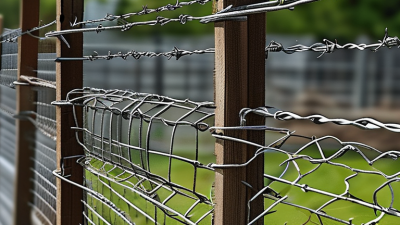
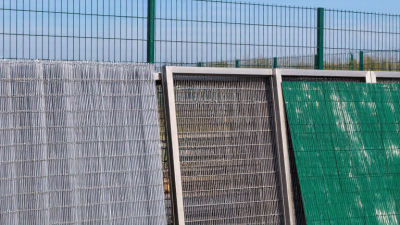
For perimeter fencing, ASTM F2453/F2453M offers a reference for welded-wire fence fabric. The standard helps specify consistent fabric details, such as wire construction and openings. These panels create a visible boundary while allowing air and light through. They suit sites that need defined access, from equipment yards to storage areas. Panel stiffness depends on wire size, mesh pattern, supports, and installation.
A close mesh can make climbing or reaching through more difficult, but no panel prevents every breach. Check how the fabric attaches to posts and rails, and inspect corners, gates, and ground-level gaps. A small gap can matter more than a heavy panel. Coating choice also affects performance outdoors; consider moisture, salts, and maintenance needs at the site. The standard is a useful starting point, not a substitute for matching the fence to actual risks.
Tips: Confirm the specified fabric dimensions and coating before ordering. Compare the drawing with the delivered panel. Check for damaged welds, sharp edges, or chipped coating during installation. These details are easy to miss.
Gabions and Erosion Control: ASTM A974 Welded-Wire Units
Wire mesh panels become useful when erosion needs a flexible, stone-filled barrier rather than a rigid wall. ASTM A974 covers two welded-wire unit types: gabions and gabion mattresses. Gabions are deeper baskets, often stacked to form retaining walls or channel edges. Mattresses are lower and wider, suited to lining banks and beds where flowing water may dislodge loose soil. The stone is visible. So is the workmanship.
The Federal Highway Administration’s HEC-23 guide treats gabions as scour and stream-instability countermeasures, with design tied to site hydraulics and expected scour. That means checking flow velocity, water depth, foundation support, and stone size—not choosing a panel from appearance alone.
ASTM A974 addresses welded-wire fabric construction and coating, but the standard does not replace project-specific hydraulic design. During installation, crews should close lids securely and prevent sharp, undersized, or highly weathered rock from creating voids.
Small gaps matter.
A weak base can undermine an otherwise sound basket. One practical limitation deserves attention: wire units can deform, and coatings may be damaged during handling. Inspection after installation is useful, though it cannot compensate for poor foundation preparation.