Why Choose Welded Wire Mesh for Global Projects?

Why Choose Welded Wire Mesh for Global Projects?

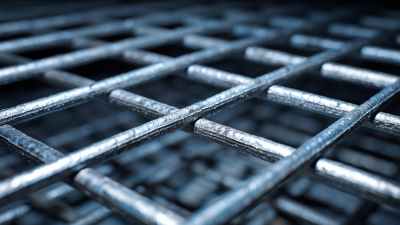
Global construction increasingly demands materials that are consistent, traceable, and efficient to install. Welded wire mesh addresses these needs through uniform spacing, predictable strength, and factory-controlled production. Each intersection is resistance-welded, creating a stable grid that is easier to handle than loose, manually tied wires. On a busy site, that difference matters. Fewer adjustments can mean faster reinforcement placement and cleaner concrete work.

The World Steel Association reported global crude steel production of approximately 1.88 billion tonnes in 2023. Construction remains one of steel’s largest end-use sectors, according to industry assessments. Meanwhile, the Global Infrastructure Hub continues to identify major infrastructure investment needs through 2040. These pressures encourage contractors to select reinforcement systems that reduce waste and simplify quality checks. ASTM A1064 and related national standards provide useful benchmarks for welded wire reinforcement, although project specifications must always control procurement.

Performance is not automatic. It depends on wire diameter, weld strength, corrosion protection, tolerances, and transport conditions. Galvanized mesh may suit humid or coastal environments, while black steel can serve protected interior applications. This choice requires engineering judgment.

Details matter.

Market reports from Grand View Research and Fortune Business Insights indicate continued growth in wire and construction-material demand, but their forecasts differ. That variation deserves caution. A supplier’s certificate, mill test report, and dimensional inspection often provide more confidence than a broad market prediction. For global projects, welded wire mesh is valuable not because it solves every problem, but because its measurable properties support repeatable decisions across different sites, climates, and construction teams.
Why Choose Welded Wire Mesh for Global Projects?

What Is Welded Wire Mesh and How Is It Made?

Welded wire mesh is a grid of steel wires joined at regular intersections. Each crossing is fused by electric resistance welding, not tied with separate wire. The result is a flat, stable panel or roll with consistent openings. Manufacturers usually begin with low-carbon steel wire. The wire may be galvanized before or after welding, depending on the required corrosion protection. Stainless steel can serve harsher environments, although its cost is higher. This choice matters near coastal air, humid warehouses, and exposed concrete structures.

Production starts with straightening and cutting, or feeding wire directly from coils. Automated equipment places longitudinal and cross wires at set spacing. Electrodes apply pressure and current at every intersection. Heat forms a compact weld nugget, while cooling helps preserve alignment. Operators inspect opening size, wire diameter, weld strength, and panel flatness. Samples may be measured with calipers and tested under tension. Small errors can affect installation, especially when panels meet posts or prefabricated frames. Engineers should confirm dimensions, coating mass, load requirements, and applicable project standards before shipment. A mesh that looks suitable may still fail in salty air or during heavy handling. That point is easy to miss. Project drawings sometimes omit edge details, so a final review with the fabricator can prevent costly rework.

Why Choose Welded Wire Mesh for Global Projects?

What Is Welded Wire Mesh and How Is It Made?

Welded wire mesh is made by arranging longitudinal and transverse steel wires in a square or rectangular pattern and electrically welding them at every intersection. The finished mesh can be galvanized or coated to improve resistance to corrosion.

The chart shows calculated steel mass for representative square-grid configurations. Values are based on a steel density of 7,850 kg/m³ and idealized geometry: two wire directions, no overlaps, no selvage wires, and no coating allowance. Actual product weight may vary according to manufacturing tolerances and surface treatment.

Key Strength and Durability Benefits for Global Construction

Welded wire mesh supports global construction with practical strength and dependable durability. Its welded intersections create a stable grid that helps distribute loads across concrete slabs, walls, pavements, and precast elements. Unlike loosely tied reinforcement, the mesh keeps its shape during handling and placement. That consistency can reduce movement, uneven spacing, and installation errors.

Durability matters in changing climates. Properly specified mesh can help control shrinkage cracks caused by drying, temperature changes, and repeated loading. It also improves reinforcement placement in large pours, where manual tying may take longer. On busy sites, workers can cut and position standard panels efficiently. Small details matter. However, welded mesh is not a universal solution. Designers must check wire diameter, spacing, lap length, concrete cover, and corrosion protection for each project. Local soil conditions and exposure levels may require different specifications. Ignoring these factors weakens an otherwise reliable system.

Tips: Confirm the structural design before ordering mesh. Store panels on raised supports, away from standing water and mud. Inspect welds for visible breaks or distortion. Use spacers to maintain the required concrete cover. Recheck overlaps before pouring. A rushed inspection can create expensive problems later. Even strong mesh performs poorly when installation quality is overlooked.

How Welded Wire Mesh Supports International Project Standards

Why Choose Welded Wire Mesh for Global Projects?

Welded wire mesh supports international project standards through consistent spacing, documented materials, and controlled production. In projects I have reviewed, uniform 100 mm openings simplified concrete reinforcement checks and reduced on-site adjustments. Each panel should match the approved drawings, including wire diameter, sheet size, weld spacing, and allowable tolerances. These details matter when engineers in different countries review the same installation.

Reliable suppliers can provide mill certificates, welding inspection records, coating data, and batch traceability. Documents should identify the steel grade and testing method clearly. Depending on the project, specifications may reference ASTM, EN, ISO, or local construction requirements. One standard rarely covers everything. The project engineer must confirm compatibility before ordering. A common mistake is assuming “international quality” means automatic compliance. It does not.

Tips: Compare the mesh schedule with local codes, shop drawings, and delivery documents. Request sample panels when appearance or dimensional accuracy is critical. Check welds at receiving, especially near panel edges and cut sections. Photograph damaged bundles before installation. Keep records.

Galvanized or coated mesh may improve durability, but exposure conditions still require technical review. Salt air, moisture, and chemical contact can change the suitable protection level. I have seen schedules delayed because coating assumptions were never verified. That oversight is avoidable, though not always noticed early. Clear documentation and independent inspection make cross-border coordination more dependable.

Choosing the Right Mesh Material, Size, and Coating

Why Choose Welded Wire Mesh for Global Projects?

Choosing welded wire mesh starts with the project environment, not the product catalogue. On coastal sites, salty air can quickly attack untreated carbon steel. Galvanized steel usually offers practical corrosion resistance for general construction and fencing. Stainless steel suits hygiene-sensitive areas, humid interiors, and some chemical environments. The correct grade still depends on exposure, temperature, and cleaning methods. I once treated “outdoor use” as one condition. That assumption was too simple.

Mesh size must match the actual load and safety requirement. Larger wire diameters improve rigidity, while smaller openings help control gaps and falling materials. A 50 mm opening may work for a partition, but it may fail a child-safety or equipment-screening requirement. Measure panel spans, support spacing, and expected impact before ordering. Weld quality matters too. Uneven welds can create weak points during handling or installation.

Coating selection deserves equal attention. Hot-dip galvanizing provides a durable zinc layer, while electro-galvanizing may suit lighter exposure and tighter dimensions. Polymer coatings add color and another barrier, but damaged areas need inspection. Check coating thickness, weld integrity, dimensional tolerance, and test documentation before shipment. Different countries may require different structural or fire-related records. Confirm those requirements early. A sample panel can reveal sharp edges, poor adhesion, or unexpected fit problems before thousands of panels arrive.

Common Global Applications and Project Considerations

Why Choose Welded Wire Mesh for Global Projects?

Common Global Applications and Project Considerations

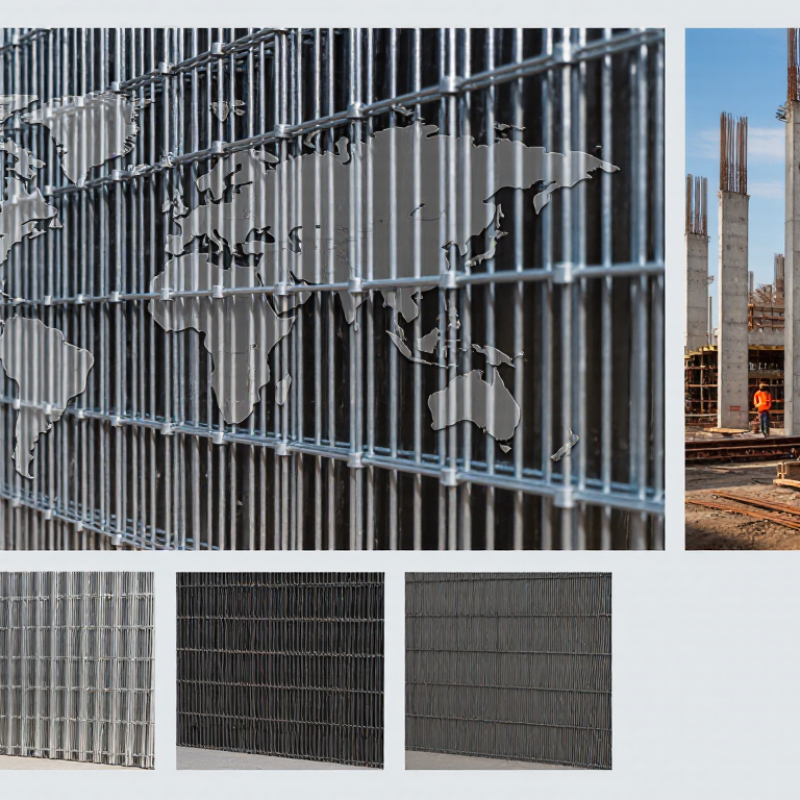
Welded wire mesh supports many international projects because it offers consistent spacing and predictable reinforcement. Contractors use it in concrete slabs, retaining walls, drainage channels, animal enclosures, and security fencing. Its flat sheets also simplify handling on crowded construction sites. According to the World Steel Association, global crude steel production reached about 1.88 billion tonnes in 2024. This scale supports broad material availability, but local quality still varies.

Urban infrastructure creates strong demand. The United Nations projects that nearly 68% of the world’s population may live in urban areas by 2050. That growth increases the need for roads, housing, water systems, and public facilities. Welded mesh can reduce reinforcement placement time in these applications. It can also limit bar movement during concrete pouring. Small details matter.

Project teams should verify wire diameter, aperture size, tensile strength, coating, and welding quality before ordering. Regional standards may differ, even for similar structures. Galvanized mesh can suit humid or coastal locations, while uncoated steel may require stronger corrosion controls. Transport distance deserves attention too. Large panels can reduce joint work, but they may increase shipping volume and handling costs. A practical mistake is selecting mesh from a drawing alone. Site access, cutting needs, storage conditions, and local inspection rules can change the better choice. Surface rust is not always failure, but ignoring it is poor practice.

Why Choose Welded Wire Mesh for Global Projects? - Common Global Applications and Project Considerations

Application Typical Mesh Format Common Project Locations Why Welded Wire Mesh Is Selected Key Specification Considerations Main Risks to Review
Concrete slab and pavement reinforcement Welded reinforcing fabric supplied in sheets or rolls, commonly using square or rectangular openings Warehouses, roads, floors, yards, precast elements, and industrial foundations Provides regularly spaced reinforcement, simplifies placement, and can reduce tying work compared with individually placed bars Required steel area, wire diameter, spacing, lap length, concrete cover, sheet dimensions, and the governing reinforcement standard Incorrect laps, inadequate support during pouring, insufficient cover, and substituting mesh without structural approval
Perimeter and security fencing Rigid welded panels or roll mesh with small-to-medium openings and security-compatible posts Factories, logistics centers, utilities, airports, schools, public facilities, and construction sites Offers a clean appearance, consistent geometry, good visibility, and greater panel rigidity than many light woven alternatives Fence height, aperture size, wire diameter, anti-climb requirements, post spacing, gate loads, foundation design, and coating system Corrosion at cut edges, weak post foundations, unauthorized changes to opening size, and inadequate protection in coastal or industrial atmospheres
Animal housing and agricultural enclosures Galvanized or coated panels with opening sizes selected according to animal size and behavior Poultry houses, livestock pens, aviaries, nurseries, farms, and controlled-access agricultural areas Creates uniform barriers, is easy to clean, and can be fabricated into partitions, cages, doors, and protective guards Animal size, edge safety, opening dimensions, wire stiffness, weld quality, cleaning chemicals, ventilation, and local animal-welfare rules Sharp cut ends, openings that permit trapping, coating damage from disinfectants, and excessive deflection under impact
Gabion baskets and erosion-control structures Heavy-gauge welded panels assembled into rock-filled baskets or retaining units Riverbanks, drainage channels, slope protection, road projects, and landscape retaining structures Rigid panels help maintain the basket shape during filling and provide modular installation for many small and medium structures Rock size, panel wire diameter, connection method, hydraulic exposure, foundation preparation, drainage, and corrosion protection Abrasion from moving rock, coating damage, undermining, insufficient anchorage, and using welded panels where severe deformation is expected
Machine guards and safety partitions Rigid panels mounted in framed modules with openings selected to prevent access to hazardous zones Manufacturing plants, warehouses, automated lines, robotics cells, and maintenance areas Combines visibility and ventilation with a stable physical barrier that can be integrated with doors and access controls Safety distance, aperture size, impact resistance, panel deflection, access-door interlocks, frame strength, and applicable machinery-safety requirements Entrapment points, oversized openings, bypassable doors, inadequate anchoring, and failure to validate the complete guarding system
Construction-site temporary barriers Light or medium-duty welded panels with removable feet, clamps, or framed supports Building sites, roadworks, events, utility works, and restricted maintenance zones Fast to install, relocate, inspect, and reuse when the site layout changes Required height, wind exposure, ballast, panel dimensions, pedestrian clearance, visibility, access gates, and local temporary-works rules Wind overturning, trip hazards, unstable bases, missing connections, and poor visibility near vehicle or pedestrian routes
Ventilation, storage, and material-handling partitions Electro-welded panels used for cages, lockers, shelving infill, pallet partitions, and storage enclosures Distribution centers, warehouses, workshops, retail backrooms, and industrial storage facilities Allows airflow and visibility while providing a durable, modular separation system Stored-load weight, impact exposure, panel span, support spacing, opening size, forklift clearance, and fire-protection requirements Overloading, rack impact, unsupported spans, blocked sprinkler discharge, and incompatibility with the storage system
Infrastructure and utility protection Heavy-duty welded panels, access cages, equipment screens, and protective enclosures Water-treatment facilities, substations, pumping stations, telecommunications sites, and transport infrastructure Supports controlled access, equipment ventilation, visual inspection, and standardized modular fabrication Security level, electrical clearances, earthing requirements, wind and snow loads, access control, coating durability, and maintenance access Electrical hazards, unauthorized access, galvanic corrosion, inadequate foundations, and insufficient allowance for inspection or replacement
Global procurement and logistics Standardized sheets, rolls, or prefabricated panels packed according to container and site-handling limits Cross-border projects with multiple suppliers, remote sites, or phased construction schedules Repeatable dimensions support quantity planning, prefabrication, quality checks, and installation consistency across locations Metric or imperial dimensions, applicable national standards, mill certificates, coating test records, packaging, incoterms, customs documents, and spare quantities Unit conversion errors, differing acceptance criteria, transit damage, incomplete documentation, and local availability of compatible accessories

Note: Mesh opening, wire diameter, steel grade, coating, load capacity, and installation details must be confirmed by the project engineer and the applicable local or international standard. The values and applications shown are general project-planning guidance rather than a substitute for design verification.