Welded wire mesh is a practical material made by joining steel wires at fixed intersections. Its clean grid supports fencing, animal enclosures, concrete reinforcement, storage cages, and garden structures. The welded joints create a firm panel that resists shifting better than loosely woven wire in many applications.
This guide explains welded wire mesh types, sizes, coatings, and common uses. You will see how wire diameter, opening dimensions, panel length, and surface treatment affect performance. Galvanized mesh offers improved resistance to moisture, while PVC-coated mesh adds color and another protective layer. Stainless steel may suit demanding environments, although its higher cost needs careful justification.
Measure twice.
A small size difference can change the entire installation. For example, a 50-by-50-millimeter opening may suit a garden fence, but it may not contain smaller animals safely. Heavy mesh can support stronger barriers, yet it also requires firmer posts and more suitable cutting tools. Product labels can be confusing, especially when suppliers list gauge numbers, millimeters, and inch measurements together. Always verify the actual wire diameter and opening size before ordering. Standards and coating quality also vary between manufacturers. The cheapest option is not automatically the most reliable. Field conditions matter, and this guide may not cover every unusual project. Its purpose is to provide a clear, practical foundation for comparing mesh products and choosing with greater confidence.
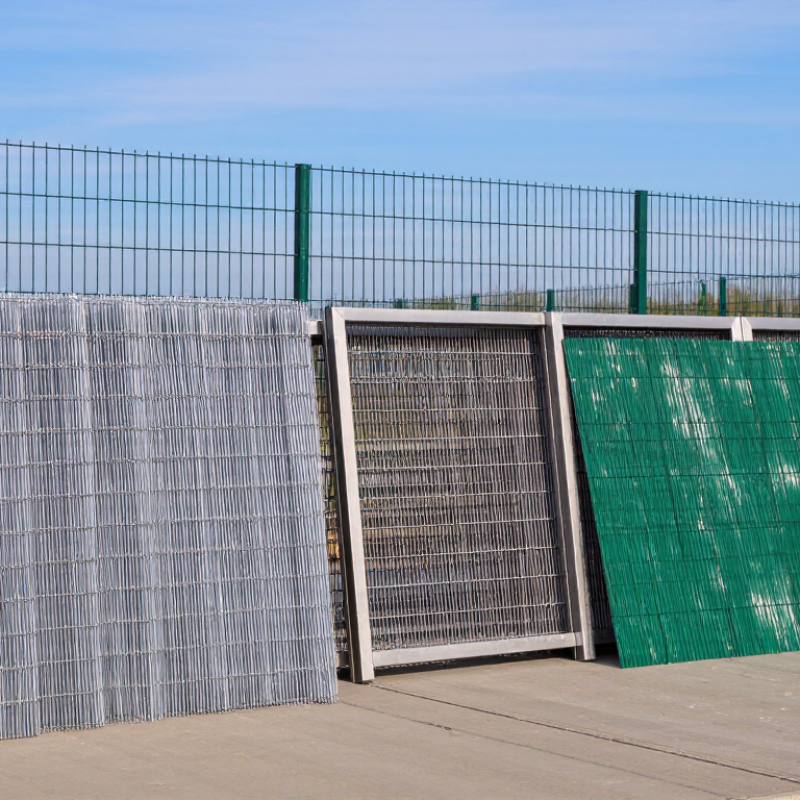
What Is Welded Wire Mesh?
Welded wire mesh is a grid made by resistance-welding steel wires at right angles. Each intersection becomes a fixed joint, unlike woven mesh, which can shift under pressure. Manufacturers produce it from plain steel, galvanized steel, or stainless steel. The surface may look simple, but wire diameter and opening size strongly affect strength, weight, and corrosion performance.
Common panels use 50 × 50 millimeter or 100 × 100 millimeter openings, with wire diameters often ranging from 2 to 8 millimeters. Smaller openings improve containment, while thicker wires handle heavier loads. Contractors use welded mesh in concrete reinforcement, animal enclosures, security partitions, drainage covers, and warehouse barriers. ASTM A1064/A1064M provides recognized requirements for carbon-steel welded wire reinforcement, helping buyers check material quality and fabrication consistency.
Demand is also connected to wider steel consumption. World Steel Association data recorded about 1.89 billion tonnes of crude steel production in 2023. A 2024 Grand View Research assessment projects the welded wire mesh market to grow at roughly 4% annually through 2030. Exact market figures vary because reports define products differently. That limitation matters. In practice, a project drawing should state wire diameter, opening dimensions, coating, panel tolerance, and load conditions. Galvanizing is not a universal solution; damaged coatings and salty environments still require inspection. Small specification errors can become expensive field problems.
Welded wire mesh is made by electrically welding intersecting steel wires into a uniform grid. The chart compares representative common mesh openings and their calculated opening areas. Smaller openings are typically used for screening, cages and general reinforcement, while larger openings are commonly used for fencing, partitions and concrete reinforcement.
Welded wire mesh is made by crossing straight metal wires at fixed angles. Automated equipment places the wires into a grid. Electrical resistance welding then fuses each crossing under pressure and controlled current. The result is a firm, regular sheet or roll. It sounds simple. It is not.
Wire diameter, spacing, and welding force must match the intended application. Common openings range from small squares for screening to wider grids for concrete reinforcement and animal enclosures. Manufacturers may weld low-carbon steel, stainless steel, or galvanized wire. Some wires receive protective coatings before welding, while others are treated afterward. Post-welding treatment can protect exposed joints more effectively, but it may increase production time.
Experienced inspectors check wire size, panel dimensions, opening accuracy, and weld strength. They also look for loose intersections, sharp ends, and uneven coating. A small spacing error can affect installation, especially when mesh supports poured concrete. In construction, workers usually cut panels with suitable tools and secure overlaps carefully. Garden fencing, machine guards, storage cages, and drainage covers use different mesh designs. The correct choice depends on load, corrosion exposure, handling, and local conditions.
The process still deserves practical judgment. A clean-looking mesh may hide weak welds. Testing matters. So does checking the actual environment before ordering.
Welded wire mesh is made by joining steel wires at fixed intersections. The result is a flat, stable grid with consistent openings. Its main types differ by wire material, surface treatment, and intended use. Choosing the right type requires more than checking the lowest price.
Galvanized welded mesh resists moisture and suits fences, cages, vents, and light construction work. Stainless steel mesh handles humidity, cleaning chemicals, and demanding industrial environments. PVC-coated mesh adds a softer surface and extra protection, making it useful for garden barriers and animal enclosures. Reinforcing mesh usually has thicker wires and larger sheets for concrete support. Square openings are common, while rectangular openings can reduce weight or match a specific design. Panel mesh is often rigid and practical for temporary partitions or security fencing.
Tips: Measure the opening size, wire diameter, sheet dimensions, and coating before ordering. Match the mesh to the load, weather, and contact conditions. A narrow opening may improve safety, but it can increase cost and weight. I have seen projects fail because corrosion resistance was assumed rather than checked. That mistake is avoidable. Also inspect weld points for gaps, sharp ends, and uneven spacing. Specifications can look correct on paper, yet a small manufacturing variation may affect installation. Ask for a sample when the mesh will carry people, animals, or structural loads.
| Welded Wire Mesh Type | Material or Finish | Typical Wire Diameter | Common Opening Sizes | Common Supply Form | Typical Uses | Key Selection Consideration |
|---|---|---|---|---|---|---|
| Plain Steel Welded Wire Mesh | Low-carbon steel with no protective coating | Approximately 1.6–6.0 mm | Approximately 13–100 mm square or rectangular openings | Rolls or rigid panels | Indoor partitions, machine guards, temporary barriers, baskets, and general fabrication | Requires paint, plating, or another protective treatment where moisture or corrosion is present |
| Electro-Galvanized Welded Wire Mesh | Zinc coating applied by an electrochemical process | Approximately 1.6–4.0 mm | Approximately 13–75 mm square openings | Mostly rolls and light-duty panels | Cages, shelving, small animal enclosures, ventilation screens, and indoor storage systems | Provides a relatively thin, uniform zinc layer and is generally better suited to mild exposure than heavy outdoor exposure |
| Hot-Dip Galvanized Welded Wire Mesh | Steel coated with zinc by immersion in molten zinc; may be galvanized before or after welding | Approximately 2.0–8.0 mm | Approximately 13–200 mm square or rectangular openings | Rolls, panels, and fabricated sections | Outdoor fencing, agricultural enclosures, ventilation covers, equipment guards, and construction work | Offers stronger corrosion protection than uncoated or electro-galvanized mesh; the coating process affects weld coverage |
| PVC-Coated Welded Wire Mesh | Steel core, commonly galvanized, covered with a bonded PVC or polymer layer | Core wire approximately 1.6–5.0 mm; finished diameter is larger | Approximately 13–100 mm square or rectangular openings | Rolls and coated panels | Garden fencing, decorative barriers, pet enclosures, playground boundaries, and landscaping | Provides added corrosion resistance and color, but the polymer coating must be checked for UV and temperature resistance |
| Stainless Steel Welded Wire Mesh | Stainless steel, commonly selected in grades such as 304 or 316 according to the environment | Approximately 0.5–6.0 mm | Approximately 3–100 mm square or rectangular openings | Precision rolls, cut panels, and fabricated components | Food-processing equipment, chemical facilities, laboratory screens, marine areas, filters, and architectural panels | Higher corrosion resistance and cleanliness, with higher material cost than carbon-steel mesh |
| Welded Wire Reinforcement Mesh | Deformed or plain steel reinforcing wires welded into a regular grid | Approximately 4–16 mm, depending on design requirements | Commonly 100 × 100 mm, 150 × 150 mm, or 200 × 200 mm | Rigid sheets or engineered reinforcing panels | Concrete slabs, walls, pavements, precast concrete, tunnels, and structural construction | Must be selected according to structural drawings, required steel area, bar strength, lap length, and concrete cover |
| Security Welded Wire Mesh | Heavy-gauge galvanized or polymer-coated steel | Approximately 3.0–8.0 mm | Commonly 12.5 × 12.5 mm, 25 × 25 mm, or 50 × 50 mm | Rigid panels with posts, frames, and security fittings | Perimeter fencing, warehouses, utility areas, sports facilities, and restricted-access zones | Small openings and heavier wire improve resistance to cutting and climbing; installation details are equally important |
| Small-Opening Welded Mesh | Plain steel, galvanized steel, stainless steel, or polymer-coated steel | Approximately 0.5–2.5 mm | Approximately 3–25 mm square openings | Rolls, sheets, and formed screens | Sifting screens, ventilation guards, laboratory equipment, animal cages, and small-part containment | Opening size should be smaller than the object being retained, while wire diameter must meet strength and visibility requirements |
Note: Dimensions shown are common commercial ranges and examples rather than universal specifications. Final selection should be based on required load, opening size, corrosion exposure, coating system, applicable standards, and installation conditions.
Welded wire mesh is specified by wire diameter, spacing, sheet size, and steel grade. In the United States, ASTM A1064/A1064M uses W and D designations for plain and deformed wire. A W1.4 wire contains about 0.014 square inches of steel, giving an approximate diameter of 0.134 inches. It is not a 1.4 mm wire. That mistake can weaken a specification.
Common layouts include 100 × 100 mm, 150 × 150 mm, and 200 × 200 mm spacing. Imperial orders often use 4 × 4, 6 × 6, or 8 × 8 inch patterns. Typical wire diameters range from about 4 mm to 12 mm, although production limits differ by mill. CRSI design tables show that sheet dimensions commonly fall near 5 × 10 feet, while rolls may suit longer slabs and wider pours. Actual availability depends on wire grade, bending requirements, and transport limits. Check the mill certificate.
For concrete slabs, a 6 × 6 pattern with moderate wire is common for crack control, not structural replacement. Heavier mesh may use closer spacing and larger wires. ACI 318 reinforcement provisions should guide structural design. Site crews also need lap lengths, cover, and support chairs shown on drawings. Small details matter. A practical warning: mesh can look adequate while sitting directly on the ground. That installation error defeats much of its intended performance. Custom spacing is possible, but unusual sizes often increase lead time and cutting waste.
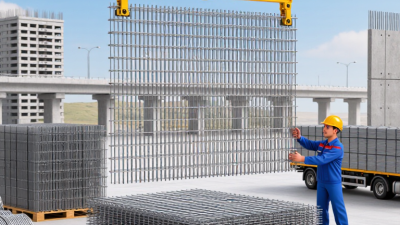
Welded wire mesh is used wherever consistent spacing, fast installation, and dependable reinforcement matter. In concrete slabs, workers place flat mesh sheets above spacers before pouring. The steel helps control shrinkage cracks and distributes local loads. It does not replace structural design. Engineers must still check loads, cover, lap length, and corrosion exposure.
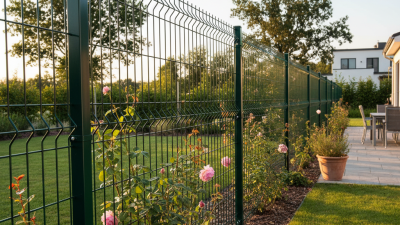
Fences and security panels are another major application. Mesh encloses warehouses, schools, sports grounds, animal areas, and utility compounds. Its welded intersections resist opening better than loosely woven alternatives. Galvanized or coated finishes suit damp locations, although damaged coatings can expose steel.
Construction sites also use mesh for temporary barriers, trench protection, storage cages, and equipment separation. It makes boundaries visible without blocking all airflow. Useful, but not invincible.
Agriculture uses welded mesh for poultry runs, livestock partitions, trellises, and crop protection. Industrial facilities use heavier panels for machine guarding and material bins. Grand View Research’s 2024 market analysis identifies construction and infrastructure as leading demand areas, with global growth expected through 2030. A 2023 report from MarketsandMarkets also links wire mesh demand with expanding construction and industrial activity. These figures describe market direction, not suitability for every project. Field conditions are messier than drawings. Poor anchoring, sharp cut ends, and incorrect openings still cause failures.