Why Choose Welded Wire for Global Construction Projects?
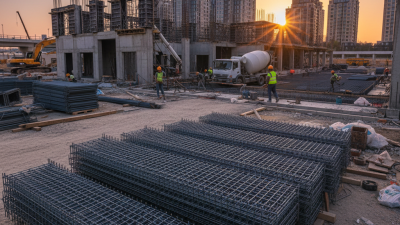
Welded wire is becoming a practical choice for construction projects across different regions. Its factory-welded intersections create consistent spacing and predictable reinforcement patterns. These qualities can simplify slab, wall, pavement, and precast concrete work. They also support faster installation when crews receive correctly fabricated panels or rolls.
Dr. Robert J. Frosch, a respected structural concrete engineer and professor, offers a useful principle: “Reinforcement must be placed where the design requires it, not merely where installation is easiest.” This idea explains why welded wire should never be selected only for speed. Engineers must still review structural drawings, load conditions, concrete cover, lap requirements, and local standards. A convenient product can become a poor choice when detailing is rushed.
Global projects add another layer of responsibility. Material grades, wire diameters, mesh dimensions, coatings, and certification documents may differ between suppliers. Transport conditions also matter. A damaged bundle, rusty surface, or mismatched panel can delay work beside an active foundation pour. Careful procurement reduces those risks. Clear drawings help too.
The benefits are tangible. Crews can lift prepared sheets, align them with spacers, and reduce repetitive tying. Factory production may also limit cutting waste and improve dimensional consistency. Still, welded wire is not automatically the best answer. Complex corners, congested reinforcement, or unusual seismic details may require another system. That uncertainty deserves attention.
A reliable decision connects design, manufacturing, logistics, and site experience. When those elements cooperate, welded wire can provide efficient reinforcement without sacrificing control. The strongest projects do not chase speed alone. They verify every important detail.
What Is Welded Wire and How Is It Made?
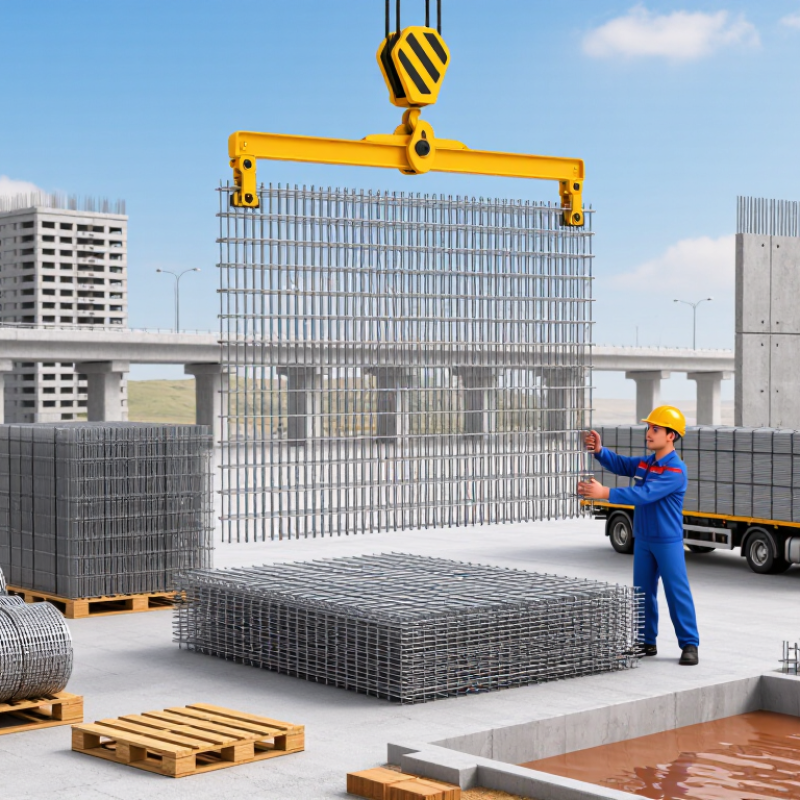
Welded wire is a factory-made grid of steel wires. Longitudinal and transverse wires cross at fixed intervals. A resistance-welding machine joins them at every intersection using controlled heat and pressure.
The process begins with steel wire rod. It is drawn to the required diameter, then straightened and cut. Automated equipment places each wire precisely before welding. Operators check spacing, wire size, weld strength, and visible defects. Galvanizing or another approved coating may follow, depending on exposure conditions. ASTM A1064/A1064M and ISO 15630-1 provide recognized requirements for welded reinforcement products and testing.
The process sounds simple, but it is not foolproof. A damaged weld can reduce confidence during handling or installation. A perfect grid is an ambition, not a guarantee. Practical inspections still matter on busy sites.
Welded wire supports faster placement than separately tying many reinforcing bars. Its regular spacing can improve concrete reinforcement consistency when workers install it correctly. The International Energy Agency and UNEP reported that buildings and construction produced about 37% of global energy-related and process CO2 emissions in 2022. Material efficiency deserves attention. The World Steel Association reports that roughly 650 million tonnes of steel are recycled globally each year, supporting steel’s circular-use potential. Recyclability helps, but transport distance, coating selection, and waste control also affect project performance. A cheaper grid is not always the better choice. Engineers should verify design loads, local standards, corrosion exposure, and weld quality before approval.
Which Properties Make Welded Wire Suitable for Construction?
Welded wire suits construction because its geometry is consistent. Each crossing is welded into a fixed grid, creating uniform openings across the sheet or roll. This regular structure helps distribute loads and supports reliable placement in slabs, walls, and precast components. Workers can measure it quickly on site. Cutting is also more predictable than with loose reinforcement.
Strength is only part of the decision. Weld quality, wire diameter, spacing, and steel grade directly affect performance. A properly manufactured panel resists movement during concrete placement and keeps reinforcement closer to its designed position. That matters around corners, openings, and heavily loaded floor zones. Its relatively light weight can reduce handling time, especially where cranes or large crews are unavailable.
Durability depends on exposure. Galvanized or coated wire can provide added protection in damp environments, but coating quality and damage during cutting still require inspection. Stainless options may suit severe conditions, though their cost can change the project balance. Welded wire is not a universal answer. Poor storage can cause contamination, bending, or hidden corrosion before installation. I have seen schedules improve after simple checks were added: verify labels, inspect welds, confirm spacing, and keep bundles off wet ground. These small controls are easy to overlook. That is the weakness.
How Does Welded Wire Support Different Building Applications?
Welded wire supports many building applications because its grid provides consistent reinforcement across large areas. In concrete slabs, workers place sheets on chairs before pouring, helping maintain the designed position. The regular spacing can reduce cutting, tying, and material handling on busy sites. It also makes reinforcement easier to inspect before concrete covers it. Small mistakes remain possible, especially when sheets shift around openings or service penetrations.
In walls and precast panels, welded wire can help control cracking caused by shrinkage and temperature changes. Engineers may specify different wire diameters and spacing for structural or non-structural requirements. For pavements, mesh distributes localized stress beneath vehicle routes, loading zones, and warehouse floors. It can also support stair elements, foundation sections, and manufactured concrete components. The right application depends on loads, concrete thickness, exposure, and required cover.
Good installation needs more than simply placing a mesh sheet. Crews should check overlaps, supports, edge distances, and clear paths around embedded items. Project drawings and applicable construction standards must guide every selection. A tighter grid is not automatically better; it may complicate concrete placement and increase costs. Designers should also review corrosion protection in damp or chemically aggressive environments. Practical coordination matters. A strong material can still perform poorly when detailing, storage, or placement is overlooked.
Why Choose Welded Wire for Global Construction Projects?
How Welded Wire Supports Different Building Applications
This chart shows representative welded-wire reinforcement selections using ASTM W-designations.
The W-number indicates the nominal steel area in square inches per foot of wire width; for example,
W4.0 provides 0.040 in²/ft. Actual reinforcement selection depends on structural design, loading,
spacing, exposure conditions, and applicable local standards.
What Standards Govern Welded Wire Quality and Safety?
Why Choose Welded Wire for Global Construction Projects?
Welded wire supports fast, consistent reinforcement placement in slabs, walls, and precast panels. Its value depends on controlled quality, not appearance alone. The World Steel Association reported about 1.89 billion tonnes of crude steel production in 2023. That scale makes traceable steel production essential for international construction.
ASTM A1064/A1064M defines requirements for carbon-steel wire and welded wire reinforcement used in concrete. It addresses dimensions, mechanical properties, weld strength, and manufacturing tolerances. ISO 15630-2 provides testing methods for welded fabric, including tensile and weld-shear performance. In Europe, EN 10080 governs reinforcing steel requirements, while ACI 318 establishes design and detailing rules for structural concrete in many projects.
These standards work together, but they are not interchangeable. A project engineer should check the specified grade, wire diameter, spacing, yield strength, and lap details. Mill certificates should match independent test results. Inspectors also need to examine damaged welds, uneven spacing, rust scale, and cutting at the site. Small defects matter. A certificate alone cannot prove every delivered panel is acceptable. This is where practice becomes less tidy than the specification. Environmental exposure, transport damage, and poor storage can reduce performance before installation. ASTM, ISO, and regional codes offer a reliable framework, but competent inspection still decides whether the reinforcement is safe for its actual conditions.
How Should Global Projects Select, Ship, and Install Welded Wire?
Why Choose Welded Wire for Global Construction Projects?
Global projects should select welded wire by performance, not price alone. Start with the required opening size, wire diameter, panel dimensions, and design load. Concrete reinforcement needs different properties from fencing or temporary site barriers. Check applicable engineering standards before ordering. Climate matters too. Coastal sites may require corrosion-resistant coating, while humid storage areas need careful packaging and drainage.
Shipping decisions can prevent expensive delays. Confirm panel lengths, bundle weights, container limits, and unloading equipment with the site team. Protect bundles from seawater, rain, and ground moisture during transit. Include accurate mill certificates, packing lists, and inspection records. Small document errors can hold a shipment for days. That detail is easy to underestimate.
Installation needs a level base and clear drawings. Workers should place sheets with specified overlaps and secure them before concrete placement. Bent panels, blocked access, or missing spacers can change the final position. Field conditions rarely match drawings perfectly. I have seen teams adapt successfully, but rushed changes can weaken quality control.
Tips:
Confirm local requirements before production. Order one sample bundle when tolerances are critical. Measure the actual route from unloading areas to the installation zone. Store wire on raised supports, not bare soil. Photograph bundles before opening them. Keep rejected pieces separate. Safety training and suitable protective equipment should guide every handling step.