China Top Drain Grate Manufacturers and Suppliers

China is a major source of drainage products, serving construction, infrastructure, and industrial projects worldwide. Its manufacturers offer drain grate options in materials such as ductile iron, stainless steel, and galvanized steel. Product choice depends on the site, expected loads, water flow, and exposure to weather or chemicals.

Details matter. A grate beside a loading bay faces different demands from one on a garden path. Buyers should compare load ratings, opening dimensions, surface finishes, and frame compatibility. Clear product drawings and test documentation can help verify whether a supplier’s specifications fit the project. Ask how samples are inspected, how production defects are handled, and whether custom dimensions affect lead times. These questions are practical, not fussy.

This guide introduces Chinese drain grate manufacturers and suppliers, with attention to product ranges, manufacturing capabilities, and communication practices. A reliable supplier should explain technical limits plainly, rather than promise that one model suits every location. Certifications and test reports are useful, but they should be checked against the exact product and intended application. That takes time. It is easy to focus on price and overlook installation details, especially when drawings are incomplete. I would not treat that as a small issue; a grate that does not fit its frame can delay work and create avoidable maintenance. The companies covered here can serve as starting points for comparison, not automatic endorsements. Careful checks still matter.
China Top Drain Grate Manufacturers and Suppliers

What Drain Grates Are and Where They Are Used

A drain grate is the visible, load-bearing cover over a drainage inlet. Its openings let rainwater enter while helping keep larger debris, footwear, and wheels out of the channel. Small, but important. Grates are commonly installed along streets, parking lots, sidewalks, courtyards, and industrial yards. Some roof and landscape drainage systems use them too.

Placement depends on where water collects. Roadside grates sit near curbs, where runoff carries grit and leaves; courtyard grates may be set into a low point beneath a downpipe. UN DESA’s 2018 World Urbanization Prospects projects that 68% of the world’s population will live in urban areas by 2050. More paved surfaces can mean faster runoff. The American Society of Civil Engineers’ 2021 Report Card gave U.S. stormwater infrastructure a D grade, highlighting wider system challenges. A grate alone cannot prevent flooding. That is easy to forget when it looks sturdy.

Tips: Match the grate’s load rating to its location, and check that openings suit expected debris and foot traffic. Clear leaves regularly; fine sediment can still pass through.

Common Drain Grate Types, Materials, and Manufacturing Methods

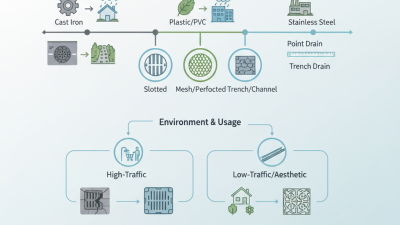
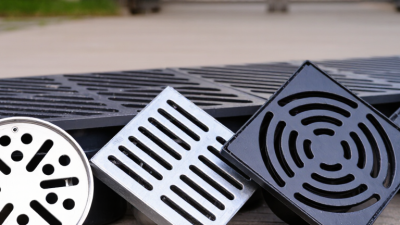
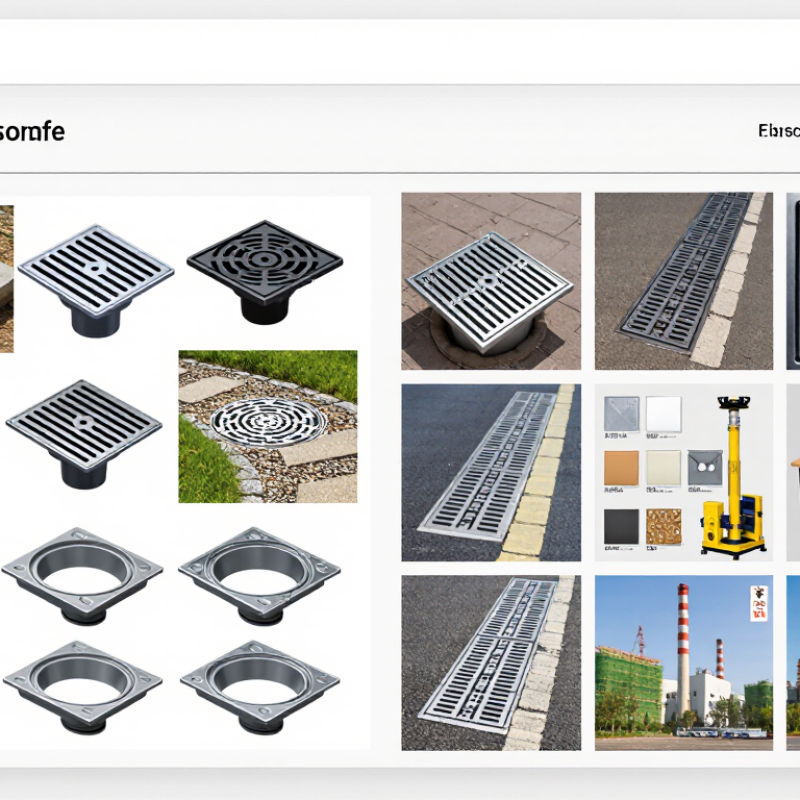
Drain grates are selected by water flow, debris, foot traffic, and the surface around them. Small details matter. Slot grates suit narrow channels and look neat, but leaves can bridge their openings. Perforated covers spread drainage across a wider area. Bar grates handle heavier runoff and are easy to inspect, though their gaps may catch small wheels or heels.

Material affects service life and maintenance. Cast iron is rigid and often used where vehicle loads are expected; it can corrode if its coating is damaged. Stainless steel resists rust in wet settings, but its higher cost may not suit every project. Galvanized steel offers a practical middle ground, while polymer concrete can work well in corrosion-prone areas. None is universally best.

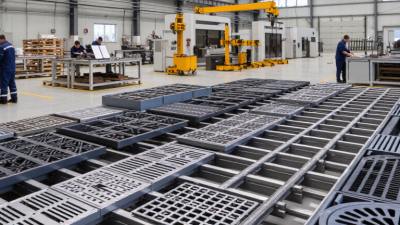
Manufacturing methods shape fit and consistency. Casting allows thick ribs and custom frames, but cooling may cause dimensional variation. Stamped steel parts are lighter and repeatable; welded bar assemblies need careful joint inspection. Polymer concrete is molded, so dimensions and curing control matter. When comparing Chinese suppliers, ask about opening size, frame tolerance, finish, and load testing—not just material names. A grate that looks robust may still rock in its frame. Check a sample, especially where paving slopes or drainage carries grit.

Common Drain Grate Materials: Approximate Density

Density is shown in kilograms per cubic metre. Values are typical approximations; actual density varies by alloy, grade, and composite formulation.

How to Evaluate Chinese Drain Grate Manufacturers and Suppliers

Evaluating Chinese drain grate manufacturers begins with the conditions at your site, not a catalog photo. Record channel width, expected traffic, exposure to salt or cleaning chemicals, and required drainage capacity. Small details matter. Ask each supplier to specify the material grade, grate dimensions, surface finish, and test method for the proposed model. Clear answers are useful.

Request recent load-test reports and confirm that the tested product matches the quoted design. Check whether the report identifies the sample, test date, and testing organization. Ask for drawings with tolerances, not just overall measurements. Then compare these details with a physical sample: inspect the edge finish, spacing, and fit against your channel. A neat sample alone proves little.

Review how the supplier handles changes, defects, and replacement parts. A written inspection plan can clarify who checks dimensions and welds before shipment. Also ask how production batches are traced, since one report may not represent every shipment. Even a careful checklist can miss installation differences; confirm fit with the contractor before ordering in volume. Price matters, but a lower quote may exclude testing, packaging, or spare grates. Don’t assume.

Leading Drain Grate Manufacturers and Suppliers in China

China’s drain grate manufacturers and suppliers serve projects ranging from residential walkways to busy industrial yards. A capable supplier should explain how grate dimensions, load requirements, and drainage capacity affect product selection. Clear answers matter.

Common options include ductile iron, stainless steel, and galvanized steel. Each suits different conditions. For example, a grate near a coastal site may need careful corrosion protection, while a service lane may require a stronger load rating. Buyers should request material details and relevant test records, not rely on appearance alone.

Good sourcing involves checking more than a catalogue. Ask whether the supplier can provide drawings, confirm opening sizes, and inspect samples for sharp edges or uneven coatings. A small dimensional mismatch can complicate installation. It happens. Production lead times, packaging, and export documents also deserve early discussion, especially for custom orders. Some suppliers communicate these details well; others may need repeated follow-up. That is worth considering. Compare quotations against specifications, inspection plans, and delivery terms, rather than choosing only the lowest price. A short factory review or independent pre-shipment inspection can help buyers understand what will actually arrive.

China Top Drain Grate Manufacturers and Suppliers - Leading Drain Grate Manufacturers and Suppliers in China
Drain Grate Product Type Common Materials Relevant Load-Class Guidance Typical Applications Key Sourcing Checks
Slotted channel drain grate Ductile iron, stainless steel, or galvanized steel Specify the class required for the installation; EN 1433 classes range from A15 to F900. Linear drainage along walkways, paved areas, and vehicle-access routes Confirm slot dimensions, channel compatibility, corrosion protection, and whether the complete channel assembly has been tested for the stated class.
Heel-proof or narrow-slot grate Stainless steel, ductile iron, or galvanized steel Class selection depends on the installed location and expected wheel loads. Pedestrian routes, accessible paving, and public areas where narrow openings are preferred Check clear opening size, slip resistance, fixing method, and compatibility with the channel body.
Bar grating for linear drains Galvanized steel, stainless steel, or ductile iron EN 1433 load class should be confirmed for the complete drainage unit and installation. Industrial floors, service areas, loading zones, and external paved surfaces Review bar spacing, bearing support, grate retention, finish, and maintenance access.
Manhole or catch-basin grate Ductile iron, cast iron, or steel EN 124 covers gully tops and manhole tops; common classes include B125, C250, and D400, with higher classes available for specified locations. Road gullies, parking areas, footways, and drainage inspection points Check frame-and-cover compatibility, clear opening, seating stability, locking features, and applicable standard certification.
Stainless-steel trench grate Stainless steel; grade should be selected for the environment Choose a rated configuration appropriate to the actual traffic and installation conditions. Commercial kitchens, food-processing areas, wash-down zones, and architectural paving Confirm stainless-steel grade, surface finish, drainage opening pattern, cleanability, and chemical exposure requirements.
Heavy-duty traffic grate Ductile iron or engineered steel EN 1433 classes D400, E600, and F900 address progressively demanding traffic or wheel-load conditions; select according to the site. Carriageways, industrial yards, freight areas, and locations subject to heavy wheel loads Request test documentation for the complete system and verify installation details, frame support, fastening, and project load requirements.

Selection note: EN 1433 load classes apply to drainage channels and their gratings, while EN 124 covers gully tops and manhole tops. The required class depends on the installation location and expected loads; confirm the applicable standard and product documentation with the supplier. Product dimensions, materials, and finishes vary by design.

How to Compare Products, Verify Quality, and Choose a Supplier

When comparing drain grate manufacturers and suppliers in China, start with the project conditions, not the catalog photos. Check the grate’s material, opening size, load rating, surface finish, and drainage capacity against the installation site. A pedestrian walkway and a vehicle entrance need different specifications. Ask for drawings and dimensional tolerances, too. Small differences can complicate installation.

Tips: Request a sample or a clear product drawing. Confirm how the supplier tests load capacity and corrosion resistance, and ask for recent inspection records. Compare like with like. A low price means little if the quoted thickness or finish differs.

Verify quality through more than a sales conversation. Review sample measurements, welds, edges, and coating consistency under good light. Ask how production defects are handled and whether inspection reports can be tied to the batch you order. For supplier checks, look for relevant manufacturing experience, stable communication, and realistic lead times. A video call can show the workshop, but it cannot replace independent testing when the project risk is high. I would not treat one polished sample as proof of every future batch; that assumption is easy to make, and worth questioning.