How to Choose the Best Trench Drain Grate in China?
Choosing the best trench drain grate in China requires more than comparing prices or viewing polished product photos. A reliable selection begins with the site. Consider vehicle weight, pedestrian traffic, drainage volume, installation depth, and the surrounding surface material. A factory entrance may need a ductile iron grate, while a hotel courtyard may suit stainless steel or galvanized steel. Small details matter. Slot width, frame alignment, anti-slip texture, and corrosion resistance can affect safety and maintenance.
Michael J. Schaefer, a drainage-design engineer and specification consultant, explains, “A grate is not decoration; it is the working face of the drainage system.” His point is practical. The grate receives impact, carries loads, and controls how water enters the channel. Buyers should request load-class documentation, material information, dimensional drawings, and production inspection records. They should also check whether the Chinese manufacturer can maintain consistent casting quality across repeated orders. One attractive sample proves little.
This guide explores how to evaluate a trench drain grate for industrial, commercial, residential, and landscape applications. It considers stainless steel, galvanized steel, ductile iron, and polymer options. It also examines slot patterns, locking systems, surface finishes, and custom sizing. Water finds weaknesses. Poorly matched components may cause ponding, rattling, cracked paving, or difficult cleaning. Some recommendations may need adjustment after a site inspection. That is an honest limitation. Soil conditions, rainfall intensity, local standards, and installation quality can change the final decision. A dependable supplier should discuss those variables openly, not promise one universal solution.
Define Trench Drain Grate Types, Materials, and Structural Features
Choosing a trench drain grate in China starts with its location, not its appearance.
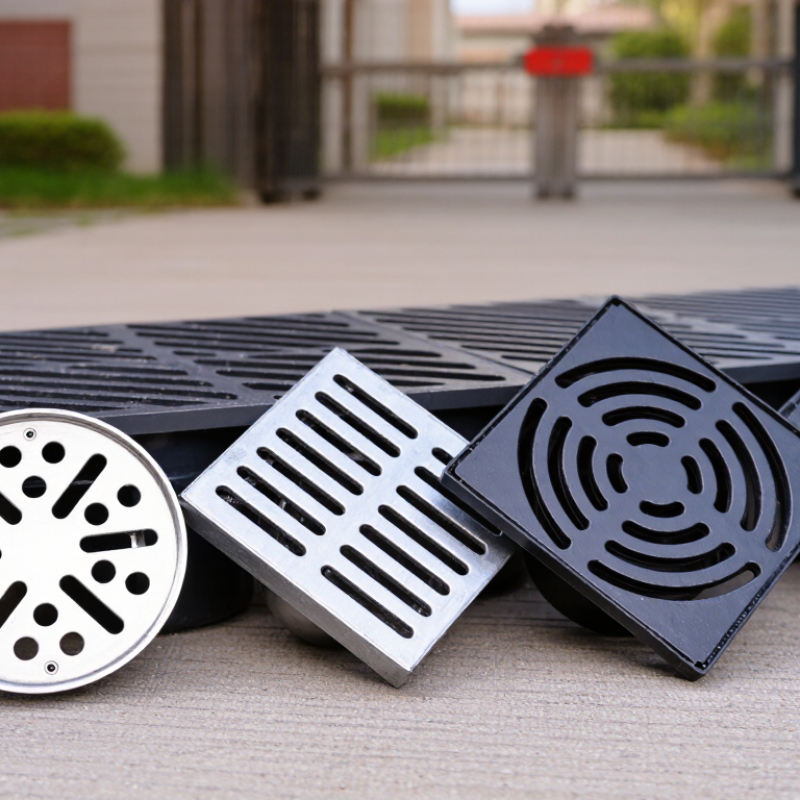
China’s Statistical Yearbook 2024 reports a 66.16% urbanization rate in 2023. Dense construction increases demand for dependable surface drainage. Industrial yards need ductile iron grates. Pedestrian areas usually need heelguard or narrow-slot designs. Kitchens and pools often suit stainless steel.
Grate materials change performance.
Ductile iron handles repeated vehicle loading and impact. Stainless steel resists moisture, grease, and cleaning chemicals. Galvanized steel costs less, but damaged coatings may corrode quickly. Polymer concrete channels can provide a stable, smooth base.
Check the frame, anchors, locking system, and channel connection together. A strong grate on a weak frame still fails.
EN 1433 lists load classes from A15 to F900, rated from 15 to 900 kN.
A15 suits pedestrian zones, while D400 commonly serves roads and parking areas. These are test classifications, not automatic daily wheel-load allowances. Hydraulic opening also matters. A decorative pattern may trap leaves and slow runoff. Anti-slip ribs help, but aggressive textures collect dirt. Field selection often favors replaceable sections, because one damaged grate should not require full drainage replacement.
The detail is easy to overlook. Conformance certificates, corrosion tests, and dimensional inspection should be requested before purchase.
Match Grate Load Ratings to Traffic and Installation Environments
How to Choose the Best Trench Drain Grate in China?
Match Grate Load Ratings to Traffic and Installation Environments
A trench drain grate must match the actual traffic above it. A residential walkway needs far less strength than a warehouse entrance. Pedestrian areas may use light-duty grates, while parking zones usually require stronger classifications. Delivery roads need even higher capacity. Do not select by appearance alone. A thick-looking grate can still fail under repeated axle loads.
Think about the installation environment, too. Wet markets, food-processing areas, and coastal sites may expose grates to moisture, chemicals, or salt. Stainless steel can resist corrosion, while ductile iron handles heavy impacts effectively. Slotted openings should also suit the site. Narrow openings improve foot safety, but they may slow debris removal. A wider pattern drains quickly, yet small wheels can catch inside. This trade-off is easy to overlook.
Tips: Confirm the load class with the project engineer and check applicable local standards, such as EN 1433 or relevant Chinese requirements. Measure the channel width carefully before ordering. Leave room for cleaning access. Site conditions are rarely perfect. A grate rated for occasional trucks may not survive daily loading, even when calculations appear acceptable. Review turning movements, wheel paths, installation depth, and concrete support. When uncertainty remains, choose based on real traffic frequency, not optimistic assumptions.
Evaluate Drainage Capacity, Safety, Corrosion Resistance, and Maintenance
How to Choose the Best Trench Drain Grate in China?
When selecting a trench drain grate in China, start with drainage capacity, not appearance. Measure the catchment area, rainfall intensity, slope, and expected debris. A hydraulic engineer should verify flow using local design rainfall data and the pipe outlet capacity. A wide grate is not automatically better. Its free area, channel depth, and inlet shape control performance. EN 1433 classifies gratings from A15 to F900, helping engineers match loads from pedestrian zones to heavy industrial yards. However, site conditions still matter. A catalog rating cannot replace field judgment.
Safety requires stable seating, slip resistance, and openings that will not trap heels, wheels, or tools. For wet factories, kitchens, and coastal sites, choose stainless steel or a properly protected ductile iron grate. Corrosion deserves attention. The NACE IMPACT study estimated global corrosion costs at about 3.4% of global GDP, or US$2.5 trillion annually. That figure is broad, but it shows why cheap coatings can become expensive maintenance. Check coating thickness, drainage of the grate frame, and compatibility with cleaning chemicals. Small details matter.
Tips: Ask for load-test records, salt-spray results, and hydraulic data. Inspect the locking system in person. Remove the grate and clean sediment regularly. I have seen excellent grates fail because the outlet was undersized. That mistake is easy to overlook. Also confirm compliance with applicable Chinese standards and project specifications before ordering.
Compare Chinese Manufacturers, Quality Standards, Custom Options, and Prices
How to Choose the Best Trench Drain Grate in China?
Chinese trench drain manufacturers differ in process control, testing, and export experience. Compare their material certificates, welding quality, surface finish, and dimensional accuracy. For stainless steel grates, check whether the supplier clearly identifies 304 or 316 grade. Project load requirements should follow recognized standards, such as EN 1433 load classes. Ask for recent test reports, inspection records, and a quality management certificate. Factory photos are useful, but they are not proof.
Tips: Request one sample before placing a large order. Measure the frame fit, grate thickness, drainage openings, and coating consistency. Ask how rejected pieces are handled. A supplier that answers vaguely may create delays later.
Custom production can include unusual lengths, corner sections, anti-slip patterns, logos, and brushed or polished finishes. Confirm drawings before tooling begins. Small orders often cost more because molds, setup, packaging, and inspection are shared across fewer units. Compare total landed cost, not only the factory price. Freight, export packing, duties, and replacement terms can change the final figure. In practice, the cheapest quotation is not always wrong, but it deserves more checking. I have seen attractive prices hide thin metal and poor tolerances. Some comparisons also miss maintenance costs. That is an easy mistake.