China Top Drain Grate Manufacturers and Suppliers?

Choosing among China’s top drain grate manufacturers and suppliers requires more than comparing catalog prices. A drain grate must match the site, traffic level, drainage volume, and surrounding surface. A factory producing attractive patterns may not provide reliable load performance. That difference matters.

Drainage researcher Dr. Richard Ashley offers a practical principle: “Good drainage design begins with the site, not the product.” This idea guides the evaluation in this article. We examine stainless steel, ductile iron, galvanized steel, and polymer options. We also consider surface treatment, anti-slip design, corrosion resistance, and dimensional accuracy. For a factory entrance, a heavy-duty grate may withstand forklifts and delivery trucks. For a hotel courtyard, appearance and walking comfort may matter more. Small details matter.

Supplier reliability deserves equal attention. Strong manufacturers usually provide drawings, load-class information, inspection records, and clear production schedules. They can explain whether the grate meets project specifications, rather than simply promising “high quality.” Ask about tooling, sample approval, welding quality, drainage testing, and replacement support. Photos alone are not enough. Neither is a long product list.

This comparison is not perfect. Some suppliers publish limited technical data, and online claims can be difficult to verify. Buyers should request samples and independent documentation before placing large orders. A low quotation may hide weak coatings, poor tolerances, or delayed delivery. The best choice balances engineering evidence, factory experience, communication, and long-term value. That is the real purpose of reviewing China’s top drain grate manufacturers and suppliers.
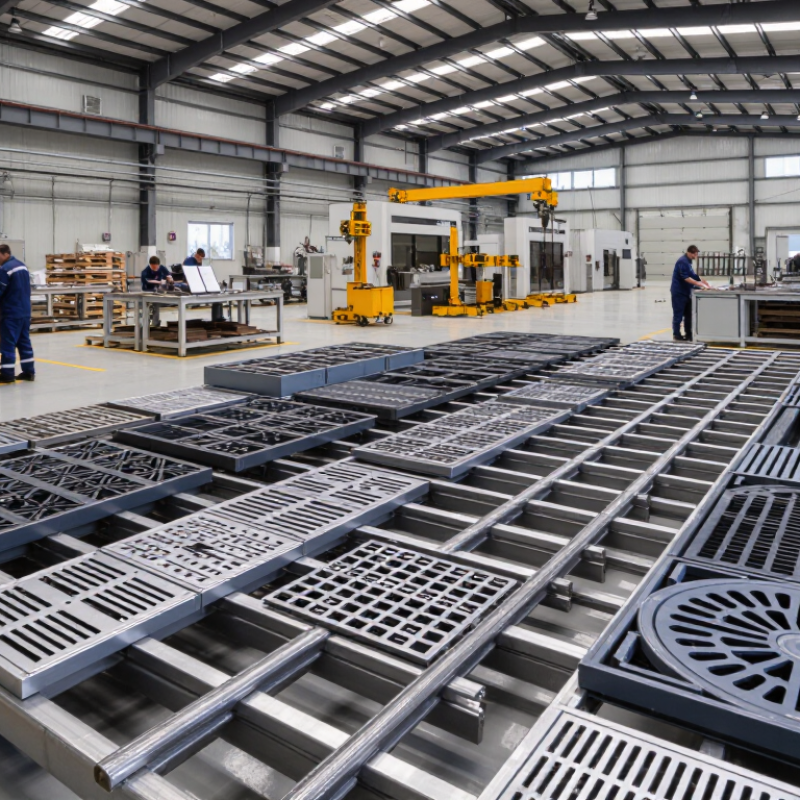
China Top Drain Grate Manufacturers and Suppliers?

What Are Drain Grates and Why Does Manufacturer Selection Matter?

A drain grate is the visible cover placed over a drainage channel or floor outlet. It allows water to pass while blocking larger debris, footwear, and tools. Common materials include stainless steel, galvanized steel, ductile iron, and reinforced polymer. Each option behaves differently under traffic, moisture, chemicals, and temperature changes.

Manufacturer selection matters because a grate is a working safety component, not just a metal panel. A reliable supplier should explain load ratings, opening sizes, surface finishes, and installation limits clearly. Factory quality checks should include dimensions, weld strength, corrosion resistance, and load testing. Ask for material certificates and inspection records. Samples can reveal sharp edges, uneven slots, weak coatings, or poor drainage flow.

Supply experience also deserves attention. Clear drawings reduce production mistakes. Traceable batches make later quality checks easier. During site inspections, I have seen attractive grates fail because the frame did not match the channel. That detail is easy to overlook. It should not be. A capable China-based manufacturer or supplier should provide practical engineering support, stable lead times, protective packaging, and responsive communication. However, documents alone cannot prove consistency. Independent inspections and repeated sample checks remain useful, especially for large orders. Even careful specifications may miss local cleaning habits or unusual wheel loads. That is where honest technical discussion becomes more valuable than a polished catalog.

Drain Grate Load Classes: A Practical Manufacturer-Selection Benchmark

The chart shows the minimum test loads defined by the EN 124 load-class system for access covers and grates. Class A15 is intended for pedestrian areas, while higher classes are designed for progressively heavier traffic, including roadways and industrial locations. When selecting a drain grate manufacturer, confirm that the product’s certified load class, dimensions, drainage capacity, corrosion resistance, and installation design match the actual site conditions. Test load is a classification value and should not be treated as the permitted continuous service load.

How to Evaluate China’s Leading Drain Grate Manufacturers

Choosing a reliable drain grate manufacturer in China requires more than comparing prices.

Look beyond the catalog. Review the factory’s production experience, material knowledge, and quality control process. A capable supplier should explain load ratings, drainage capacity, surface treatment, and suitable installation environments in clear language.

Request material certificates for stainless steel, ductile iron, or other specified alloys. Ask for proof. Inspection records should cover dimensions, welding, coating thickness, flatness, and grate opening size.

Factory visits can reveal practical details, including storage conditions, calibration routines, and whether rejected parts are separated properly. Photos help, but they do not replace physical inspection.

Order samples before approving a large production run. Test how the grate fits its frame, handles standing water, and resists movement under pressure.

I have found that small dimensional errors often create installation delays. That detail is easy to underestimate.

Evaluate tooling capability, mold maintenance, packaging strength, and communication during revisions. Export experience matters, but it should include reliable documentation and consistent delivery, not only a long customer list.

Ask how the manufacturer handles defects, replacement parts, and design changes. Their answer may reveal more than a polished sales presentation. Some suppliers promise customization too quickly; that deserves careful questioning.

Which Types of Drain Grates Do Chinese Suppliers Offer?

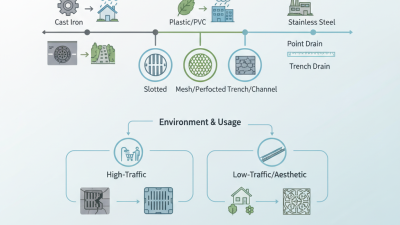
Chinese drain grate suppliers offer several practical types for residential, commercial, and infrastructure projects. Cast iron grates suit roads, parking areas, and loading zones because they tolerate heavy traffic. Stainless steel grates are common in kitchens, hospitals, hotels, and public washrooms. They resist corrosion and provide a clean appearance. Galvanized steel offers a lower-cost option for outdoor drainage, although its coating may wear in harsh environments.

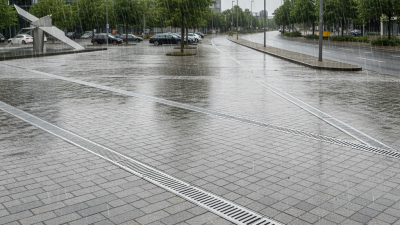
Linear trench grates create a continuous drainage line beside showers, swimming pools, balconies, and factory floors. Floor drains usually include square or round covers with removable baskets for easier cleaning. Suppliers also produce channel drain systems, slot drains, tree-pit grates, and custom trench covers. Aluminum models are lightweight, while polymer concrete and reinforced composite grates can reduce handling effort. Some factories make narrow-slot designs for modern paving projects. Appearance matters.

During sourcing, buyers should match the grate with its load requirement, opening size, drainage capacity, and installation depth. Chinese manufacturers commonly provide stainless, galvanized, or powder-coated finishes. Anti-slip patterns, locking bolts, hinged covers, and odor-control inserts are also available. Ask for dimensional drawings, material certificates, load-test records, and sample inspection before production. A polished surface does not guarantee long service life. Drainage design still controls performance. Small openings may improve safety but collect leaves faster. Oversized openings drain quickly but can create risks for shoes, wheels, or tools. Specifications deserve a second review.

What Quality Standards and Customization Options Should Buyers Check?

Choosing among China’s top drain grate manufacturers requires more than comparing prices. The 2023 WHO/UNICEF Joint Monitoring Programme reported that 3.5 billion people lacked safely managed sanitation in 2022. Reliable drainage hardware therefore deserves careful verification, especially in flood-prone areas.

Buyers should request test reports against EN 124 load classes or relevant ASTM methods. Check the declared load rating, grate dimensions, frame fit, slip resistance, corrosion protection, and locking design. Material certificates should identify stainless steel, ductile iron, or another specified alloy. Factory inspections should include dimensional checks, load testing, coating thickness, and batch traceability. ISO 9001 certification supports process control, but it does not prove every grate performs well. A certificate is not the product.

Tips: Send drawings, traffic details, drainage flow, and installation photos before requesting a quotation. Confirm whether “custom” means a new mold, modified dimensions, or simple cutting. Ask for a production sample and independent test evidence. Test slot width with a gauge, inspect welds closely, and check whether the frame rocks on a flat surface. Small errors become noisy failures. The World Bank’s 2023 Urban Floods report also emphasizes resilient, locally suitable drainage planning. That matters because a grate designed for a warehouse may fail on a busy road. Buyers should leave room for revision; the first specification is often incomplete.

How Can Buyers Compare Prices, Services, and Supplier Reliability?

Price comparison starts with one identical specification. Ask each Chinese drain grate supplier to quote the same material, dimensions, surface finish, load class, packaging, and Incoterm. A cheaper unit price may hide thinner steel, weaker welds, higher tooling fees, or expensive inland transport. The World Steel Association reported approximately 1.89 billion tonnes of crude steel production in 2023. Steel availability is broad, but grade and thickness still affect cost. Compare landed cost, not factory price. Request a cost breakdown. Include samples, inspection, freight, insurance, and replacement terms. Small details matter.

Service quality appears in documents and response time. Ask for drawings, material certificates, batch records, inspection photos, and a clear production schedule. For channel grates, check testing against EN 1433 and confirm the required load class, such as A15 or D400. A certificate alone proves little. The ISO Survey 2023 recorded more than 1.2 million ISO 9001 certificates worldwide, yet certification does not guarantee every shipment is perfect. Inspectors should verify dimensions, drainage openings, coating thickness, and load performance before dispatch. I would also request two recent customer references and a video factory audit. It is not flawless evidence. Still, silence, changing specifications, and vague warranty language deserve caution. Reliable suppliers explain defects, accept reasonable inspections, and provide traceable corrective actions. Test one production batch before committing to a large order.

China Top Drain Grate Manufacturers and Suppliers? - How Can Buyers Compare Prices, Services, and Supplier Reliability?
Supplier Profile Common Product Materials Typical Product Range Indicative Export Price Range* Typical MOQ Standard Lead Time Customization Capability Quality and Compliance Documents Export Service Level Reliability Indicators Buyers Should Verify
Large, export-oriented manufacturer Ductile iron, cast iron, stainless steel, galvanized steel Linear drains, trench drains, manhole covers, floor drains, grates for roads and public areas US$8–US$80 per piece, depending on material, size, load class, and finish Usually 1–5 tons or an agreed production batch 25–45 days after drawing approval and deposit High; tooling, private labeling, drawings, coatings, and packaging are commonly available Material certificates, dimensional inspection reports, load-test reports, and ISO 9001 documentation may be available High Factory audit, production capacity, traceability records, previous export documentation, and verified testing facilities
Specialized cast-iron drainage producer Ductile iron and gray cast iron Heavy-duty trench grates, drainage channel covers, municipal and highway grates US$12–US$120 per piece, with heavier load ratings costing more Generally 20–100 pieces for standard models; custom orders may require a larger batch 30–60 days, including pattern or mold preparation for new designs Medium to high; custom patterns, dimensions, logos, surface coatings, and load classes Chemical composition reports, tensile-strength data, load-test results, coating records, and inspection reports High for heavy-duty projects Applicable load-class testing, casting defect controls, pattern ownership, and consistency between samples and production
Stainless-steel drainage specialist 304 stainless steel, 316 stainless steel, occasionally 201 stainless steel Shower drains, kitchen drains, hygienic floor drains, decorative linear drains US$6–US$65 per piece, depending on grade, thickness, dimensions, and surface finish Usually 50–300 pieces for standard products 20–40 days for standard products; 35–60 days for custom fabrication High Steel mill certificates, grade verification, welding inspection, dimensional reports, and surface-finish samples Medium to high Actual stainless-steel grade, sheet thickness, weld quality, water-seal design, corrosion resistance, and packaging protection
Pressed-steel and fabricated-metal supplier Galvanized steel, carbon steel, stainless steel, aluminum Light-duty floor drains, roof drains, utility grates, ventilation and drainage covers US$2–US$35 per piece, mainly affected by sheet thickness and surface treatment Often 100–500 pieces 15–35 days for standard items; 25–50 days for custom items Medium; laser cutting, bending, punching, welding, and powder coating are commonly offered Material certificates, thickness records, coating reports, dimensional inspection, and packaging inspection Medium Actual steel thickness, zinc coating weight, corrosion protection, tooling ownership, and production-line inspection
OEM/ODM project supplier Ductile iron, stainless steel, brass, aluminum, polymer concrete, and plastic components Project-specific drainage systems, branded packaging, architectural drains, and complete channel systems US$5–US$150+ per piece, depending on design complexity and engineering requirements Commonly 100–1,000 pieces; engineering projects may be negotiated by volume 35–75 days, including sampling, tooling, testing, and approval Very high Technical drawings, prototypes, test samples, material declarations, inspection plans, and project-specific compliance files High when project management is established Engineering response time, sample-to-mass-production consistency, tooling terms, change-control procedures, and after-sales responsibility
Trading company with multiple factory sources Cast iron, stainless steel, galvanized steel, plastic, and composite materials Mixed drainage products, standard catalog items, accessories, and small trial orders US$3–US$100 per piece, depending on the selected factory and order volume Often 10–100 pieces for stock items; custom products may require higher quantities 15–45 days, plus time required for supplier coordination Medium; depends on the cooperating factory Documents may include factory-issued material certificates, inspection reports, and test reports; authenticity should be checked Medium Factory identity, authorization to sell, document authenticity, production-site access, and responsibility for non-conforming goods
Low-volume online export supplier Primarily stainless steel, plastic, aluminum, and light-duty iron Standard residential and commercial floor drains, small grates, and replacement parts US$3–US$40 per piece, excluding freight and destination charges Often 1–50 pieces for available stock 7–25 days for stock items; 25–45 days for production orders Low to medium; limited changes to standard products Basic product specifications and commercial documents; independent testing may not be included Medium for standard products Actual stock availability, product dimensions, water-flow performance, return terms, secure packaging, and communication speed
*The price ranges are indicative China export-market ranges for common drain grates and related drainage products. Final prices vary according to material grade, dimensions, load class, surface treatment, tooling, order quantity, packaging, inspection requirements, Incoterms, and freight costs. Buyers should request comparable quotations based on the same technical specification and confirm all claims through samples, factory audits, independent inspections, and test reports.