Why Choose Metal Mesh for Industrial Applications?

In a processing plant, a screen may face abrasive powder, hot wash water, or repeated pressure changes in the same shift. Metal mesh offers a practical way to manage those demands while allowing air, liquid, or particles to pass through controlled openings. It can be woven, welded, or expanded, and each construction behaves differently. That choice matters. A fine woven screen can support precise separation, while a heavier welded panel may better suit guards or structural uses.

Material selection also has a broad industrial context. The World Stainless Association’s Stainless Steel in Figures 2024 reports global stainless-steel melt-shop production of about 58.4 million tonnes in 2023. This figure does not measure metal mesh production, but it indicates the scale of the stainless-steel supply base used across demanding industrial sectors. For mesh buyers, the alloy, wire diameter, aperture, and finish still determine whether a product fits a specific process. ISO 9044:2016 provides technical requirements and test methods for industrial woven wire cloth, offering a useful reference when comparing specifications.

Performance is not automatic. Corrosion, clogging, fatigue, and installation errors can undermine even a well-made screen. A mesh that works in a dry sifter may fail in a corrosive wash line. Engineers should compare operating conditions, maintenance access, and replacement costs—not just purchase price. That takes testing. Supplier data helps, but real process trials often reveal details that a catalog cannot.
Why Choose Metal Mesh for Industrial Applications?

What Metal Mesh Is and How It Is Made

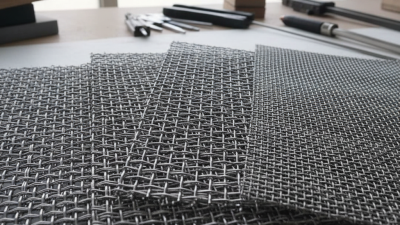
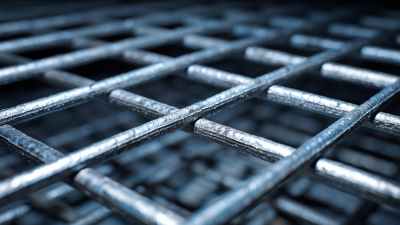
Metal mesh is a network of metal wires or strips with openings for air, liquids, or particles to pass through. Its structure depends on how the strands meet. Woven mesh crosses wires over and under on a loom; welded mesh joins straight wires at intersections. Expanded metal is slit and stretched into diamond-shaped openings, while perforated sheet is punched or cut. These products can look similar at a glance. They are not interchangeable.

Material and manufacturing method affect strength, corrosion resistance, and cleaning. The International Stainless Steel Forum’s Stainless Steel in Figures 2024 reports 58.4 million tonnes of stainless steel production in 2023, up 4.6% from 2022. That figure describes stainless steel production, not mesh output. ASTM E2016-22 specifies industrial woven wire cloth, including key details such as mesh count and wire diameter. Those details influence particle retention and flow.

On a shop floor, a technician might check a sample with calipers, inspect weld consistency, and feel for burrs along a trimmed edge. Small changes matter. Finer openings can capture smaller particles but may clog sooner; thicker wires can support more load while reducing open area. A drawing alone may not reveal the trade-off. Confirm dimensions against operating conditions, including temperature, tension, surface finish, and cleaning method.

Key Properties That Support Industrial Performance

Why Choose Metal Mesh for Industrial Applications?

Key Properties That Support Industrial Performance

Metal mesh supports industrial work through its balance of strength, airflow, and open area. In a filtration housing, the openings can let fluid pass while retaining larger particles. In a machine guard, sturdy wire can provide visibility and help separate workers from moving components. Performance depends on the alloy, wire diameter, opening size, and weave. Stainless steel may suit damp or washdown areas, while other metals may fit different temperature, weight, or cost requirements. No mesh is ideal for every setting.

Tips: Match mesh specifications to the actual load and operating environment. Check opening size, wire thickness, and material compatibility before ordering. Inspect cut edges and mounting points; damage or poor support can affect service life.

Mesh is also practical to fabricate, cut, and form into panels or baskets. Its open structure can reduce weight compared with a solid sheet of similar dimensions, though the finished part still needs adequate support. One detail is easy to miss: smaller openings can restrict flow and collect debris faster. I would not choose by strength alone. Consider cleaning access, vibration, corrosion exposure, and how often the component will be inspected. A small test panel can reveal issues that a specification sheet may not show.

Common Industrial Uses Across Different Sectors

Why Choose Metal Mesh for Industrial Applications?

Common Industrial Uses Across Different Sectors

Metal mesh serves different purposes across industry: separating, screening, guarding, and ventilating. In mining, woven screens sort crushed stone by size, while perforated panels can handle heavier loads. Food-processing facilities use stainless-steel mesh baskets and conveyor surfaces that allow water and air to pass through. In factories, mesh guards help shield workers from moving equipment while preserving visibility. A useful fit. But material, opening size, wire diameter, and cleaning requirements all matter; one specification rarely suits every task.

Water treatment is another important application. Screens catch debris before it reaches pumps and downstream equipment. The U.S. Environmental Protection Agency’s 2022 Clean Watersheds Needs Survey estimated $630.1 billion in wastewater infrastructure capital needs over 20 years. That figure describes infrastructure needs, not mesh spending, but it highlights the scale of upgrades where screening equipment may be relevant. Mesh also appears in agricultural grading, building ventilation, and automotive filtration. Conditions differ sharply. Abrasion, corrosion, heat, and frequent washdowns can shorten service life if overlooked.

Tips: Match the alloy to the operating environment, then check aperture size against the particles or objects being screened. Ask for load and corrosion data, and inspect sample panels under real working conditions. Small trials help. They can reveal blinding, clogging, or cleaning problems before a full installation.

How Metal Mesh Compares With Alternative Materials

Metal mesh is often compared with polymer filter cloth and perforated metal sheet. Its main advantage is open area: air, liquid, or light can pass through while the structure retains particles or guards equipment. On a factory floor, that can mean clearer sightlines through a machine guard and less resistance across a ventilation screen. Small detail. Mesh openings and wire thickness must match the actual load and particle size.

Material choice matters as much as the pattern. Polymer screens are light and do not rust, but heat, abrasion, or process chemicals may shorten service life. Perforated plate is rigid and handles impact well, though its open area depends on hole size and spacing. Stainless or coated mesh can resist corrosion, but neither is immune to the wrong chemistry or neglected cleaning. AMPP’s 2016 IMPACT study estimated corrosion costs at US$2.5 trillion annually, about 3.4% of global GDP; it also estimated that applying existing corrosion-control practices could save 15–35%. That is industry-wide context, not proof that mesh will reduce a specific plant’s costs.

In practice, compare replacement intervals, cleaning access, pressure drop, and downtime—not purchase price alone. A fine mesh can clog with sticky dust; a coarse one may let unwanted material through. The right answer can be less tidy than a catalog suggests. Test samples under real operating conditions, and record what fouls, bends, or wears first.

Why Choose Metal Mesh for Industrial Applications? — How Metal Mesh Compares With Alternative Materials

Performance Dimension Woven Metal Mesh Perforated Metal Sheet Expanded Metal Polymer Mesh Woven Filter Fabric
Construction Interlaced metal wires form a regular pattern of openings. Holes are punched or drilled into a continuous metal sheet. A sheet is slit and stretched into a network of connected strands. Polymer strands are woven, knitted, or formed into a mesh. Textile fibers are woven into a porous fabric.
Opening and filtration options Available in a wide range of openings and wire diameters; suitable for screening and many filtration tasks. Hole size and spacing are selectable, but fine filtration is generally less practical than with fine woven mesh. Openings are typically suited to coarse screening, guarding, and separation rather than fine filtration. Can provide fine openings; performance depends on polymer, weave, and operating conditions. Can provide fine particle retention, with pore structure and permeability depending on fiber and weave.
Airflow and flow-through High open area is possible, supporting airflow or liquid flow while retaining selected particle sizes. Flow capacity depends on hole size, spacing, and sheet thickness; solid areas add flow resistance. Often offers substantial open area for ventilation, drainage, and coarse screening. Can allow good flow, though strand shape and mesh geometry affect pressure drop. Flow is controlled by fabric permeability and can be reduced by fine particle loading or clogging.
Temperature capability Often suitable for higher-temperature service when the alloy and construction are selected for the operating conditions. Similar to metal mesh when made from a comparable alloy and thickness. Similar to other metal forms; performance depends on alloy, thickness, and load. Usually more limited than metal; allowable temperature depends strongly on polymer type and exposure time. Varies by fiber; many common synthetic fabrics have lower temperature limits than metal mesh.
Mechanical durability Metal wires can resist abrasion and impact; fine meshes may deform or be damaged if unsupported or overloaded. Continuous sheet sections can provide good rigidity and impact resistance. Connected strands provide a durable, open structure, but edges and strand geometry should be considered in handling. Lightweight and flexible; may stretch, tear, or wear depending on polymer and application. Flexible and often lightweight; abrasion, tearing, and fatigue resistance vary by fiber and weave.
Corrosion and chemical resistance Depends on alloy and environment; selecting a compatible corrosion-resistant metal is essential. Depends on the metal or coating, as with woven metal mesh. Depends on the metal or coating, as with other metal forms. Can resist particular chemicals well, but compatibility must be checked for the specific polymer and exposure. Depends on fiber chemistry; some chemicals, solvents, or cleaning agents can damage the fabric.
Cleaning and reuse Often washable and reusable; cleaning method must suit the alloy, mesh size, and trapped material. Rigid surfaces are generally accessible for cleaning, though small holes can retain debris. Open geometry can be relatively easy to rinse, but edges and strand intersections may collect material. May be washable, but heat, solvents, and mechanical cleaning can damage some polymers. Can often be cleaned, although fine pores may retain particles and cleaning can affect fabric integrity.
Common industrial uses Screening, filtration, guards, vents, strainers, and process equipment. Machine guards, panels, vents, screens, and protective covers. Walkways, platforms, guards, ventilation panels, and coarse screening. Lightweight screens, agricultural uses, fluid screening, and applications requiring nonmetallic materials. Dust collection, liquid filtration, dewatering, and separation processes.
Relative cost considerations Varies with alloy, wire diameter, weave, opening size, and finishing; fine or specialty mesh can cost more. Depends on sheet alloy, thickness, hole pattern, and fabrication requirements. Often economical for large-area, coarse-open structures; cost varies by material and strand dimensions. May be economical for lightweight service, depending on polymer, mesh specification, and expected service life. Cost depends on fiber, weave, filtration performance, and replacement frequency.

Selection note: These are general comparisons, not guaranteed ratings. Actual performance depends on material grade, opening size, construction, temperature, pressure, chemical exposure, cleaning method, and installation. Confirm suitability against the specific operating conditions.

Factors to Consider When Selecting Metal Mesh

Selecting industrial mesh starts with the task, not the alloy. Define the material being screened, expected particle size, flow rate, and operating temperature. A 100-micron opening may retain fine particles but restrict flow if the mesh blinds quickly. Check aperture, wire diameter, weave, and tolerances together; nominal opening size alone can mislead.

Match the metal to the operating environment. Moisture, salt, cleaning chemicals, and heat can all affect service life.

The 2016 NACE IMPACT study estimated global corrosion costs at US$2.5 trillion annually, or 3.4% of global GDP. It also reported that better corrosion management could save 15–35% of those costs. These are economy-wide estimates, not mesh-specific predictions, but they show why alloy choice deserves careful review.

Stainless steel may suit many wet processes; aggressive chemistry may require a more resistant alloy.

Consider installation and maintenance, too. Will the panel vibrate, face pressure, or need frequent washing? Ask for test data under conditions close to the real process, and verify cleaning methods won’t damage the wire.

There is no perfect mesh. A finer weave can improve retention, yet raise pressure drop and cleaning demands. That trade-off is easy to underestimate. A small pilot panel may reveal problems before a full installation.