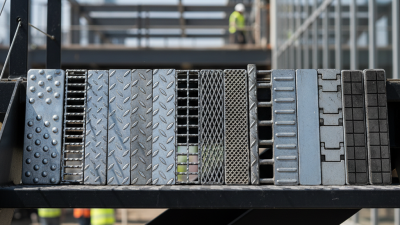
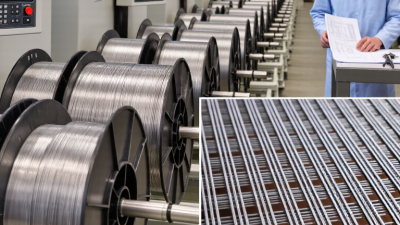
Choosing steel stair treads is not simply a matter of selecting the thickest metal or the lowest price. On real projects, small details often decide whether a staircase feels secure, lasts through harsh weather, and remains practical to maintain. The correct tread must match the stair’s load, width, support structure, traffic level, and surrounding environment.
This guide presents ten practical tips for choosing steel stair treads with greater confidence. It examines material grade, tread thickness, surface pattern, slip resistance, drainage, corrosion protection, nosing design, fabrication accuracy, installation requirements, and long-term maintenance. A factory floor may need serrated grating, while an indoor office staircase may require a quieter and more refined surface. Conditions matter.
Look closely.
Experience shows that polished steel can appear impressive under showroom lighting, yet become uncomfortable or slippery when wet. Galvanizing usually improves outdoor durability, but it can alter the surface appearance and affect precise fitting. These trade-offs deserve attention before ordering. Measurements should be checked at the site, not copied blindly from an old drawing.
Reliable suppliers should provide clear specifications, load information, material documentation, and consistent quality records. However, paperwork alone does not prove suitability. Inspect welds, edges, cutouts, and coating coverage when possible. Some recommendations may need adjustment after reviewing actual site conditions. That is not a weakness; it is responsible decision-making. With careful comparison, the ten tips below can help buyers choose steel stair treads that balance safety, durability, comfort, and installation value.
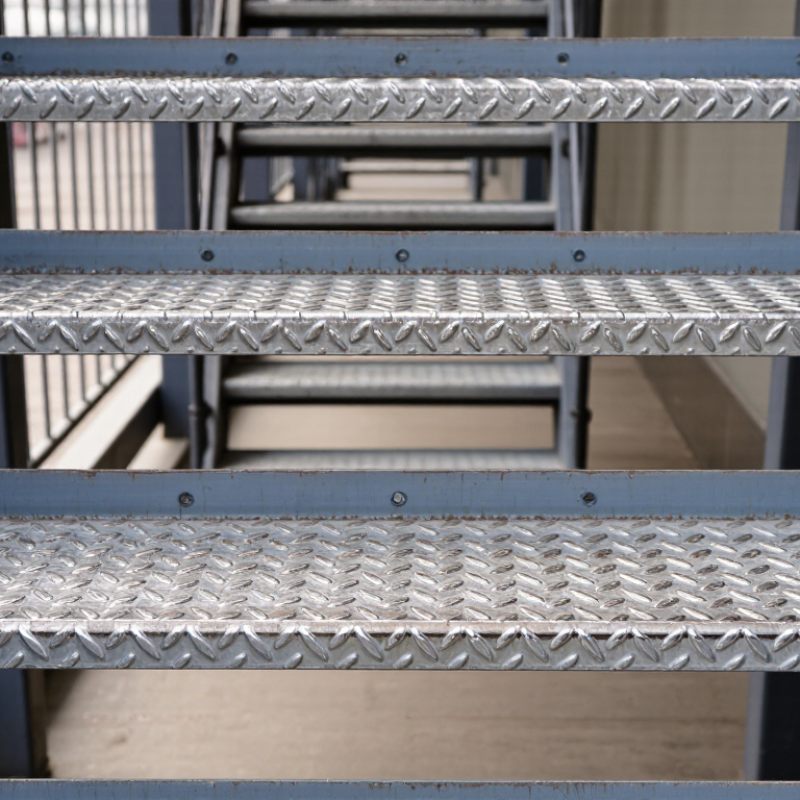
Steel stair treads should be selected by duty class, not appearance. Start with the real load case: pedestrians, wheeled carts, pallet jacks, or maintenance equipment. A quiet office stair and a wet plant entrance do not deserve the same specification. Define peak daily traffic, impact frequency, tread span, and concentrated loads before comparing profiles.
Traffic data makes the choice less subjective. The U.S. Bureau of Labor Statistics reported more than 200,000 days-away-from-work cases involving falls, slips, and trips in recent annual surveys. That figure does not prove every incident began on a stair, but it shows why grip and drainage require serious attention. OSHA 1910.25 also requires stairways to provide safe footing and consistent dimensions. In practice, I check nosing visibility, opening size, walking direction, and whether debris can collect beneath the tread. Small details matter.
Service life should be expressed in years and conditions. Consider moisture, salt, chemicals, temperature changes, cleaning methods, and expected coating damage. Galvanized steel may suit a damp exterior, while a coated or stainless option may fit a harsher process area. It is tempting to select the heaviest tread and move on. That can waste money and still miss corrosion or slip risks. Ask for load-test evidence, material certificates, and a documented duty classification. The right answer is sometimes less obvious. Recheck it against actual site behavior after installation.
Choosing steel stair treads starts with the load path, not the surface pattern.
Under the stated IBC criterion, stairs must be checked for a 100-psf uniform live load and a 300-lb concentrated load. Confirm the currently adopted edition and local amendments before ordering. These requirements may apply differently to stairs, landings, or related components. Ask a licensed structural professional to review the project conditions.
Small detail. A tread can feel rigid yet fail at its supports.
Measure clear span, bearing length, tread depth, and support spacing in the field. Record them carefully. Select a tread profile that resists bending between supports, not merely one that looks heavy. Check the 300-lb load where it may govern, often near the center or edge of a step.
Review connection capacity too. Strong steel can be undermined by thin welds, weak bolts, or flexible stringers. Deflection matters. Excess movement can loosen finishes and create complaints, even when strength calculations pass.
Specify slip resistance for wet footwear, drainage through open areas, and a finish suited to the environment. Inspect welds, bearing points, and tread alignment during installation.
Keep mill certificates, shop drawings, load calculations, and inspection records together. Do not rely on a catalog rating alone. It may assume different spans or supports. Recheck those assumptions on site, especially when field dimensions differ from the drawings.
Safe steel stair design begins with geometry, not surface finish. Keep risers between 6.5 and 10 inches, and make every riser equal. Use treads at least 9.5 inches deep, measured consistently from nosing to nosing. Small variations can catch a boot toe. People notice them late.
On site, measure the total floor-to-floor height before cutting steel. Divide that height into equal risers, then check the actual field dimensions again. My early layouts looked correct on paper, but a slight slab difference changed the final step. That mistake taught me to build a temporary mock-up. Walk it with work boots. Check knee clearance, headroom, and the natural landing position. A comfortable stair should not force a long stride or a cramped step.
Add a clear nosing, firm traction, and drainage paths where water may collect. Perforated or serrated surfaces can improve grip, but sharp edges need careful finishing. Confirm welds, fasteners, and supporting angles during installation, not only during final inspection. Verify local construction requirements with a qualified professional, because acceptable dimensions can vary by building use. Record each measurement. Recheck the first and last risers after coatings or flooring are installed. Finish thickness matters. A few missed millimeters can disturb an otherwise dependable climb.
OSHA 1910.24 requires fixed stair treads to be reasonably slip-resistant. Nosings must also have a nonslip finish. The rule does not prescribe one friction coefficient. Therefore, tread selection needs site-specific judgment.
The Bureau of Labor Statistics recorded 865 fatal workplace injuries from falls, slips, and trips in 2022. That figure represents about one-fifth of all fatal work injuries. NIOSH also identifies slips, trips, and falls as persistent occupational hazards. These reports support a practical choice: use serrated or perforated steel treads where oil, water, mud, or snow may collect.
Open designs help drainage. Serrated edges can improve contact under work boots. However, open grating is not automatically safer.
Small openings may trap debris, while large openings can affect footing or accessibility. Check the walking direction, tread depth, nosing visibility, and nearby lighting before approval.
A careful inspection should include wet and dry conditions. Look for worn serrations, polished metal, loose fasteners, and damaged nosings. A clean tread can still become slippery after contamination.
That is an easy mistake to overlook. Maintenance records, slip-testing data, and installation drawings provide stronger evidence than appearance alone. OSHA compliance should be verified against the complete stair design, not the tread surface alone.
Choosing steel stair treads starts with the environment, not appearance. ASTM A123/A123M covers hot-dip zinc coatings on fabricated iron and steel products. It does not approve every paint or surface treatment.
Select steel with predictable chemistry and enough thickness for the stair load. High silicon or phosphorus can produce a thick, dull zinc layer. That look is not automatically a failure. Confirm the steel grade and chemistry with the galvanizer. Check tread dimensions, drainage holes, and weld design before dipping. Trapped acid or zinc can cause dangerous pressure during processing. Small details matter. Avoid sealed hollow sections. Specify ASTM A123/A123M on the purchase order, including the required coating category. Ask for coating thickness or coating mass records. Use a certified magnetic gauge during inspection. Measure several areas, not only the easiest edges. Edges can differ.
Match the coating requirement to the thickest steel component, because ASTM categories depend partly on material thickness. Confirm whether the tread includes plates, angles, or welded supports. Their coating behavior may vary. Inspect for bare spots, heavy runs, sharp zinc drips, and blocked holes. A rough surface can affect fit, especially around nosings and bolted connections. Repair minor damage with an approved zinc-rich method, following the governing specification. Do not casually paint over a questionable area. It may hide the problem. In field work, check cuts and welds again after installation. A perfect factory finish can be damaged by drilling. No checklist catches everything. Reconsider the specification when salt spray, standing water, or frequent washing changes the exposure.
| No. | Selection Dimension | Practical Recommendation | Relevant ASTM A123 Consideration | Verification Point |
|---|---|---|---|---|
| 1 | Confirm the base steel grade | Use a structural carbon steel grade suitable for the calculated live load, dead load, span, and support arrangement. Common structural grades include ASTM A36 and ASTM A572 Grade 50, when specified by the design engineer. | ASTM A123/A123M addresses hot-dip galvanized coating requirements; it does not determine the stair tread’s structural capacity or replace the base-steel specification. | Request the material test certificate and confirm the steel grade, yield strength, tensile strength, and thickness. |
| 2 | Specify hot-dip galvanizing | For exposed steel treads, select a hot-dip galvanized finish after fabrication whenever practical. This provides a metallurgically bonded zinc coating on accessible steel surfaces. | Cite ASTM A123/A123M for fabricated iron and steel products. Small hardware and fasteners may fall under other galvanizing standards, such as ASTM A153/A153M. | Ensure the purchase specification names the applicable ASTM standard and the required coating inspection method. |
| 3 | Match coating thickness to steel thickness | Use the product’s controlling steel-thickness category when establishing the minimum zinc coating requirement. |
Typical ASTM A123/A123M minimum coating thickness values for structural steel are:
• ≥ 6.0 mm: 100 µm average, 85 µm local • 3.0 to < 6.0 mm: 85 µm average, 75 µm local • 1.5 to < 3.0 mm: 75 µm average, 65 µm local • < 1.5 mm: 65 µm average, 55 µm local |
Verify the current edition of ASTM A123/A123M and identify whether the tread is classified as structural steel, plate, strip, pipe, or another product category. |
| 4 | Choose a tread surface that drains water | Prefer serrated grating, punched plate, or another open-drainage design for outdoor stairs, wet areas, and locations exposed to snow or process liquids. | ASTM A123 protects the steel from corrosion but does not define slip resistance, opening geometry, drainage performance, or pedestrian safety. | Check the opening size, bearing-bar orientation, nosing profile, drainage path, and applicable local accessibility requirements. |
| 5 | Evaluate the service environment | Use galvanized steel for many atmospheric, outdoor, industrial, and humid environments. For continuous immersion, strong acids, strong alkalis, or high-chloride exposure, obtain a corrosion-engineering assessment. | ASTM A123 specifies coating quality and thickness, not a guaranteed service life for every environment. | Record humidity, salt exposure, chemical concentration, temperature, immersion time, and expected maintenance conditions. |
| 6 | Design for complete drainage and venting | Provide suitable vent and drain openings in hollow sections, boxed nosings, and overlapping components to prevent trapped cleaning solution, moisture, and molten zinc. | Proper fabrication improves coating coverage, reduces zinc pooling, and helps prevent blocked vents or drainage defects during hot-dip galvanizing. | Review fabrication drawings with the galvanizer before welding, drilling, and final assembly. |
| 7 | Control welding and fabrication details | Complete welding, drilling, cutting, and edge preparation before galvanizing. Avoid unnecessary weld spatter, tight crevices, and inaccessible contact surfaces. | ASTM A123 acceptance depends on the condition and accessibility of the fabricated product. Uncoated areas caused by fabrication may require repair according to the standard. | Inspect welds, seams, corners, holes, and concealed interfaces before shipment to the galvanizing facility. |
| 8 | Specify post-galvanizing repairs | Repair small damaged or uncoated areas after handling, field drilling, or installation using an approved zinc-rich repair system. | ASTM A123/A123M provides requirements for repairing damaged or uncoated areas, including the preparation and application of zinc-based repair materials. | Define repair material, surface preparation, application thickness, and inspection records in the project specification. |
| 9 | Check coating uniformity and appearance | Accept normal galvanizing variations such as a matte or bright appearance, provided the coating meets the applicable requirements and does not compromise use. | ASTM A123 acceptance is primarily based on coating thickness, adherence, and permissible surface condition rather than color uniformity alone. | Use magnetic thickness measurements and the inspection procedures specified by the applicable ASTM standard. |
| 10 | Verify the complete stair assembly | Check tread span, bearing length, support spacing, fasteners, nosing projection, guard interfaces, and installation tolerances in addition to corrosion protection. | ASTM A123 covers hot-dip galvanized coating requirements, not structural design, stair geometry, load ratings, or building-code compliance. | Obtain engineer-approved calculations, product drawings, inspection reports, and installation records before acceptance. |