Why Choose Steel Stair Treads for Industrial Projects?
Industrial stairs face heavier demands than ordinary building steps. Forklifts pass nearby. Oil reaches the floor. Rainwater enters through open loading doors. Steel stair treads provide a practical response to these conditions when properly specified.
The U.S. Bureau of Labor Statistics reported 885 fatal workplace injuries involving falls, slips, and trips in 2023. That figure shows why stair traction deserves serious attention. OSHA’s Walking-Working Surfaces requirements also emphasize safe stair design, maintenance, and consistent dimensions. Serrated steel stair treads can improve grip by cutting through water, mud, and light debris. Open treads can also support drainage and ventilation. That matters around processing lines, platforms, and outdoor access towers.
Steel also offers high structural strength, fire resistance, and predictable fabrication. Galvanized or stainless options may resist corrosion better than untreated materials. However, steel is not magic. Poor coating selection, worn nosing, or incorrect installation can still create hazards. A specification should consider load ratings, environment, cleaning chemicals, tread geometry, and maintenance access.
Dr. David Michaels, former Assistant Secretary of Labor for OSHA, stated, “We know that falls are preventable, and we know how to prevent them.” His point applies directly to stair selection. Reliable protection begins before fabrication. It begins with evidence, site experience, and disciplined detailing. The 2023 BLS data supports the urgency, while OSHA guidance provides a practical framework. Steel stair treads are often the stronger choice, but only when engineers match the product to real operating conditions. That step is sometimes overlooked. It should not be.
Why Choose Steel Stair Treads for Industrial Projects?
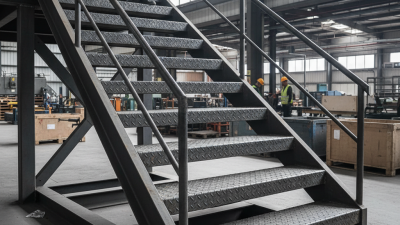
Industrial stair treads are the horizontal surfaces workers step on while moving between elevations. They form part of a complete access system, not a separate decorative component. In factories, warehouses, and maintenance areas, treads must support repeated foot traffic, tools, and occasional impact. Their main functions include safe access, stable footing, drainage, and visual guidance.
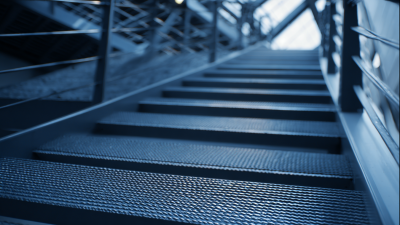
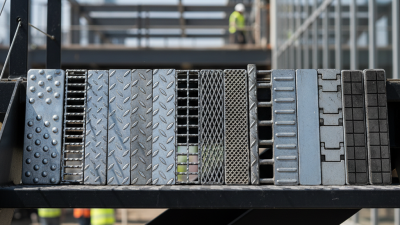
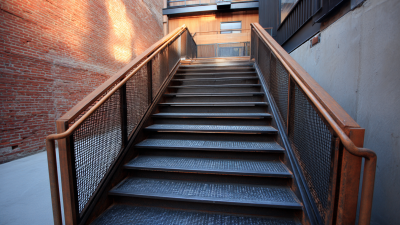
A typical steel stair tread uses a formed plate or open grating panel. The surface may include perforations, serrations, or raised patterns for traction. Side supports connect the tread to stringers, while welded or bolted joints transfer loads through the stair assembly. A front nosing can improve edge visibility and reduce slipping near the step edge. Small details matter here. Poorly finished welds may create sharp points. Uneven spacing can cause awkward foot placement.
Steel suits many industrial projects because it offers high strength, dimensional stability, and practical fabrication. It can handle demanding loads without requiring unusually thick sections. Open steel grating also allows water, dust, and small debris to pass through, keeping the walking surface clearer. In real inspections, corrosion often begins around cut edges, bolts, and trapped moisture. Protective coatings and regular checks remain essential. Steel is not automatically maintenance-free. A drainage-friendly design can still fail when cleaning is neglected or damaged coating goes unnoticed. Engineers should verify load ratings, slip resistance, connection details, and local safety requirements before installation.
Industrial stair treads must withstand repeated foot traffic, equipment movement, and demanding service conditions. This chart compares representative minimum specified yield and tensile strengths of commonly used structural metals.
Values shown are representative minimum specified strengths in MPa: ASTM A36 carbon structural steel, ASTM A240 Type 304 stainless steel, and ASTM B221 6061-T6 aluminum. Actual performance depends on tread thickness, span, support spacing, surface pattern, corrosion exposure, and installation quality.
Why Choose Steel Stair Treads for Industrial Projects?
Key Reasons Steel Treads Suit Demanding Industrial Environments
Steel treads earn their place in demanding industrial environments through strength, stability, and practical maintenance. On plant walkways, they handle heavy foot traffic, wheeled loads, and occasional impacts from tools. Their welded or bolted construction also reduces movement under repeated use. That stability matters.
Serrated steel surfaces help workers maintain footing near machinery, tanks, and loading areas. Rain, oil, and fine dust can make ordinary steps dangerous. Open designs let water and debris pass through instead of collecting underfoot. Maintenance crews can inspect the structure quickly and replace damaged sections with limited disruption. They are not delicate.
Engineers still need to match tread thickness, span, support spacing, and load ratings to each site. They should also review local safety requirements and the surrounding corrosion risks. Galvanized finishes can protect steel outdoors, while specialized coatings may suit chemical processing areas. Field experience exposes a less convenient truth: coatings can wear faster near abrasive traffic. A damaged tread can become a trip hazard before it looks seriously weakened. Regular inspections, secure fasteners, and clear drainage details remain essential. Steel is reliable, but poor detailing can undermine it.
| Evaluation Dimension | Representative Steel Tread Data | Industrial Advantage | Specification Consideration |
|---|---|---|---|
| Structural Strength | Common structural carbon-steel grades have nominal yield strengths of approximately 235–355 MPa, depending on the selected grade and product standard. | Provides a strong load-bearing base for access stairs, platforms, maintenance walkways, and equipment areas. | Actual load capacity depends on tread span, bearing bars, support spacing, welds, stair width, and the design load specified by the engineer. |
| Load and Impact Resistance | Steel has a density of approximately 7,850 kg/m³ and a high modulus of elasticity of about 200 GPa. | The rigid material helps limit deflection and withstand repeated foot traffic, tool movement, and localized service impacts when properly designed. | Use a structural calculation for concentrated loads, rolling loads, vibration, and accidental impact rather than selecting by material alone. |
| Open-Grating Drainage | Typical open steel grating provides a large free area, often approximately 60–80%, depending on bar spacing and construction. | Allows water, oil, dust, snow, and small process debris to pass through instead of pooling on the walking surface. | Openings must be selected to suit pedestrian safety, footwear, tools, wheels, and the applicable workplace regulations. |
| Slip Resistance | Serrated or punched nosing profiles are commonly used to increase edge grip; performance varies with surface geometry, contamination, and footwear. | Improves traction in areas exposed to water, oil, mud, dust, or industrial residues compared with a smooth flat surface. | Specify a tested slip-resistance classification or project test method when the site has high contamination or high fall consequences. |
| Fire Performance | Bare steel is non-combustible under normal building-material classifications, although paints, sealants, and attached components may have different fire properties. | Does not add combustible fuel to an industrial access route and maintains a robust metal platform in many high-temperature service areas. | Fire resistance of the complete stair assembly still depends on supports, connections, coatings, surrounding materials, and the applicable fire code. |
| Corrosion Protection | Hot-dip galvanizing, protective paint systems, weathering steel, and stainless steel are common corrosion-control options for steel treads. | Allows the tread system to be matched to indoor, outdoor, humid, coastal, chemical, or wash-down environments. | Select protection according to corrosivity, chemical exposure, temperature, drainage, maintenance access, and expected service life. |
| Temperature Capability | Steel retains useful structural capacity across a wide industrial temperature range, but strength and stiffness decrease as temperature rises. | Suitable for many plant rooms, boiler areas, processing facilities, and outdoor installations when the design temperature is controlled. | High-temperature applications require engineering review of steel grade, thermal expansion, connections, coatings, and fire exposure. |
| Dimensional Flexibility | Common fabricated tread widths are approximately 600–1,200 mm, with tread depths often around 240–300 mm; project dimensions vary. | Can be fabricated for straight stairs, access towers, platforms, maintenance routes, and replacement sections. | Confirm stair angle, rise, going, clear width, nosing, landing dimensions, handrails, and headroom against the governing standard. |
| Installation and Maintenance | Steel treads can be supplied as welded, bolted, or removable panels and can be repaired or replaced using standard metalworking methods. | Supports practical installation, modular maintenance, and replacement of individual damaged sections without rebuilding the entire access system. | Bolted removable designs can improve maintenance access; weld quality, fastener protection, and galvanizing repair must be controlled. |
| Standards and Verification | Industrial access stair design is commonly reviewed against applicable requirements such as OSHA walking-working-surface rules or EN ISO 14122 series provisions. | A standards-based specification improves consistency for dimensions, guarding, access, loading, and safe use. | The governing requirements depend on the project location, industry, building classification, and whether the stair is for general access or machinery access. |
Industrial stairs face heavier abuse than office stairways. Steel treads handle carts, tools, wet boots, and repeated impacts. OSHA 29 CFR 1910.25 requires fixed stairs to support five times their maximum intended load, with a minimum capacity of 1,000 pounds. That figure gives engineers a practical design baseline, not permission to ignore site conditions.
Safety depends on more than strength. The U.S. Bureau of Labor Statistics recorded 865 fatal workplace injuries from falls, slips, and trips in 2022. A serrated steel tread can create biting edges under footwear, while open grating helps water, oil, and snow drain away. However, slip resistance changes with contamination, shoe material, tread wear, and walking direction. No tread is perfect. That assumption needs challenging.
Independent testing should match the real environment. ANSI and ASTM methods can measure friction, but results may not represent an oily maintenance platform or a rain-exposed access stair. Specify the test method, surface condition, and acceptance value before installation. Field inspections should check loose fasteners, bent nosings, corrosion, and clogged openings. In practice, a strong tread can still become unsafe when maintenance is delayed. Designing for drainage and replacing damaged sections early often protects workers better than relying on material strength alone.
Material selection affects load capacity, maintenance, and worker safety. Carbon steel suits heavy-duty platforms and frequent impact. Stainless steel performs better near washdown areas, chemicals, and humid process zones. Open grating improves drainage, while serrated surfaces increase traction around oil or water. However, no material solves every site problem.
Surface Treatment Surface treatment must match the exposure. Hot-dip galvanizing creates a zinc barrier and sacrificial protection, following ASTM A123 requirements for fabricated steel. Paint systems can add color coding and extra chemical resistance, but damaged edges demand prompt repair. The NACE IMPACT study estimated global corrosion costs at 2.5 trillion US dollars annually, equal to about 3.4% of global GDP. That figure shows why a low purchase price can become expensive after installation.
Corrosion protection should consider cut edges, welds, fasteners, and trapped moisture. Duplex systems, combining galvanizing and paint, can extend service life when preparation and inspection are controlled. Designers should review ISO 12944 exposure categories, drainage details, and expected cleaning methods before specifying a coating. In practice, small gaps often collect grit and water. They are easy to overlook. A robust tread can still fail early if the surrounding structure holds moisture. Periodic visual checks, slip testing, and thickness inspections provide useful evidence, though inspection schedules are sometimes too optimistic. The specification should leave room for correction.
Why Choose Steel Stair Treads for Industrial Projects?
Selecting industrial stair treads starts with the site, not the catalog. Measure stair width, support spacing, traffic levels, and expected loads. Steel treads suit busy facilities because they resist impact and daily wear. However, the heaviest option is not always the best choice. Excess weight can complicate lifting and increase structural demands. Confirm local building and workplace requirements before ordering materials.
Surface design matters under real working conditions. Choose serrated or perforated surfaces where oil, rain, dust, or ice may collect. Check the opening size carefully, especially near small tools or narrow footwear. A contrasting front edge can improve visibility. The nosing should provide grip without creating a trip point. These details seem minor. They are not.
Installation quality controls long-term performance. Inspect stringers and supporting steel before fitting each tread. Uneven supports can create movement, noise, and premature fatigue. Use correctly sized bolts or qualified welds, following the project specification. Protect cut edges and connection points against corrosion. Drainage also deserves attention in outdoor areas. Water trapped beneath a tread can cause problems quietly. Experienced crews still miss this step when schedules become tight. A final walk-through should check level, spacing, sharp edges, fasteners, and safe access. One overlooked gap can affect the entire stairway.