

Who Is the Best Steel Mesh Supplier in China?
Choosing the best steel mesh supplier in China takes more than comparing prices. A low quotation can hide uneven wire thickness, inconsistent openings, or poor packaging. These details matter when panels must fit a site drawing and arrive without bent edges. Ask for material specifications, production photos, sample panels, and inspection records. Then check whether the supplier can explain each document clearly.
As steel fabrication consultant Lin Wei puts it, “A dependable mesh order begins with measurable specifications, not promises.” Treat that as a practical sourcing principle, not a substitute for independent verification. Confirm the steel grade, wire diameter, aperture size, coating, tolerances, and intended application in writing. Request recent test reports and check that their product details match your order. If a supplier avoids specific answers, pause. Even a polished catalogue proves little.
This guide compares suppliers through product consistency, manufacturing capability, quality checks, communication, and delivery planning. Look closely at how mesh is cut, welded, coated, packed, and labeled. Ask what happens when inspection finds a defect. The answer can reveal more than a sales pitch. No supplier is perfect, and a sample cannot guarantee every production batch. That limitation deserves attention. With clear criteria, buyers can narrow their options and choose a steel mesh partner with evidence behind its claims.
What Steel Mesh Products Are Made in China?
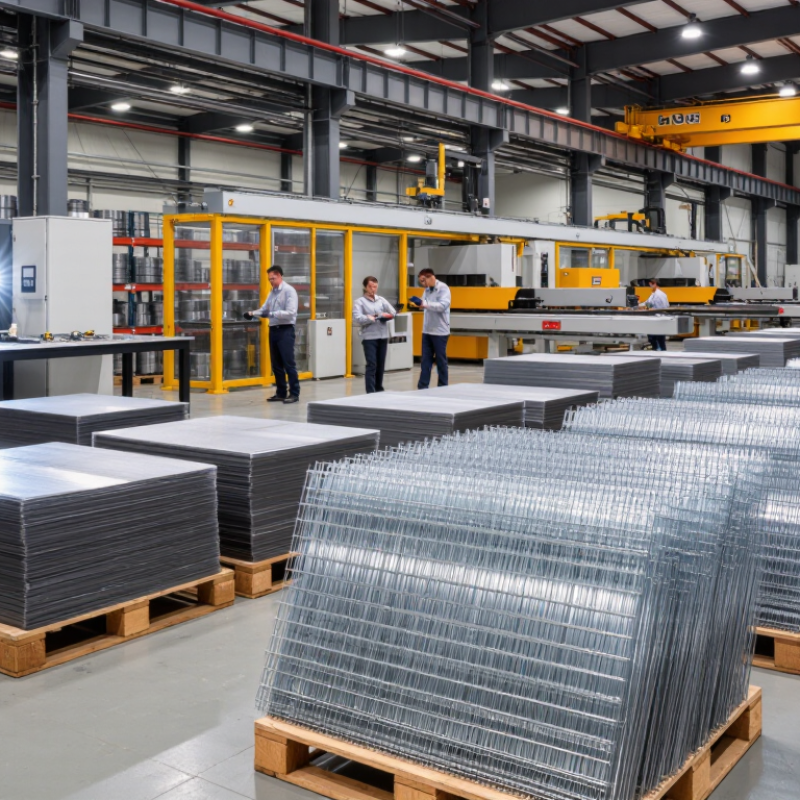
China produces a broad range of steel mesh products for construction, agriculture, transport, and industrial use. Common options include welded wire mesh, reinforcing mesh sheets, woven wire cloth, expanded metal mesh, and gabion mesh. Products may use low-carbon steel, galvanized wire, or stainless steel, depending on corrosion exposure and load needs. World Steel Association’s World Steel in Figures 2024 reports that China produced about 1,019 million tonnes of crude steel in 2023, out of roughly 1,892 million tonnes worldwide. This scale supports a diverse supply base, but it does not guarantee consistent mesh quality.
Buyers can specify wire diameter, aperture size, sheet dimensions, coating, and edge finish. For example, a 50 mm square opening behaves differently from a fine woven screen, even when both use similar wire. Ask for a sample and check weld strength, dimensions, and coating coverage before approving a large order. Details matter. A supplier’s test records and inspection process are useful evidence, though paperwork alone cannot replace a physical check. Product tolerances may also vary, so confirm them in writing.
Tips: Match the mesh to its actual use, then request a drawing and material specification. Measure several openings across the sample, not just one. If the surface coating looks uneven, ask how it was applied and inspected. I would not rely on a product photo alone; it can hide rough edges and inconsistent welds.
Who Is the Best Steel Mesh Supplier in China? - What Steel Mesh Products Are Made in China?
There is no single best supplier for every project. The right choice depends on the required product, material, dimensions, applicable specification, quality records, delivery terms, and verified samples. The product types below are commonly manufactured in China; configurations should be confirmed against the project requirements.
| Steel Mesh Product | Common Materials | Typical Construction or Options | Common Applications | What to Confirm with a Supplier |
|---|---|---|---|---|
| Welded reinforcing mesh | Carbon steel reinforcing wire or bars; galvanized options may be available for some uses. | Crossing wires are resistance-welded into square or rectangular openings. Sheet and roll formats are available, depending on wire size and product design. | Concrete slabs, floors, walls, pavements, and other reinforced-concrete work. | Wire or bar diameter, spacing, sheet dimensions, weld integrity, material grade, and the project’s applicable reinforcement specification. |
| Woven wire mesh | Stainless steel, carbon steel, or galvanized steel wire. | Wires are woven in patterns such as plain weave or twill weave. Opening size and wire diameter determine the mesh specification. | Screening, filtration, separation, guarding, and general industrial use. | Clear opening, wire diameter, weave pattern, material grade, dimensional tolerances, and whether the mesh is supplied in rolls or cut pieces. |
| Crimped wire mesh | Carbon steel, galvanized steel, or stainless steel. | Pre-crimped wires are woven together; aperture shape and rigidity depend on the wire and crimp design. | Aggregate and mineral screening, sieving, and protective screens. | Aperture size, wire diameter, crimp type, edge finish, material, and suitability for the screening equipment. |
| Expanded metal mesh | Carbon steel, galvanized steel, or stainless steel sheet. | Sheet is slit and stretched to form a pattern of connected strands and openings; it is commonly supplied in flattened or raised form. | Walkways, platforms, guards, partitions, and architectural panels. | Sheet thickness, strand dimensions, opening size, panel dimensions, finish, and load requirements where used underfoot. |
| Perforated metal sheet | Carbon steel, galvanized steel, or stainless steel sheet. | Openings are punched into sheet metal. Hole shapes, sizes, patterns, and open area can be specified to suit the application. | Screening, ventilation, machine guards, acoustic panels, and architectural finishes. | Sheet thickness, hole shape and diameter, pitch, open area, flatness, edge margins, and surface finish. |
| Chain-link fence mesh | Galvanized steel wire or polymer-coated galvanized steel wire. | Woven diamond-pattern fabric; height, mesh opening, wire diameter, and edge treatment vary by specification. | Boundary fencing, sports enclosures, and site security fencing. | Wire diameter, mesh opening, fabric height and length, coating type, coating condition, and compatibility with posts and fittings. |
| Gabion mesh | Steel wire with zinc-based metallic coating; polymer-coated options are also used. | Often made as double-twisted hexagonal wire mesh and supplied as panels or baskets with diaphragms, depending on the design. | Retaining structures, erosion control, river works, and landscape applications. | Wire diameter, mesh opening, coating specification, basket dimensions, lacing wire, diaphragms, and the applicable civil-engineering requirements. |
| Stainless steel welded mesh | Commonly stainless steel grades such as 304 or 316; the appropriate grade depends on the environment. | Wires are welded at intersections and supplied in sheets or rolls, with opening and wire dimensions specified by the buyer. | Food-processing equipment, industrial guards, architectural panels, and applications requiring corrosion resistance. | Stainless grade and traceability, wire diameter, opening dimensions, weld quality, surface condition, and suitability for the service environment. |
| Supplier evaluation | Applicable to any product type. | Compare written quotations against the same technical specification rather than comparing price alone. | Procurement planning and supplier selection. | Request a detailed datasheet, material documentation, inspection records, a representative sample where practical, packaging details, production lead time, and clear acceptance criteria. Verify that certificates and test results match the goods being supplied. |
Specification note: Mesh dimensions, coatings, grades, and tolerances vary by product and order. State the required standard or drawing, inspection method, quantity, and delivery destination in the inquiry, and confirm the final specification in the purchase contract.
Related Posts
-
Unlocking Strength: How Steel Mesh Reinforces Modern Construction Trends with 30% Increased Durability
-
Why Metal Mesh Screens Are Essential for Your Home and Business Needs
-
Top 10 Metal Mesh Screen Suppliers in China for Global Buyers?
-
Why Choose Metal Mesh for Industrial Applications?
-
2026 Best Steel Mesh Types for Global Buyers?
-
How to Choose the Right Metal Mesh Screen in 2026?