2026 Best Steel Mesh Types for Global Buyers?
Choosing the best steel mesh in 2026 is not simply a matter of comparing prices. Global buyers must match mesh type, wire diameter, opening size, coating, and production method to the real application. A fence panel, concrete reinforcement sheet, mining screen, and filtration element require very different performance. One choice cannot serve every project.
This guide examines welded, woven, expanded, perforated, galvanized, stainless steel, and coated steel mesh options. It considers strength, corrosion resistance, dimensional accuracy, installation effort, and expected service life. Practical sourcing experience shows that small details often create large results. A slightly incorrect aperture can affect material flow, safety, or assembly speed. Surface quality matters too.
Standards vary by market.
Reliable purchasing also requires more than a product photograph. Buyers should review mill certificates, inspection reports, tolerances, coating thickness, packaging methods, and traceability records. Independent testing may be valuable for demanding applications. However, documentation is not always perfect, and supplier claims still require careful verification. We may overlook shipping damage, local climate, or future maintenance costs when focusing only on unit price.
This overview offers a balanced framework for comparing steel mesh types in 2026. It does not present one universal winner. Instead, it helps engineers, distributors, contractors, and importers make clearer decisions based on evidence, operating conditions, and total value. The best result is usually the mesh that performs reliably after installation, not merely the option that looks strongest on paper.
Steel Mesh Fundamentals and How the Main Types Differ
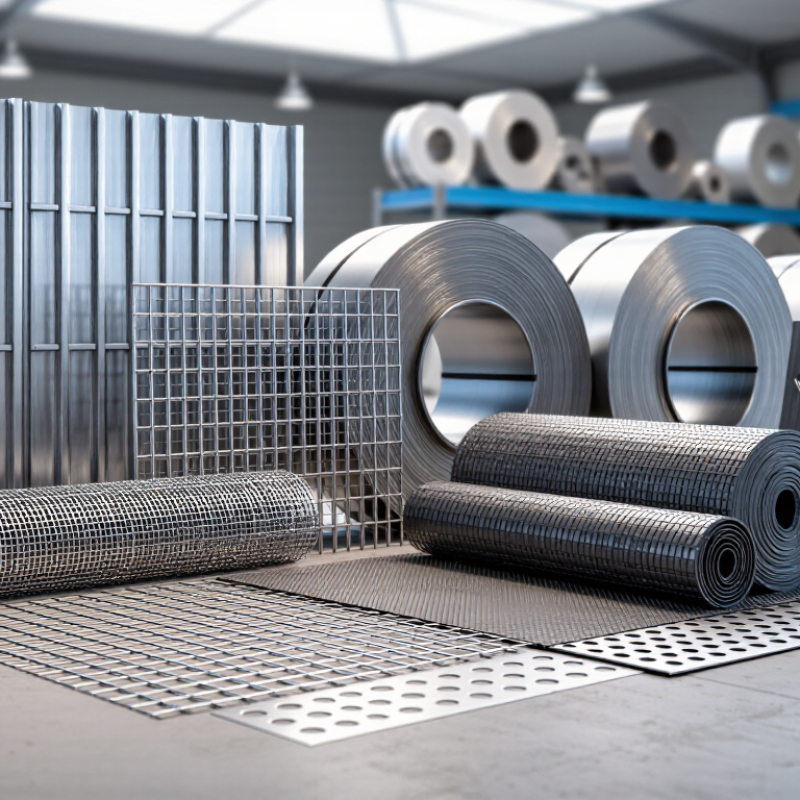
Steel mesh is made by joining or shaping steel wires, strips, or sheets into regular openings. Its performance depends on wire diameter, aperture size, steel grade, and surface treatment. These details matter more than the word “mesh” alone.
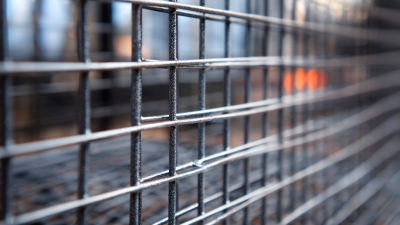
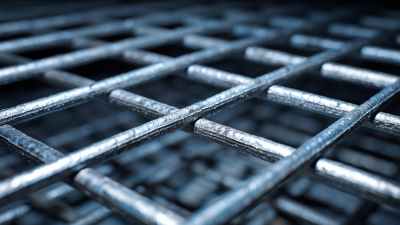
Welded wire mesh uses intersecting wires fixed at each crossing. It offers stable openings and efficient load distribution, making it suitable for reinforcement panels, cages, partitions, and industrial barriers. Woven wire mesh interlaces wires, creating flexible sheets with precise filtration openings. It can absorb slight movement better, but it may deform under heavy impact. A small opening does not automatically mean higher strength.
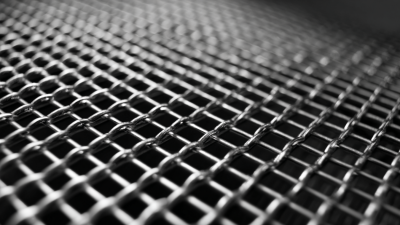
Expanded metal is cut and stretched from a solid sheet. Its diamond-shaped openings provide airflow, drainage, and a strong surface with limited waste. Perforated sheet uses punched holes, so its pattern stays rigid and visually uniform. It suits guards, screens, and acoustic or ventilation panels. In practice, buyers sometimes compare these products only by weight. That approach can fail. Opening direction, edge support, coating thickness, and installation method also affect service life. Before ordering, request measured aperture data, wire or sheet thickness, tolerances, steel grade, and coating test records. Outdoor projects may need galvanized or corrosion-resistant steel, but the environment should guide that decision. Even experienced teams should recheck drawings, because a few millimeters can change fit, airflow, and safety performance.
Welded, Woven, Expanded, and Reinforcing Mesh Compared
2026 Best Steel Mesh Types for Global Buyers?
Welded, Woven, Expanded, and Reinforcing Mesh Compared
Steel mesh selection starts with application, not appearance. Welded mesh uses intersecting wires fused at fixed points. It offers clean apertures, strong rigidity, and efficient panel installation. Woven mesh bends more easily and suits screening, filtration, and irregular surfaces. Its flexibility can be useful. It can also complicate tension control.
Expanded mesh is cut and stretched from one sheet, without welded joints. This reduces loose connections and creates useful ventilation, grip, and visibility. However, its diamond pattern changes under heavy loading. Reinforcing mesh is different. It supports concrete design and crack control, so engineers must follow project calculations and applicable standards. It should not be substituted with ordinary fence mesh.
The World Steel Association reported approximately 1.883 billion tonnes of crude steel production in 2024. That scale supports broad availability, but availability does not guarantee identical quality. ASTM A1064/A1064M covers steel wire and welded wire reinforcement requirements in many projects. EN 10223 standards address several steel wire mesh applications. Local specifications still matter. A neat comparison has limits.
Tips: Confirm aperture, wire diameter, tolerance, coating, edge finish, and loading conditions. Request mill certificates and independent test records. For coastal projects, check corrosion protection carefully. I would not choose by weight alone. A lighter mesh may install faster, yet fail the practical stiffness test. Trial samples often reveal problems that drawings miss.
2026 Best Steel Mesh Types for Global Buyers
The chart compares representative open-area levels across welded, woven, expanded, and reinforcing mesh. Higher open area generally improves airflow, visibility, drainage, and material efficiency, while the best choice still depends on load, aperture, forming method, and corrosion requirements.
Values are indicative midpoints from commonly specified commercial configurations. Typical ranges are shown in the tooltips because actual performance varies by wire diameter, opening size, strand geometry, and reinforcement design.
Key Performance Factors for Choosing Steel Mesh in 2026
Choosing the best steel mesh in 2026 requires more than comparing price or wire diameter. The mesh must match the load, opening size, climate, and installation method. For fencing, panels, reinforcement, or screening, tensile strength and yield strength reveal how the material handles stress. Small openings improve containment, but they can increase weight and shipping costs. Every detail affects performance.
Corrosion resistance deserves close attention. Galvanized mesh suits many outdoor applications, while stainless steel performs better in humid, coastal, or chemically active environments. Coating thickness matters, not just the coating name. Check weld quality, wire uniformity, edge finishing, and dimensional tolerance. A practical inspection should include calipers, coating records, and sample tests from different areas. One weak weld can reduce confidence in an otherwise strong panel.
Load calculations should consider vibration, impact, temperature changes, and long-term exposure. Ask for material certificates, test reports, and traceable production data. These documents support reliable purchasing and reduce disputes between suppliers and buyers. I have seen projects focus heavily on tensile strength while overlooking fixing hardware and drainage. That was a costly gap. The mesh was suitable, but the installation was not. Buyers should also review packaging, corrosion protection during transit, and local compliance requirements before approving a shipment. Specification sheets can look complete. They still need practical questioning.
Global Standards, Coatings, and Compliance Requirements
For global buyers, steel mesh selection should begin with the destination market, not price. Welded, woven, and expanded mesh serve different load, filtration, and protection needs. Confirm the required standard, aperture tolerance, wire diameter, and mechanical strength before ordering. ASTM, ISO, and EN references may differ, so equivalent does not always mean identical. I have seen projects delayed because a familiar standard was accepted too casually.
Tips: Request a full specification sheet, material test report, coating certificate, and inspection records. Check whether documents match the actual batch. Measure sample openings and wire diameter independently. A small mismatch can affect installation, airflow, or structural performance.
Coating choice also affects compliance and service life. Hot-dip galvanized mesh suits many outdoor applications, while polymer coatings may require color, adhesion, and weathering tests. Stainless steel can support corrosive environments, but its grade must match the chemical exposure. Ask for coating thickness, salt-spray results, and surface preparation details. Requirements for food-contact, construction, agricultural, or industrial use may be different. Local import rules can also require labeling, origin documents, or restricted-substance declarations. No checklist is perfect. Recheck every assumption with an accredited laboratory or qualified inspector before shipment.
How Buyers Can Match Steel Mesh Types to Project Needs
2026 Best Steel Mesh Types for Global Buyers?
How Buyers Can Match Steel Mesh Types to Project Needs
“Best” depends on the job, not the catalog.
Welded steel mesh suits concrete slabs, cages, and partitions because fixed intersections resist shifting during placement. Choose it when alignment and repeatable spacing matter. Woven mesh offers flexible openings for drainage screens, machine guards, and ventilation. Small apertures can trap debris. Measure twice. Expanded mesh provides strength with an open surface, making it practical for walkways, platforms, and lightweight barriers. However, its diamond pattern can complicate cutting and edge finishing.
Project conditions should drive the specification. Record the opening size, wire diameter, panel dimensions, load, temperature, and exposure before requesting quotations. Near saltwater, galvanized or stainless steel may reduce corrosion risk, but coating thickness and alloy grade still require verification. Indoor, dry service may not justify the same protection. Check weld quality, flatness, tolerances, certificates, and packing. Ask for samples. Photographs can hide uneven openings and damaged edges.
Cross-border purchasing adds another layer. Confirm metric dimensions, test methods, inspection duties, and whether the mesh arrives cut, rolled, or bundled. Freight damage is easy to overlook when panels are poorly separated. One practical mistake is selecting by price per kilogram alone; labor, waste, and replacement costs can reverse the decision. That lesson is easy to forget. A small trial panel can reveal fit, handling effort, and finishing problems before full production.