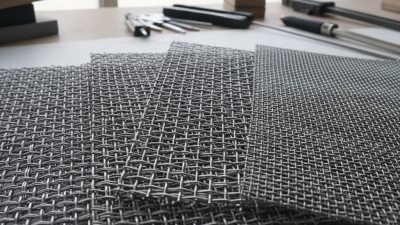
Choosing the right metal mesh screen in 2026 requires more than comparing wire diameter and price. A screen may look identical on a supplier’s website, yet behave differently under vibration, heat, abrasion, or repeated cleaning. MarketsandMarkets identifies filtration, electronics, and industrial processing as major demand areas in its Metal Mesh Market report. Grand View Research also highlights rising requirements for efficient industrial filtration and durable separation materials. These trends make technical selection increasingly important.
“Performance begins with the opening, not the product label,” says Dr. Michael J. Ellison, a wire-mesh filtration specialist. His point is practical. Mesh count alone cannot predict service life. Buyers should examine aperture size, open-area percentage, wire material, weave pattern, tensile strength, and operating temperature. Stainless steel 316 may suit corrosive washdown areas, while galvanized steel can serve less demanding environments. The wrong alloy can rust around a clean-looking frame.
Start with the process, not the catalogue. Measure the particles. Record pressure, moisture, cleaning chemicals, and impact exposure. Ask for test certificates, dimensional tolerances, and batch traceability. ISO 9044 and ASTM E11 provide useful references for woven-wire mesh classification and testing.
Some choices remain uncertain. Laboratory results may not reflect dusty production floors. A finer mesh can improve separation, but it may also increase pressure loss and clogging. That trade-off is easy to underestimate. In 2026, the most reliable buyers will compare verified data, supplier experience, and field performance before approving a metal mesh screen. A lower purchase price is not always a lower operating cost.
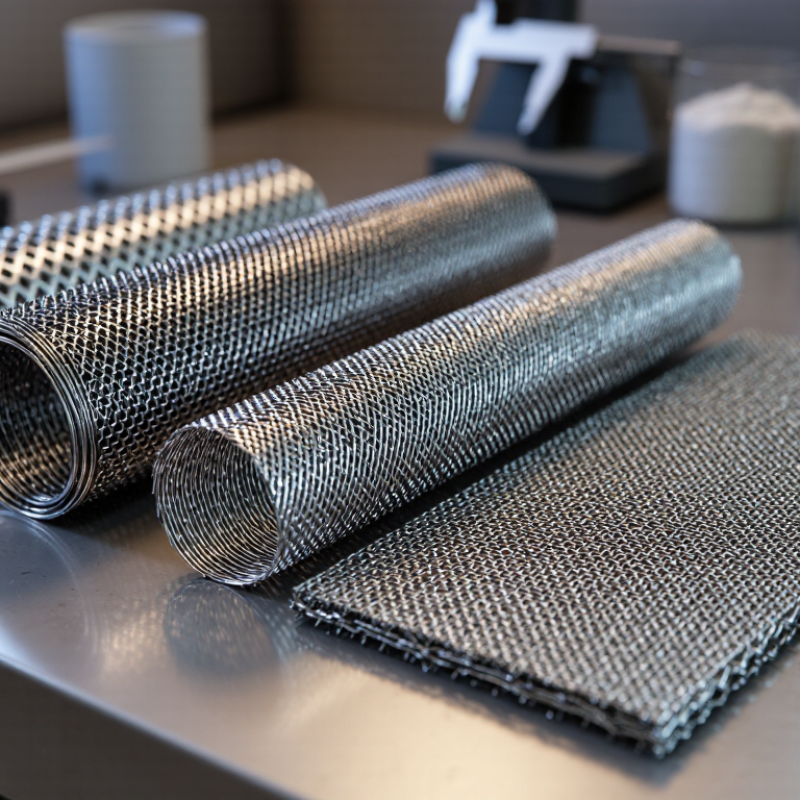
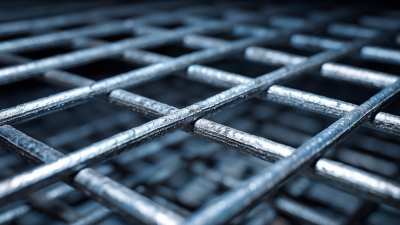
A metal mesh screen is a sheet of interwoven or welded metal wires. Its openings allow air, light, liquid, or fine particles to pass through. Wire diameter, aperture size, and metal type determine its performance. Stainless steel resists moisture and many chemicals. Aluminum is lighter, but it may deform under heavy pressure. Carbon steel often provides strength at a lower cost, although it needs surface protection.
These screens serve many practical purposes. They filter particles in ventilation equipment and separate materials during processing. They also protect machine openings, cover drains, and support safety guards. In a workshop, a screen may stop large debris while maintaining airflow around a motor. In food or laboratory settings, cleanliness and corrosion resistance become especially important. A screen used near saltwater needs different protection from one used indoors.
Choosing the right mesh requires more than measuring the hole. Check the working temperature, expected load, cleaning method, and contact materials. Small openings can improve filtration, but they may clog quickly. Large openings increase airflow, yet they may allow unwanted particles through. This trade-off is easy to underestimate. I have seen specifications look suitable until vibration loosened a poorly supported screen. Installation details matter. Frame rigidity, edge finishing, and regular inspection can affect service life as much as the mesh itself. Test a small section when conditions are uncertain. That step may reveal problems earlier than a full installation.
How to Choose the Right Metal Mesh Screen in 2026?
Metal selection starts with the environment, not the catalog. Stainless steel suits humid or chemically exposed equipment. Carbon steel costs less, but it needs protective treatment. Copper and nickel alloys offer useful conductivity or corrosion resistance. The 2024 Industrial Filtration Market report by MarketsandMarkets projects growth from USD 39.3 billion in 2024 to USD 55.2 billion by 2029. That pressure encourages tighter, more reliable filtration decisions.
Weave controls strength, flow, and particle retention. Plain weave works well for general screening and smaller openings. Twill weave supports finer filtration with stronger wires. Dutch weave favors pressure filtration, but its flow resistance can surprise designers. Check ISO 9044 and ASTM E11 requirements before approving a drawing. Standards reduce guesswork.
Opening size needs practical testing. A 100-micrometer aperture may retain target particles, yet it can restrict flow quickly. Larger openings reduce pressure loss but may allow damaging debris through. Do not choose by mesh count alone. Wire diameter changes the real opening and open-area percentage. Field checks should include temperature, pressure, cleaning method, and corrosion exposure. A spreadsheet may recommend the wrong screen. I still verify samples under actual operating conditions.
| Application Requirement | Recommended Metal | Suitable Weave | Typical Opening Size | Typical Wire Diameter | Key Performance Characteristics | Common Uses |
|---|---|---|---|---|---|---|
| General-purpose screening | Low-carbon steel | Plain weave | 1.0–10.0 mm | 0.40–2.00 mm | Economical, rigid, and suitable for dry indoor or protected environments. Requires a protective finish where corrosion is a concern. | Machine guards, partitions, ventilation covers, and basic particle screening |
| Outdoor exposure and moderate corrosion | Galvanized carbon steel | Plain weave or welded mesh | 6.0–50.0 mm | 1.60–4.00 mm | Zinc coating improves atmospheric corrosion resistance but can be damaged by cutting, welding, or severe abrasion. | Fencing, safety barriers, animal enclosures, drainage screens, and outdoor equipment guards |
| Moist, hygienic, or mildly corrosive environments | Type 304 stainless steel | Plain weave | 0.20–5.00 mm | 0.15–1.60 mm | Good general corrosion resistance, cleanability, and dimensional stability. Not the preferred choice for high-chloride environments. | Food-processing equipment, water screens, laboratory screens, filters, and architectural panels |
| High-chloride or marine conditions | Type 316 stainless steel | Plain weave or twilled weave | 0.025–3.00 mm | 0.025–1.20 mm | Molybdenum-bearing stainless steel provides better resistance to pitting and crevice corrosion than Type 304 in chloride-bearing environments. | Seawater equipment, coastal installations, chemical processing, desalination, and marine filtration |
| High-temperature service | Heat-resistant stainless steel | Plain weave or twilled weave | 0.10–3.00 mm | 0.10–1.20 mm | Better oxidation and elevated-temperature performance than standard carbon steel; exact temperature capability depends on alloy and operating atmosphere. | Furnace screens, heat-treatment baskets, exhaust systems, kiln components, and hot gas filtration |
| Fine particle filtration | Type 304 or Type 316 stainless steel | Twilled weave or Dutch weave | 0.005–0.150 mm | 0.025–0.150 mm | Provides high filtration precision and improved wire support. Dutch weaves are selected when retention and pressure resistance are more important than open area. | Hydraulic filters, polymer filtration, pharmaceutical processing, fuel filtration, and laboratory separation |
| High open area and low airflow resistance | Aluminum | Plain weave or expanded mesh | 2.0–25.0 mm | 0.50–2.00 mm | Low density, good formability, and useful corrosion resistance in many atmospheric environments. Lower strength and wear resistance than steel. | Air intake screens, lightweight guards, speaker grilles, ventilation panels, and decorative façades |
| High strength-to-weight ratio | Titanium | Plain weave | 0.10–3.00 mm | 0.05–1.00 mm | Low density, high specific strength, and strong resistance to seawater and many chemical environments. Higher material cost than common steels. | Aerospace components, chemical equipment, marine systems, and specialized medical or laboratory applications |
| Heavy impact protection | Carbon steel or stainless steel | Welded mesh | 12.5–100.0 mm | 2.00–8.00 mm | Rigid geometry, high structural stability, and good resistance to localized impact. Weld quality and frame design are critical. | Machine enclosures, warehouse partitions, safety cages, security barriers, and equipment guards |
| Screening with high abrasion resistance | Hardened or high-carbon steel | Crimped woven mesh | 5.0–100.0 mm | 2.00–12.00 mm | High stiffness and wear resistance for coarse materials. Protective coating or regular maintenance may be required in wet environments. | Mining screens, aggregate sizing, quarry equipment, trommel screens, and bulk-material separation |
Strength and filtration must be evaluated together. A fine 25-micron opening may improve particle control, yet it can reduce flow and clog quickly. ASTM E11 provides test methods for wire-cloth aperture size and inspection. Ask for aperture tolerance, wire diameter, tensile strength, and pressure-drop data. ISO 16889 also uses beta ratios to measure filter performance under multipass conditions. “Nominal filtration” is not the same as absolute removal. That difference matters.
Corrosion resistance needs process-specific evidence. The NACE IMPACT study estimated global corrosion costs at about 3.4% of global GDP, showing why material selection deserves more than a catalogue check. Salt spray, chlorides, acids, moisture, and cleaning chemicals attack mesh differently. Stainless alloys may perform well, but welds, edges, and trapped deposits can fail first. Temperature testing should include thermal cycling, not only a maximum temperature claim. Expansion can loosen a tightly fitted screen. I have seen neat laboratory data become unreliable in dirty, vibrating equipment.
Tips: Request a test report linked to the exact mesh grade and opening size. Check flow at operating temperature, not room temperature. Inspect a sample after cleaning cycles. Compare strength before and after corrosion exposure. Leave room for uncertainty; real plants are rarely tidy. A cheaper screen may become expensive after repeated replacement.
Choosing a metal mesh screen in 2026 starts with the aperture, wire diameter, and installation environment. Mesh count alone can mislead. A 40-mesh screen may use different wire diameters, changing its aperture and open area. Measure the material being filtered, not only the frame. If particles measure 300 microns, specify an aperture smaller than that target. Consider particle shape and moisture, too. Check the drawing twice. I once saw a “matching” screen fail because its wire was too thick for the required airflow. That mistake was avoidable.
Record three dimensions: aperture width, wire diameter, and sheet thickness or panel size. Ask for tolerances, because a nominal 1.00 mm opening may vary during production. Calculate open area before ordering. It affects pressure drop, light transmission, and ventilation. For a vibrating panel, include support spacing and expected load. A fine mesh stretched across a wide frame can sag. It looked strong. It was not.
Surface finish should match the exposure, cleaning method, and appearance requirements. A smooth finish reduces residue in food, laboratory, and powder-handling areas, but it cannot prevent corrosion alone. For humid or salty locations, verify the metal grade and finish compatibility with cleaning chemicals. Choose a coated surface only after checking adhesion, operating temperature, and abrasion risk. Inspect sample coupons under bright light. Look for pinholes, rough welds, blocked apertures, and uneven color. Supplier data helps, but a real sample reveals details specifications may hide. Leave room for revision; field conditions often challenge the original design.
Start with the duty, not the catalogue photograph. Record temperature, particle size, flow speed, wash chemicals, and expected service hours. These details determine wire alloy, weave, aperture, and edge construction. ISO 9044:2016 defines terminology and quality requirements for industrial woven wire cloth. ASTM E2016 also supports consistent metallic mesh descriptions. Ask suppliers to state mesh count, wire diameter, open area, tolerances, and inspection methods.
The first quote is rarely the true cost. World Steel Association’s World Steel in Figures 2025 reports approximately 1.88 billion tonnes of crude steel production in 2024. This scale does not predict your invoice, but alloy surcharges and energy costs deserve scrutiny. Request a line-item quotation. Compare usable open area, frame material, freight, packaging, tooling, and replacement lead time. One supplier may quote per panel. Another may quote per square metre. Their numbers may look similar, yet deliver different screening capacity.
Maintenance changes the decision. The U.S. Department of Energy’s Operations & Maintenance Best Practices guide reports that preventive maintenance may cost 12–18% less than reactive maintenance. Inspect for blinding, broken wires, corrosion spots, and loose frames. Keep a simple record beside the equipment. Note pressure drop and cleaning dates. A screen that needs harsh cleaning every week may be the wrong design. I would not rely on a supplier’s “long-life” claim without test conditions. Real service is messier. Scratches, vibration, and rushed cleaning often shorten mesh life.
Supplier comparison should consider technical compliance, total cost, corrosion resistance, cleaning effort, and expected service conditions—not purchase price alone.
Decision guide: Stainless steel woven mesh offers strong corrosion resistance and precise filtration. Welded wire mesh is generally rigid and economical for structural guarding. Expanded metal provides good stiffness with efficient airflow, while perforated sheet is easy to clean and suitable for robust screening applications.
The index is a practical, non-brand comparison based on material performance, fabrication complexity, maintenance demand, and common industrial use. Confirm aperture, wire diameter, tolerances, material grade, test documentation, and applicable standards such as ISO 9044, ISO 4783-1, ASTM E2016, or project-specific specifications before ordering.