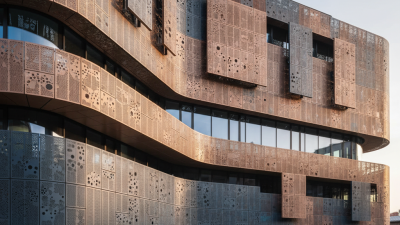
7 Best Perforated Metal Panels for Global Buyers

Global buyers compare more than appearance when selecting perforated metal panels. Alloy, thickness, hole pattern, open area, finish, and lead time all shape performance and landed cost. A panel that looks light in a sample may feel heavy across a large façade. Small details matter.

The market is substantial. World Steel Association data puts global crude steel production at about 1.89 billion tonnes in 2024. The UN Environment Programme’s 2024 buildings report says buildings and construction accounted for 34% of global CO₂ emissions and 32% of energy demand in 2022. These figures do not prove that perforated panels reduce environmental impact; performance depends on the whole design, fabrication, and supply chain. That distinction matters.

Architect Louis Sullivan’s famous line, “Form ever follows function,” offers a useful lens for evaluating these products. It was not written specifically about perforated metal. Still, it reminds buyers to connect visual choices with practical needs. This guide compares seven options, from aluminum and stainless steel to galvanized and weathering steel. It considers corrosion exposure, airflow, shading, maintenance, and sourcing. A coastal project may need a different alloy and finish than an interior ceiling. No single panel wins everywhere. Buyers should verify specifications, samples, and supplier documentation before committing.
7 Best Perforated Metal Panels for Global Buyers

Perforated Metal Panel Types, Features, and Global Applications

Perforated metal panels differ by hole shape, open area, thickness, and finish.
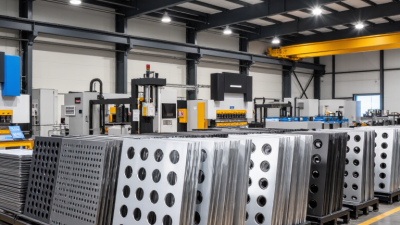
Round-hole panels are a versatile choice for sun screens, equipment guards, and ventilation grilles. They allow airflow while softening direct light. Slotted panels suit drainage, acoustic screens, and applications needing directional openings. Check slot orientation before ordering; it can affect both appearance and performance.

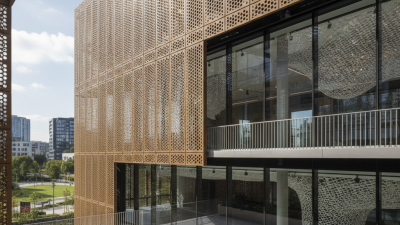
Square-hole panels offer a more geometric look for partitions and façades. Decorative patterns bring visual detail to ceilings or balcony screens, though intricate designs may require careful cleaning. Microperforated panels use very small openings to support acoustic control or subtle shading. They are not automatically soundproof. Corrugated perforated sheets add stiffness and suit larger exterior spans, while heavy-gauge panels are useful for walkways, machine enclosures, and other demanding settings.

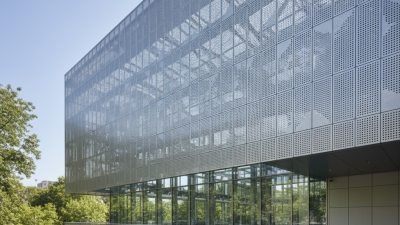
Material selection matters. Aluminum is relatively light and often chosen for façades, while stainless steel can suit wet or frequently cleaned areas. Galvanized steel may be a practical option for general industrial use. Ask suppliers for open-area data, load information, and finish details; appearance alone is not enough. Samples help reveal sharp edges, glare, and how the pattern reads at full scale. One detail is easy to miss: dust can collect in small holes, especially in sheltered locations. Cleaning access should be considered early.

Carbon Steel and Stainless Steel Panels for Heavy-Duty Performance

7 Best Perforated Metal Panels for Global Buyers

Heavy-duty perforated metal work starts with the base material, not the hole pattern. Carbon steel offers strong stiffness and practical cost control for guards, platforms, and equipment screens. Choose round holes for balanced strength, square holes for airflow, and slotted holes for directional ventilation. Staggered patterns often provide more open area without making the sheet feel fragile. For demanding service, thicker gauges reduce vibration and edge distortion. Finish matters. Use a suitable coating where moisture, salt, or chemicals could attack exposed carbon steel.

Stainless steel suits washdown areas, humid rooms, food-processing equipment, and coastal installations. A useful shortlist covers seven options. These include carbon steel round, square, and slotted panels, stainless versions of each, plus one reinforced heavy-gauge panel.

Stainless panels usually cost more, but their corrosion resistance can reduce replacement work. Select the grade according to exposure, cleaning chemicals, and temperature. Not every stainless panel performs equally in harsh environments.

Ask for material grade, thickness tolerance, open-area percentage, and production test records. Check hole edges carefully. Poor deburring can damage cables, gloves, or nearby components. I would not treat one thickness as universally safe. Actual loads, spans, fasteners, and vibration change the result. No panel is perfect. A design that looks strong may still flex when its support spacing is underestimated. Reviewing drawings with a qualified engineer helps confirm load capacity, airflow, and safe installation details.

Aluminum and Galvanized Panels for Lightweight Corrosion Resistance

7 Best Perforated Metal Panels for Global Buyers

Aluminum and galvanized steel panels suit projects that demand low weight and corrosion resistance. Aluminum naturally forms a protective oxide layer, making it useful for facades, screens, ceilings, and transport enclosures. It is easy to handle on site. This can reduce installation labor, especially where access equipment is limited. Marine air still requires careful alloy selection and coating control.

Galvanized panels provide a zinc barrier that protects steel from moisture and abrasion. They usually offer higher stiffness than aluminum at comparable thicknesses. However, they are heavier. Perforation also changes panel strength, so open-area percentage, hole size, and support spacing must be checked together. A wide pattern may improve airflow but create unwanted vibration.

A reliable specification should state sheet thickness, zinc coating mass, aluminum grade, hole tolerance, and surface finish. Ask for salt-spray or cyclic corrosion test data when the panels face coastal humidity. Inspect punched edges and drainage paths before approval. Small defects matter.

The lightest option is not always the best option. I would question any quotation that ignores fastener compatibility. Aluminum and galvanized steel can react when they touch in wet conditions. Use suitable separators and confirm local building requirements. Some assumptions need testing. A sample panel exposed outdoors may reveal problems that a clean product sheet does not.

7 Best Perforated Metal Panels for Global Buyers - Aluminum and Galvanized Panels for Lightweight Corrosion Resistance

The chart compares the estimated mass of one square meter of 1 mm solid sheet before perforation. Aluminum provides the lowest theoretical weight, while galvanized and stainless steel offer higher mass with strong corrosion protection when correctly specified for the service environment.

Values are calculated from commonly published material densities: aluminum alloys are approximately 2.68–2.70 g/cm³, carbon and weathering steels approximately 7.85 g/cm³, and stainless steels approximately 8.00 g/cm³. Actual perforated-panel weight depends on thickness, hole pattern, open area, coating, and fabrication tolerances.

Decorative, Acoustic, and Security Panels for Specialized Needs

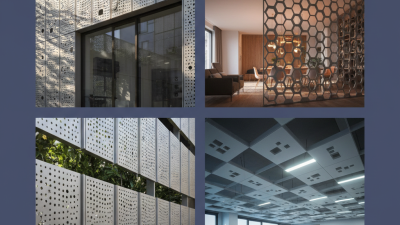
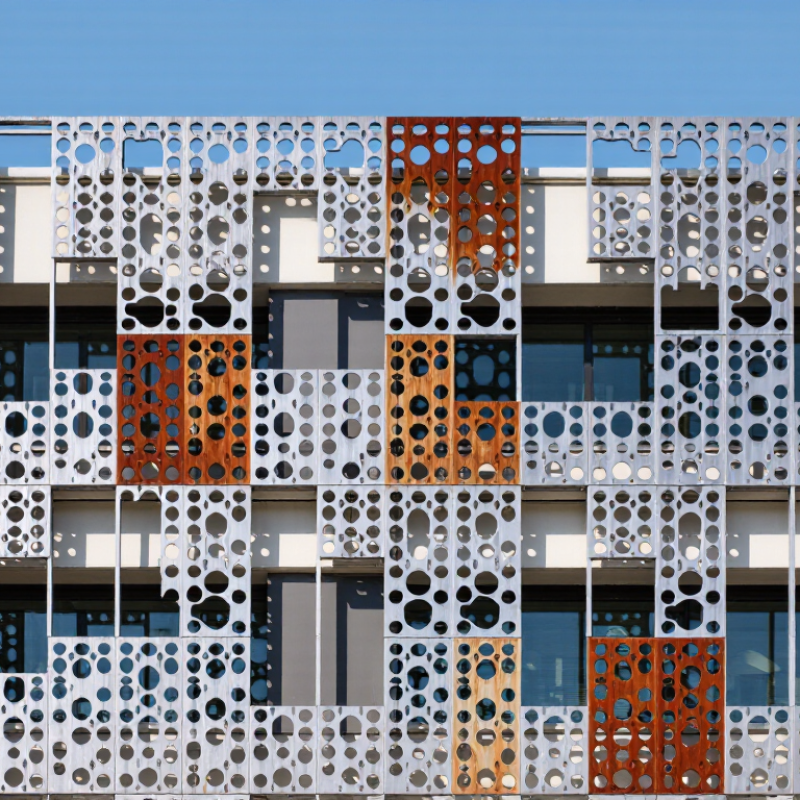
Perforated metal panels serve different purposes, and the right pattern depends on the room or structure. Decorative façade panels can cast crisp shadows across a walkway as sunlight shifts. Ceiling panels with geometric openings add visual rhythm while allowing light fixtures and services to remain accessible. For either use, check hole size, open area, and sheet thickness against the design drawings.

Acoustic panels often use small, closely spaced perforations over sound-absorbing backing. They can soften reflections in a busy corridor, though the metal face alone does not guarantee sound control. Microperforated panels offer a cleaner appearance where visible holes need to stay subtle. Privacy screens use denser patterns to limit direct views while retaining airflow. Small mock-ups help reveal how much can be seen from different angles.

Security-focused panels typically use thicker sheet and smaller openings, but strength depends on the full assembly, including supports and fasteners. Sunshade panels can reduce direct glare on windows; their performance changes with orientation and local sun angles. Equipment enclosures use perforated panels to balance ventilation and physical protection. Measure airflow and access needs before fabrication. Details matter. A pattern that looks ideal on screen may feel too open or too heavy once installed. Recheck the sample under real lighting, and confirm that edges, coatings, and mounting points suit the site’s conditions.

How Global Buyers Can Compare and Select the Best Panel Option

Global buyers should compare perforated metal panels by function, not appearance alone. Start with the opening pattern: hole diameter, pitch, and open-area percentage affect airflow, light, privacy, and weight. A panel with 40% open area may suit ventilation, while a tighter pattern can better screen equipment. These figures are examples, not universal specifications. Ask suppliers for drawings and samples, then check the actual open area and tolerances before ordering.

Material and finish matter just as much. Compare alloy, sheet thickness, edge quality, coating, and exposure conditions. The NACE IMPACT study estimated global corrosion costs at US$2.5 trillion annually, or 3.4% of global GDP, and reported potential savings of 15–35% through corrosion-control practices. That broad estimate is not specific to perforated panels, but it shows why finish selection deserves careful review. Request test documentation and clarify whether the quoted finish covers cut edges. Also compare packaging, shipping dimensions, and replacement lead times; a low unit price can be misleading. One detail is easy to miss: sharp edges after cutting. Inspect samples. Specifications still need judgment. A panel that looks right in a catalog may behave differently outdoors, especially near salt spray or persistent moisture.

7 Best Perforated Metal Panels for Global Buyers - How Global Buyers Can Compare and Select the Best Panel Option

Comparison of commonly specified perforated metal panel types. The figures below are typical purchasing ranges; final values depend on the perforation pattern, sheet size, tolerances, finish, and structural requirements.
Panel option Typical material grade Common thickness Typical hole pattern Typical open area Approx. mass range Corrosion resistance Typical sheet sizes Best-fit applications Main advantages Key buying consideration
1. Mild Steel Round-Hole Panel Low-carbon steel, commonly equivalent to commercial-quality structural sheet 1.0–6.0 mm Round holes; staggered or straight-row layout 20–60% 7–47 kg/m², depending on thickness and open area Low without coating 1,000 × 2,000 mm to 1,500 × 3,000 mm Machine guards, equipment covers, ventilation screens, architectural infill High availability, good stiffness, easy forming and welding, economical Specify galvanizing, powder coating, or another protective finish for humid or outdoor service.
2. Hot-Dip Galvanized Steel Panel Low-carbon steel with zinc coating; coating mass is commonly specified by applicable coating standard 0.8–3.0 mm Round, square, or slot holes 20–60% 6–24 kg/m², depending on steel thickness and perforation Good for general outdoor use 1,000 × 2,000 mm to 1,250 × 2,500 mm Facade screens, HVAC guards, agricultural equipment, service enclosures Better atmospheric corrosion protection than uncoated steel; durable and widely available Confirm whether the zinc coating is applied before or after perforation and account for cut-edge protection.
3. Aluminum Round-Hole Panel Aluminum sheet, commonly from 3000- or 5000-series families 1.0–5.0 mm Round holes; staggered layout is widely used 20–60% 2.5–14 kg/m², depending on alloy, thickness, and open area Good 1,000 × 2,000 mm to 1,500 × 3,000 mm Lightweight facades, ceiling panels, transport equipment, sun-control screens Low density, naturally forming oxide layer, easy handling, good appearance Check deflection and fastener compatibility because aluminum has lower stiffness than steel.
4. Stainless Steel 304 Panel Austenitic stainless steel equivalent to grade 304 / EN 1.4301 0.8–4.0 mm Round, square, slot, or decorative patterns 15–60% 5–31 kg/m², depending on thickness and open area Very good in normal atmospheres 1,000 × 2,000 mm to 1,500 × 3,000 mm Food-processing areas, interior architecture, public buildings, equipment screening Good general corrosion resistance, clean appearance, hygienic surface, recyclable Specify surface finish, such as 2B, brushed, or polished, and protect against carbon-steel contamination.
5. Stainless Steel 316 Panel Molybdenum-bearing stainless steel equivalent to grade 316 / EN 1.4401 or 1.4404 0.8–4.0 mm Round, square, slot, or fine decorative perforations 15–60% 5–31 kg/m², depending on thickness and open area Excellent in chloride-prone service 1,000 × 2,000 mm to 1,500 × 3,000 mm Coastal architecture, marine equipment, chemical environments, wastewater facilities Higher resistance to pitting and crevice corrosion than 304 in many chloride environments Use when exposure justifies the higher material cost; design still requires proper cleaning and drainage.
6. Weathering Steel Panel Atmospheric-corrosion-resistant structural steel containing alloying elements that support a protective patina 2.0–6.0 mm Round, square, or custom architectural patterns 20–55% 14–47 kg/m², depending on thickness and open area Good in suitable wet–dry climates 1,000 × 2,000 mm to 1,500 × 3,000 mm Landscaping, exterior screens, public art, architectural facades Distinctive rust-colored appearance and reduced need for conventional paint systems Requires wet–dry exposure, drainage, and runoff control; avoid continuously wet or marine splash conditions.
7. Micro-Perforated Acoustic Panel Powder-coated steel, aluminum, or stainless steel with an acoustic backing layer 0.7–1.5 mm face sheet Fine round holes, commonly 0.5–2.0 mm diameter 0.5–2.5% 3–12 kg/m², excluding substantial independent backing systems Depends on face material and finish 600 × 1,200 mm to 1,200 × 2,400 mm Ceilings, wall absorbers, auditoriums, offices, transport terminals Combines controlled sound absorption with a clean, durable metal surface Request tested acoustic data, including sound absorption coefficients, cavity depth, and backing specification.
Selection checklist: Compare base material, thickness, hole size, pitch, open area, load and deflection requirements, surface finish, corrosion exposure, acoustic performance where relevant, sheet dimensions, packaging, and destination-country standards before placing an order.