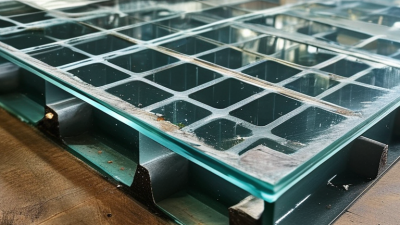
Choosing the right fiberglass grating in 2026 requires more than comparing prices or catalog photographs. Global buyers face different loads, climates, installation practices, and documentation requirements. A coastal walkway may need corrosion resistance, while a factory platform may prioritize heavy-load performance and slip control. Color matters less than resin chemistry, panel thickness, bearing-bar spacing, and tested capacity. Small details often decide long-term value.
This guide examines molded, pultruded, covered, and custom fiberglass grating options for international purchasing teams. It considers open-mesh drainage, solid-top hygiene, grit surfaces, UV exposure, fire behavior, and maintenance access. Experienced engineers normally begin with span, load, support spacing, and operating temperature. They also review drawings, test reports, tolerances, and installation instructions before approving a shipment. A low quotation can become expensive when cutting, fasteners, freight, or replacement panels are ignored. That risk deserves attention.
Reliable selection depends on verifiable evidence, not confident marketing language. Buyers should request product data sheets, batch information, quality records, and relevant third-party test documentation. Requirements may differ by project location, industry, and local authority. This article compares practical strengths and limitations, rather than declaring one universal winner. That assumption is too simple. A premium surface can still fail when supports are poorly spaced or drainage is blocked. The most suitable fiberglass grating balances safety, service life, installation effort, and total delivered cost. It should also fit the people who inspect, clean, and repair it. Some projects need specialist review. That is not weakness; it is responsible procurement.
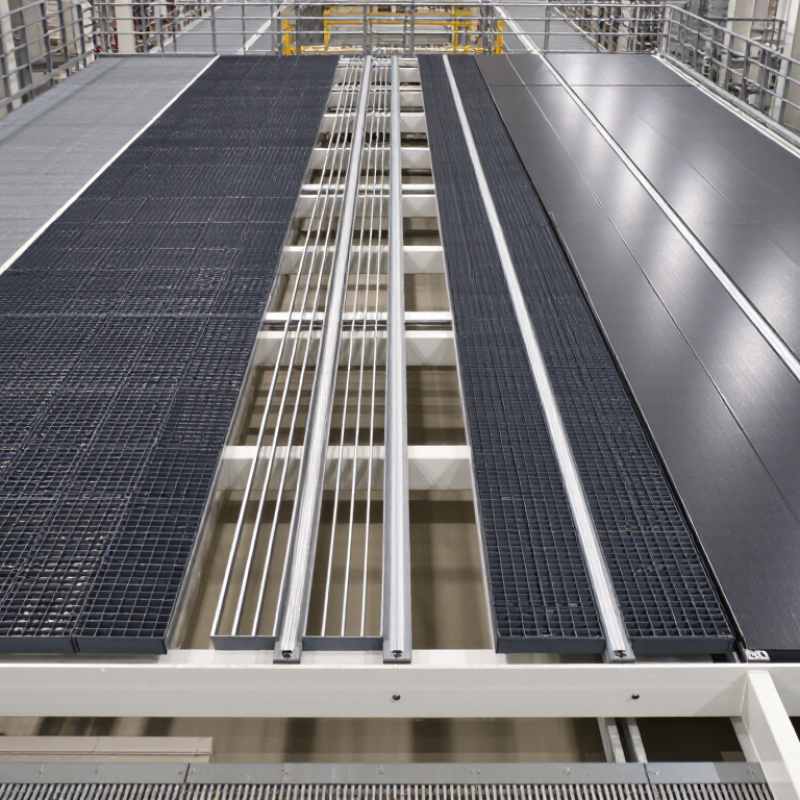
Fiberglass grating, also called FRP grating, is a structural walking surface made from glass fibers and resin. The fibers provide strength, while the resin resists moisture, chemicals, and corrosion. Unlike steel, it does not rust when rainwater collects around fasteners. A 38 mm panel can support workers, tools, and small equipment when properly specified.
Grating is commonly classified by manufacturing method. Molded grating has interconnected load bars and offers balanced strength in many directions. Pultruded grating uses continuous structural bars, making it suitable for longer spans and heavier loads. Resin type also matters. Vinyl ester performs well in aggressive chemical areas, while polyester is often selected for general industrial environments. Phenolic options can reduce smoke and flame spread in carefully controlled applications.
Surface design creates another classification. Concave surfaces improve drainage and everyday slip resistance. Gritted surfaces provide stronger traction near oil, mud, or process water. Smooth surfaces clean easily but may become unsafe when wet. Open mesh sizes affect drainage, visibility, and the chance of small tools falling through. Buyers should check span, load, resin compatibility, UV exposure, fire requirements, and local installation rules. Field measurements matter. A drawing can miss a pipe, uneven support, or a doorway threshold. That mistake is easy to make. It is also expensive to correct. I would not choose a panel from color alone, because appearance says little about long-term structural performance.
Fiberglass grating selection should follow the environment, not only the load rating. A 2024 report from Grand View Research estimates the global fiberglass market will expand at about 5.7% annually through 2030. That growth reflects demand for corrosion-resistant materials in water treatment, energy, and chemical facilities. In wet platforms, molded grating offers strong resin coverage and better resistance to standing water. Its square mesh also helps drain rain and process liquids quickly. Pultruded grating suits long walkways and maintenance platforms. It provides higher directional stiffness and a cleaner, more beam-like structure.
Chemical exposure changes the decision. Vinyl ester grating generally suits acids, chlorides, and aggressive wastewater better than standard polyester systems. Phenolic grating is more appropriate near fire-sensitive areas because it can reduce flame spread and smoke. Buyers should verify tested values under ASTM E84 or the project’s required fire standard. A smooth surface may look easier to clean, but covered grit improves footing around oily pumps and unloading bays. This is a practical detail people sometimes overlook.
Electrical areas need another layer of judgment. Conductive or static-control grating can support risk management near sensitive equipment, but it is not a substitute for a complete grounding design. The 2023 Global Water Intelligence market report identifies continued investment in advanced water treatment, where corrosion and slip hazards remain common maintenance concerns. Still, no grating type is universally best. Resin choice, mesh size, span, temperature, UV exposure, and installation quality can change performance. A specification copied from another site may fail here.
For global buyers, fiberglass grating selection starts with the load scenario, not the catalog image. Load ratings describe more than a headline number. They depend on span, support spacing, panel depth, and foot traffic. A 38 mm molded panel may suit walkways, while forklift routes require engineered checks. Check point loads, deflection limits, and fastener positions. A wet platform can feel less rigid than its dry specification suggests. That detail is often missed.
Surface design changes daily safety and maintenance. Concave grit provides drainage and traction around pumps, wash areas, and coastal decks. A smooth surface cleans faster, but can become slippery under oil or fine mud. Covered-top grating blocks debris from falling below, although it may retain water if drainage is poor. Buyers sometimes choose aggressive grit without considering barefoot access or cleaning tools. Better traction is not always better usability.
Resin systems should match exposure, temperature, and chemical contact. General-purpose polyester works for many sheltered installations. Vinyl ester offers stronger resistance where acids, solvents, or persistent moisture are present. Phenolic systems can reduce flame spread and smoke, but their color and handling expectations differ. Confirm test methods, resin content, UV exposure, and local fire requirements. Certificates deserve scrutiny. A document can be valid yet irrelevant to your exact span and environment. Leave room for inspection, replacement, and honest uncertainty.
2026 Best Fiberglass Grating Types for Global Buyers?
For global buyers, certification should match the grating’s real service conditions. Pultruded grating suits long spans and chemical areas, while molded grating often handles complex shapes and heavy foot traffic. Ask for test reports covering load capacity, deflection, resin type, and slip resistance. ASTM F3059 is a useful reference for FRP grating specifications. ASTM E84 can indicate surface flame-spread performance, but it does not replace project-specific fire engineering.
Check the certificate’s scope carefully. ISO 9001 confirms a quality-management system, not automatic product compliance. ISO 14001 may support environmental-control claims, but buyers still need material traceability. For platforms, stairs, and walkways, EN ISO 14122 requirements can help assess safe access design. European projects may also require documented conformity under applicable product rules. CE marking alone is not proof of structural capacity.
Corrosion data deserves attention. The NACE IMPACT study estimated global corrosion costs at about 3.4% of worldwide GDP, showing why lifecycle selection matters. A recent ISO Survey also records more than one million ISO 9001 certificates globally, yet paperwork varies greatly in quality. That distinction matters. Request batch numbers, resin and glass-content records, independent laboratory results, and installation instructions. Check whether tests used wet, aged, or clean specimens. Many buyers forget this detail. I would not accept a generic certificate without a traceable report, although even detailed documents cannot replace an engineer’s site review.
Technical comparison of FRP grating constructions, selection criteria, and internationally recognized verification documents
| FRP Grating Type | Typical Construction | Typical Open Area / Mesh | Main Performance Advantages | Recommended Applications | Important Limitations | Standards and Documents to Check |
|---|---|---|---|---|---|---|
| Molded concave-surface grating | Glass-fiber roving is embedded in a thermoset resin matrix and molded as an integral panel. The top surface is normally concave or grit-enhanced for drainage and slip resistance. | Common mesh: 19 × 19 mm 38 × 38 mm Open area: commonly about 55–65% | Loads can be distributed in two directions; good corrosion resistance; easy cutting and field modification; strong drainage and ventilation performance. | Walkways, platforms, wastewater facilities, chemical-processing areas, marine access routes, and general industrial floors. | Usually less efficient than pultruded grating for long spans or highly directional loads. Resin selection must match chemicals, temperature, and UV exposure. | Check product design calculations against ASTM F3059/F3059M; verify slip-test method and results; request resin and glass-content data, load/span tables, and fire-test reports where required. |
| Pultruded structural grating | Continuous glass-fiber profiles are pulled through a resin bath and heated die, then assembled into a grating panel. Load-carrying bars run mainly in one direction. | Open area: commonly about 35–70% Bar depth: often 25–50 mm Mesh selected by project loading | High longitudinal stiffness-to-weight ratio; suitable for longer spans; consistent fiber alignment; good resistance to many corrosive environments. | Long-span walkways, equipment-support platforms, stair treads, maintenance decks, and areas with concentrated directional loading. | Load capacity is strongly direction-dependent. Cross-bars may provide less structural contribution than the main load bars. Support spacing and bar orientation must be specified. | Check ASTM F3059/F3059M, structural calculations, deflection limits, bar orientation, connection details, and test data based on relevant ASTM composite-mechanical methods such as ASTM D790 where applicable. |
| Covered or solid-top FRP grating | Open grating is manufactured with a bonded or integral solid plate surface, often with a grit or textured finish. | Open underside Top coverage: typically full surface Common cover thickness: about 3–6 mm | Prevents small tools and objects from falling through; provides a more stable walking surface; can improve hygiene and cleanability. | Food and beverage support areas, chemical plants, elevated work platforms, pedestrian routes, and locations below which personnel or equipment are present. | Less drainage than open grating; added weight and cost; the solid cover can retain liquids or contaminants unless properly sloped and maintained. | Check ASTM F3059/F3059M, slip-resistance test evidence, cover-to-grating bond quality, drainage design, point-load performance, and any project-specific hygiene or cleanability requirements. |
| Mini-mesh FRP grating | Molded or pultruded grating with smaller openings than standard pedestrian grating, usually with a textured or grit-coated walking surface. | Common openings: approximately 13–19 mm Open area: commonly about 30–50% | Reduces the risk of small objects, heels, tools, or debris passing through; suitable for dense pedestrian traffic and elevated work areas. | Stair treads, walkways above public or operating areas, maintenance platforms, water-treatment plants, and locations requiring enhanced fall-through protection. | Smaller openings can reduce drainage and increase material weight. The mesh size alone does not establish compliance with a fall-protection or safety requirement. | Check ASTM F3059/F3059M, applicable platform and stair requirements under EN ISO 14122-2 and EN ISO 14122-3, slip-resistance evidence, and local building or workplace regulations. |
| Fire-retardant FRP grating | FRP grating manufactured with a resin system and additives intended to reduce flame spread or improve reaction-to-fire performance. | Available in open or covered designs Performance depends on resin and panel design | Can provide improved flame-spread performance compared with standard resin systems while retaining corrosion resistance and low weight. | Industrial plants, transport infrastructure, offshore support areas, enclosed facilities, and projects with specified fire-performance requirements. | “Fire-retardant” is not a universal rating. Flame spread, smoke production, toxicity, and fire resistance are different properties and must not be treated as interchangeable. | Request a current test report to ASTM E84 where that method is accepted by the project, or classification to EN 13501-1 where required. Confirm the exact resin, thickness, surface finish, and production batch covered by the report. |
| Low-smoke or phenolic FRP grating | FRP grating using a phenolic or other specially formulated resin system designed for reduced smoke and flame performance in specified environments. | Usually supplied as open grating Mesh and depth are project-specific | May provide lower smoke generation and improved fire behavior compared with conventional polyester systems, subject to the tested formulation and installation. | Marine and offshore facilities, enclosed industrial areas, transport-related infrastructure, and escape or evacuation routes where smoke control is important. | Phenolic systems can be more brittle, harder to machine, and more sensitive to manufacturing quality. Fire performance must be verified for the complete product, not inferred from resin name alone. | Check the required EN 13501-1 classification or project-specific marine/offshore fire approval. Review smoke, flame, toxicity, mechanical, and slip data together; confirm whether the report covers the installed surface finish. |
| Conductive or static-dissipative FRP grating | FRP grating incorporating conductive fillers, surface veils, or conductive elements to create a specified electrical-resistance path. | Open or covered construction Resistance must be measured on the finished product | Can reduce electrostatic charge accumulation when correctly designed, bonded, grounded, installed, and maintained. | Flammable-liquid handling areas, solvent facilities, powder-processing zones, and hazardous locations subject to a documented electrostatic-control assessment. | Conductive performance can vary with humidity, wear, contamination, joints, coatings, and grounding continuity. It does not automatically make the area explosion-proof. | Request finished-product surface and resistance test data, grounding details, inspection procedures, and hazardous-area engineering documentation. Where applicable, coordinate with the IEC 60079 series and the site’s electrical classification requirements. |
Selecting fiberglass grating starts with the service environment, not the catalog image. Molded grating suits complex platforms and frequent foot traffic. Pultruded grating supports longer spans and directional loads. Covered surfaces improve slip resistance, but they may retain dirt and moisture. Specify resin type, bearing-bar size, panel dimensions, load class, surface finish, UV exposure, and chemical contact.
A 2016 NACE IMPACT study estimated global corrosion costs at about 3.4% of worldwide GDP. That figure supports careful material selection, especially in wastewater, marine, and chemical facilities. Still, corrosion data alone cannot predict every site condition.
Ask suppliers for tested load tables, flame-spread results, resin documentation, and batch traceability. Confirm whether values apply to dry, aging, or chemically exposed conditions. Request samples with the actual grit surface. A photograph is not enough. For global sourcing, verify tolerances, packaging, replacement-panel availability, and inspection procedures. ISO 9001 certification can indicate controlled processes, but it does not guarantee suitable engineering performance. The buyer must check the evidence.
Tips: Map the walking route, support spacing, and maintenance tools before ordering. Compare total installed cost, not only panel price. A cheaper panel may require extra supports or earlier replacement.
I would also challenge my own specification twice; real sites often change after drainage, cable, or access details appear. When uncertainty remains, obtain a project-specific calculation from a qualified engineer.