
Choosing the right display system can shape how shoppers move, browse, and decide inside a retail store. This guide explores the Top 10 Wall Mounted Display Racks for Retail Stores, focusing on practical performance rather than appearance alone. Strong Wall-Mounted Display Racks should present products clearly, use vertical space wisely, and support daily staff routines. They also need stable mounting, suitable load capacity, and surfaces that withstand repeated cleaning.
Small details matter. A rack placed near eye level can make featured items easier to notice. Adjustable shelves can accommodate changing package sizes. Hooks may suit accessories, while tiered shelves often work better for boxed products. Materials such as powder-coated steel, aluminum, and laminated wood offer different balances of strength, weight, and visual style. Store managers should check wall construction before installation. A beautiful rack cannot compensate for weak anchoring.
No rack is perfect. That matters. A compact design may save floor space but limit product depth. A heavy-duty frame may improve durability while adding installation complexity. These trade-offs deserve honest evaluation. The selections in this article consider retail experience, product visibility, maintenance needs, customer access, and long-term value. They also encourage buyers to review manufacturer specifications and local safety requirements before purchase. Real-world results can vary between a boutique, pharmacy, convenience store, and large showroom. Careful measurement remains essential. Even experienced planners can overlook door swings, lighting glare, or cleaning access. This guide aims to make those decisions clearer, more reliable, and easier to test before committing to a complete store layout.
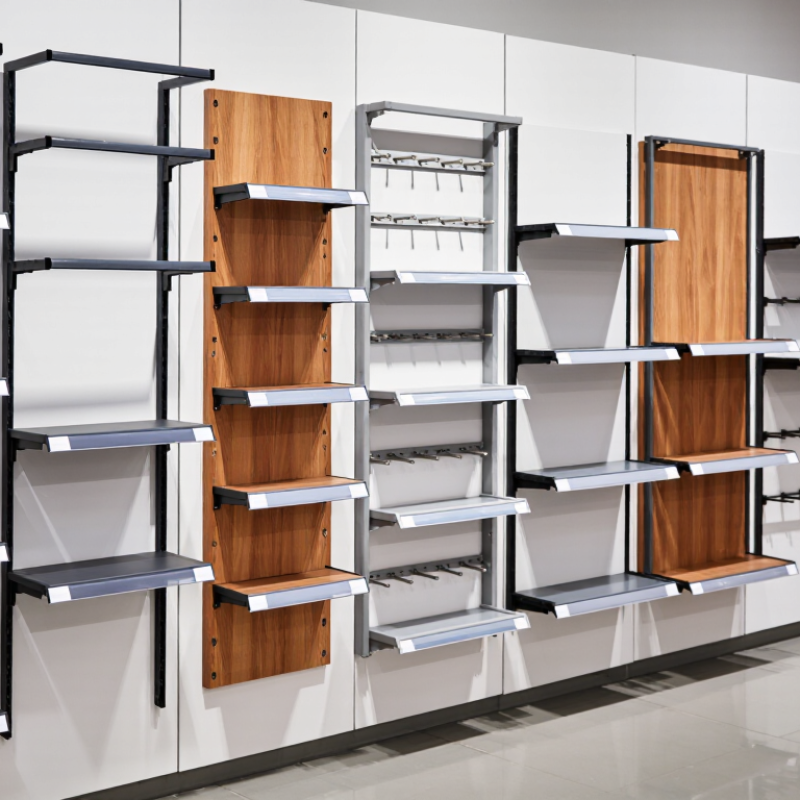
Wall-mounted display racks come in several forms, and each suits a different product and store layout. Slatwall panels accept movable hooks, shelves, and bins, making them useful when merchandise changes often. A row of hooks can hold packaged accessories, while shallow shelves keep small boxes visible. Pegboard offers similar flexibility through evenly spaced holes and compatible fittings. It is practical for lightweight goods, though crowded hooks can make browsing awkward.
Gridwall uses a metal wire panel with hooks and baskets. Its open structure keeps sightlines clear and works well in compact shops or seasonal displays. Fixed wall shelves provide a cleaner look for folded clothing, jars, or boxed products, but their spacing is less adaptable. Rail systems use brackets and adjustable arms, helping staff reposition hanging items without replacing the entire display. Simple, but effective. Before choosing any type, check its rated load and mounting requirements; wall material and fastener placement matter. A rack that holds steadily on masonry may need different support on drywall. Measure the product depth, too. Some displays look tidy when empty, then become cramped once stock is added.
There is no perfect system. A mixed wall can be useful: shelves for larger items, hooks for smaller ones, and a clear section for new arrivals. Still, too many fittings can create visual clutter. Leave enough space for customers to see labels and remove products comfortably. Store teams should test the arrangement during normal restocking, not just judge it from a floor plan.
Typical projection depth from the wall, in inches. Ranges are approximate planning estimates; actual dimensions vary by fixture design and product.
When comparing wall-mounted display racks, start with load capacity, not appearance. Check the rated load per shelf and per unit, then confirm that the wall material and fixings can support it. A rack holding boxed cookware needs different support from one displaying lightweight accessories. Ask for test documentation; a neat finish is not proof of strength. Installation details matter.
Visibility and reach matter, too. POPAI’s 2012 Shopper Engagement Study reported that 76% of purchase decisions were made in store, underscoring the value of clear product presentation. Compare shelf depth, spacing, and sightlines at a shopper’s eye level. Can customers see labels without leaning? Can staff restock without removing half the display? Small details count.
Measure the aisle before choosing. A deep rack may hold more stock but narrow the walking path or create awkward corners. Check whether shelves adjust, hooks can be repositioned, and the surface resists scuffs from daily handling. Ask how the unit attaches to your specific wall; generic hardware advice can miss a weak spot. A finish that looks durable today may show scratches under bright retail lighting. Don’t rely on photos alone. Walk the space with a tape measure and a sample product.
| Display Rack Type | Typical Configuration | Best Suited For | Key Advantages | What to Compare Before Choosing |
|---|---|---|---|---|
| Single Garment Rail | One horizontal hanging bar with wall brackets; commonly available in widths around 60–120 cm. | Clothing, uniforms, and coordinated outfits | Keeps garments visible and accessible while using little floor space. | Check rail length, bracket spacing, projection from the wall, finish, and the stated load rating for the rail and mounting system. |
| Double Garment Rail | Two parallel hanging bars, either at the same level or arranged at staggered heights. | Light garments, accessories, and smaller apparel collections | Provides more hanging positions within a compact wall area. | Compare usable hanging length, clearance between bars, garment visibility, and whether the wall and fixings can support the intended load. |
| Slatwall Shelf System | Shelves fitted into horizontal slatwall grooves; shelf depth and width vary by system. | Packaged goods, folded clothing, footwear, and home accessories | Shelf positions can often be adjusted, making it easy to change the layout as merchandise changes. | Confirm panel compatibility, shelf dimensions, adjustment increments, edge design, and the load rating for each shelf and panel installation. |
| Pegboard Display | Perforated panel used with compatible hooks, baskets, or small shelves. | Tools, craft supplies, packaged accessories, and small retail items | Flexible hook placement supports different product arrangements and clear item separation. | Check hole spacing and diameter, panel material, compatible accessories, and whether the fixing method suits the wall surface. |
| Gridwall Panel | Wire grid panel mounted to a wall, with hooks, shelves, or baskets attached to the grid. | Accessories, lightweight packaged products, and promotional merchandise | Open construction keeps products visible and allows accessories to be rearranged. | Compare grid spacing, wire finish, panel dimensions, accessory compatibility, and the installation requirements for the expected load. |
| Floating Display Shelves | Individual shelves with concealed or low-visibility supports; available in a range of widths and depths. | Decorative items, folded products, and curated product groupings | Creates a clean, uncluttered presentation and can suit many store interiors. | Review shelf depth, material, support design, installation instructions, and stated load capacity; concealed supports still require secure wall fixing. |
| Wall-Mounted Wire Baskets | One or more open-front wire baskets attached directly to a wall or compatible panel. | Soft goods, produce bags, clearance items, and loose packaged products | Open sides make contents easy to see, and baskets can help contain small or irregular items. | Compare basket depth, opening size, wire spacing, cleanability, and suitability for the size and weight of the products displayed. |
| Acrylic Ledge Display | Shallow transparent ledges, often installed in a series on a wall or display panel. | Cosmetics, small boxed goods, collectibles, and promotional items | Offers a visually light presentation and helps keep small products facing forward. | Check ledge depth, front-lip height, material thickness, mounting method, and compatibility with the product packaging. |
| Wall-Mounted Shoe Display | Angled shoe shelves, single-shoe supports, or paired brackets installed at regular intervals. | Footwear and related accessories | Raises products to viewing height and can present individual styles clearly. | Compare support style, shoe-size compatibility, spacing, angle, finish, and ease of repositioning when the assortment changes. |
| Wall-Mounted Literature Rack | Multiple pockets arranged vertically or in tiers, with pocket sizes selected for the printed material. | Brochures, catalogs, menus, and product information sheets | Organizes printed materials and keeps covers visible for browsing. | Check pocket width and depth, number of compartments, material, mounting points, and compatibility with the format of the literature. |
Note: Dimensions and configurations are typical examples and vary by design. Actual safe load depends on the rack, its installation, the wall material, and the anchors used. Check the manufacturer’s specifications and use fixings suitable for the wall before installation.
Wall-mounted racks can turn unused vertical space into clear, reachable product displays. Slatwall shelves suit boxed goods and let staff adjust shelf height as assortments change. Pegboard hooks keep small packaged items visible, while gridwall baskets hold soft goods or irregular products. Floating ledges work well for folded clothing, books, or a few featured objects. Keep heavier items low.
Acrylic pockets present cards, accessories, or small products without hiding them. Brochure racks separate printed materials by size and make replenishment easy. A wall-mounted garment rail displays a small collection without taking up floor space. It can look crowded quickly, though, so leave room between hangers. Measure the wall before choosing its length.
Tiered shelves help shoppers compare colors or sizes at a glance. A glass-front cabinet can protect delicate merchandise while keeping it visible. Corner racks use awkward wall junctions for compact items, but access may feel cramped. Check the rack’s stated load capacity and use suitable wall fixings; drywall alone may not support heavy stock. Small details matter. I have seen attractive layouts fail when labels are hidden or the lowest shelf is hard to reach, so test the viewing angle from a shopper’s position.
Choose a rack around the product’s weight, dimensions, and shopping behavior. Lightweight accessories suit pegboard hooks, while boxed goods need stable shelves with a front lip. For cosmetics or small hardware, use shallow trays and clear dividers; they keep items visible and reduce messy restocking. Apparel often works better on rails or face-out arms, where shoppers can see color and shape. Measure packages, not just the rack. A few centimeters can decide whether products hang freely or snag.
Visibility matters, but it is not the only factor. POPAI’s 2012 Shopper Engagement Study reported that 76% of purchase decisions were made in-store. That supports clear product presentation, though the figure is dated and should not be treated as a universal rule. Match rack depth to aisle space, and verify the fixture’s load rating against the actual product weight. Secure wall-mounted units to suitable supports; attractive displays are not useful if they shift under load. A tidy plan can still fail when replenishment is awkward.
Tips: Place high-interest items near eye level, and keep heavier products lower. Test one section before outfitting the whole wall. Check sightlines from the entrance and aisle. Leave room for hands to reach products. Small details matter. A rack that looks perfect in a drawing may feel cramped in a busy store.
Wall-mounted display racks need secure attachment to the actual wall structure, not just a neat-looking finish. Check the wall material, locate studs or masonry, and select fixings rated for the rack and its fully loaded weight. Follow the rack maker’s load limits, and spread heavy products across the frame rather than concentrating them at one end. OSHA’s 29 CFR 1910.176(b) requires stored materials to remain stable against sliding or collapse. That principle matters in busy aisles, where a customer may brush a fixture or a worker may restock it quickly. A level, firmly fixed rack is only part of the job.
The U.S. Bureau of Labor Statistics reported 2.6 million nonfatal workplace injuries and illnesses in private industry in 2023. That figure is not specific to display racks, but it reinforces why safe handling and clear work areas matter. During installation, keep the floor clear, use a suitable step platform, and have a second person steady long or heavy sections. Check brackets, fasteners, and visible wall movement during routine store inspections; recheck after a collision or major reset. Look for loosened screws, sagging shelves, cracked finishes, and uneven gaps. Small shifts can be easy to miss. A monthly log helps, though it cannot replace checking a rack that has been struck. Even careful installations can reveal weak wall sections only after loading, so increase loads gradually and reassess.
