
Tinted Plastic Film serves practical purposes beyond adding color. It can soften glare, create visual privacy, shape a product’s appearance, or help manage light. Its performance depends on more than shade. Film thickness, visible-light transmission, color consistency, adhesive quality, and compatibility with glass or plastic substrates all deserve attention.
This guide introduces ten manufacturers operating across global markets. It offers a starting point for comparing product ranges, customization options, technical documentation, production capabilities, and customer support. Buyers should confirm specifications directly with each supplier, since availability and performance can vary by grade and application. Ask for samples when color accuracy matters. Review test data when light control or durability is important. Details matter.
A manufacturer’s reputation can help narrow a shortlist, but it cannot replace project-specific checks. A film suited to an indoor display may not meet the needs of an automotive component or architectural panel. Even a familiar color can look different under changing light. This comparison is not a universal ranking, and the “best” option depends on material, use, budget, and required service life. That distinction is easy to overlook. By examining manufacturers alongside these practical considerations, readers can make more informed inquiries and identify suppliers worth evaluating further.
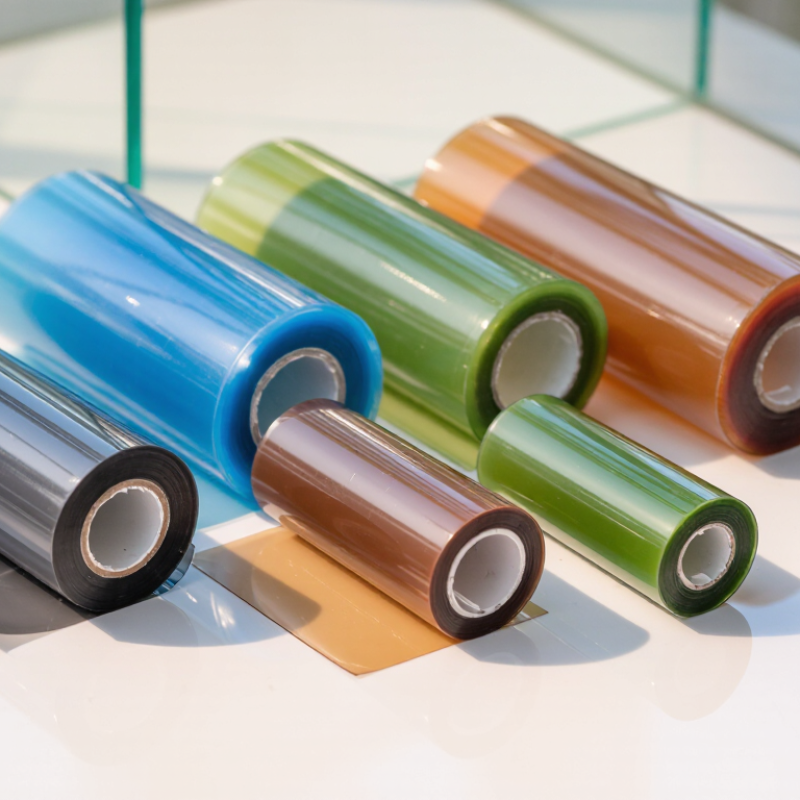
Tinted plastic film is a thin polymer sheet colored to control light, appearance, or heat transmission. Its base may be polyester, PVC, or another suitable plastic, depending on the intended use. Color can come from dyes or finely dispersed pigments. The difference matters.
Manufacturers commonly add color concentrate to molten resin before extrusion. A screw mixer blends the material, then pushes it through a flat die into a continuous sheet. Cooling rolls set the thickness and surface finish. Some films are made by coating a clear sheet with a tinted layer, then drying or curing it. For certain polyester films, stretching improves strength and dimensional stability. Even so, perfect color uniformity is difficult.
Production checks may measure thickness, visible-light transmission, haze, and color consistency across the roll. Samples can also be tested for adhesion, flexibility, and resistance to heat or sunlight, according to the application. A darker look does not automatically mean better glare or heat control; performance depends on the formulation and film structure. Small variations matter. Edges, seams, and installation conditions can affect the final appearance, too. That is worth remembering.
Tinted plastic films are distinguished by more than their visible shade. Light transmission describes how much visible light passes through the material, while haze affects image clarity. Shade matters. Two films that look similar on a sample card may perform differently under direct sunlight or indoor lighting. For reliable comparisons, request measured transmission and color data, and check samples under the conditions where the film will be used.
Heat and ultraviolet performance also vary by resin, pigment, additives, and film thickness. A darker tint does not automatically mean better heat control. Ask for test results that specify the measurement method and sample thickness. Mechanical properties matter too: tensile strength, tear resistance, and flexibility can affect converting, installation, and service life. A stiff film may wrinkle around a tight curve; a softer one may stretch more than expected.
Manufacturing consistency is another useful differentiator. Check whether color, thickness, and surface finish remain stable across production batches. Roll edges, pinholes, and uneven tint can become visible during fabrication. Small defects count. No single specification predicts performance in every setting, and published tests may not mirror real installation conditions. A trial with the intended adhesive, substrate, and exposure can reveal problems that a datasheet misses.
The entries below compare ten common tinted-film product types, not individual manufacturers or a company ranking. Properties vary by formulation, thickness, and production process; consult product specifications for project requirements.
| No. | Tinted Film Product Type | Typical Base Material | How Color or Tint Is Achieved | Distinguishing Properties | Common Applications |
|---|---|---|---|---|---|
| 1 | Dyed polyester film | PET | Colorants are incorporated into or applied to the film. | Available in a wide range of shades and light-transmission levels; performance depends on dye stability and construction. | Window films, graphic overlays, and decorative laminates. |
| 2 | Metallized tinted polyester film | PET with a thin metal coating | A metal layer provides reflective properties; tint may be added through dyes or coatings. | Can reflect solar energy and create a reflective appearance; metal layers may affect radio-frequency signal transmission. | Architectural glazing films and reflective packaging laminates. |
| 3 | Ceramic-coated tinted film | PET or another clear polymer film | Ceramic particles are incorporated into a coating or film layer; color can be separately formulated. | Non-metal construction avoids the metal layer associated with some signal-interference concerns; heat and light performance varies by design. | Automotive and architectural window applications. |
| 4 | Colored PVC film | PVC | Pigments or dyes are compounded into the polymer or applied as a coating. | Can be made flexible or rigid and supplied in opaque, translucent, or transparent grades; formulation influences flexibility and weathering. | Signage, surface decoration, stationery, and protective coverings. |
| 5 | Colored polyethylene film | LDPE, LLDPE, or HDPE | Color pigments are typically blended into the polymer before film extrusion. | Flexible, moisture-resistant, and available in varying strengths and transparencies; properties depend on resin grade and film structure. | Packaging, agricultural covers, liners, and protective sheeting. |
| 6 | Colored polypropylene film | PP, including cast or oriented grades | Pigments or color concentrates are incorporated during processing. | Often offers good stiffness and moisture resistance; clarity, sealability, and impact behavior depend on grade and orientation. | Flexible packaging, labels, stationery, and decorative films. |
| 7 | Tinted polycarbonate film | PC | Colorants are compounded into the resin or applied in a coating. | Known for impact resistance and dimensional stability; optical clarity and UV resistance depend on grade and any protective layers. | Equipment guards, lighting components, displays, and formed parts. |
| 8 | Tinted acrylic film | PMMA | Color is introduced through pigments, dyes, or surface coatings. | Can provide high optical clarity and weatherability; flexibility and impact resistance are grade-dependent. | Displays, lighting, glazing laminates, and decorative surfaces. |
| 9 | Colored TPU film | Thermoplastic polyurethane | Colorants are compounded into the TPU or added as a coating or laminate layer. | Typically flexible and abrasion-resistant; elasticity, chemical resistance, and clarity vary with TPU chemistry. | Protective laminates, flexible components, and specialty surface films. |
| 10 | Tinted EVA film | Ethylene-vinyl acetate copolymer | Dyes or pigments are added to the polymer formulation. | Used as a flexible encapsulating or bonding layer; optical transmission and durability depend on formulation and processing. | Laminated glass and photovoltaic module encapsulation. |
Assessing a tinted-film manufacturer starts with the sample, not the sales sheet. Ask for thickness tolerances, color consistency data, and visible-light transmission readings across several production rolls. A spectrophotometer should verify shade; haze and tensile tests reveal whether appearance comes at the cost of clarity or strength. Small differences matter. A deep bronze sample can look uniform under factory lighting, then shift beside a window.
Check how the supplier controls production variation. Request batch records, calibration schedules, and test results from both laboratory samples and full-width rolls. Ask how they handle color drift, edge defects, and changes between resin lots. These questions expose process discipline. Yet paperwork alone is not proof; compare a retained sample with a later shipment under the same light source.
Material choices deserve equal scrutiny. The OECD’s Global Plastics Outlook reports that 460 million tonnes of plastics were produced in 2019, while only 9% of plastic waste was recycled. This makes clear material identification and end-of-life information useful capability checks, not decorative claims. Ask whether pigments, coatings, and adhesive layers affect the film’s stated recyclability. The answer may be less tidy than a brochure suggests. The UNEP report Turning off the Tap (2023) estimates that coordinated changes could cut plastic pollution by 80% by 2040; manufacturers should therefore explain what design changes they can actually support. Ask for test methods, not just promises.
Ten leading tinted plastic film manufacturers worldwide serve markets ranging from building interiors to vehicle components and packaging. Their products may look similar on a sample card, yet differ in light transmission, color stability, thickness, and surface finish. Buyers should compare technical data sheets alongside physical samples, especially when films will face strong sunlight or frequent cleaning.
Manufacturing capability matters. A dependable supplier should explain how tint is controlled across production batches and provide clear information about testing methods. Ask for samples large enough to reveal color shifts near windows or under cool-white lighting. Details matter. Some films reduce glare, while others are chosen mainly for privacy or appearance; these functions are not interchangeable. Requesting performance figures for the intended application helps avoid mismatched expectations.
Global manufacturers also vary in customization, minimum order quantities, lead times, and technical support. A supplier with broad production capacity may suit a large project, while a smaller operation may offer more flexible specifications. Neither is automatically better. Sample testing can still miss long-term fading, and published figures may not reflect every installation condition. Samples can mislead. Buyers should record the film’s thickness, tint, and test conditions before comparing quotations, then confirm that delivered rolls match the approved specification.
Tinted plastic films serve practical roles across packaging, buildings, vehicles, and electronics. In food packaging, color can reduce light exposure and help products stand out on crowded shelves. In architecture, tinted glazing films soften glare and limit solar heat entering a room. Vehicle interiors use colored films for trim and light control. Small details matter: a film that looks subtle indoors may appear much darker under direct sun.
Emerging trends focus on measurable performance and easier recycling. Producers are exploring recycled feedstocks, thinner film structures, and coatings that manage heat or ultraviolet light. Yet these options can involve trade-offs. Recycled content may affect color consistency, while added layers can complicate material recovery. Progress is uneven. Buyers should compare visible-light transmission, haze, weathering resistance, and compatibility with inks or adhesives. A short pilot run can reveal curling, fading, or sealing problems before full production.
Tips: Request samples and test them in the actual lighting and climate conditions. Check color stability and end-of-life guidance. A specification sheet helps, but real-world trials matter more.
Plastic-film demand is connected to several end-use sectors. The chart shows the distribution of plastics demand in Europe by sector in 2022 as a broad application proxy; it is not a market-share breakdown for tinted films.
What this suggests: Packaging and building & construction are major plastics end-use sectors. For tinted films, relevant areas include packaging, architectural glazing, and automotive glazing. Emerging product directions include improved solar and UV control, lightweight glazing solutions, and designs that support recyclability.
Source: Plastics Europe, Plastics — the Facts 2023 (European plastics demand by sector, 2022). Values are rounded; figures cover plastics overall, not tinted plastic film specifically.
