
Who Are the Top 10 Shipping Tarp Manufacturers in China?

A dependable Shipping Tarp does more than cover a load. It must handle rain, wind, road spray, and repeated folding without failing at the seams. For buyers, small details matter: fabric weight, reinforced hems, grommet spacing, stitching quality, and the way a tarp holds up after months of use. A sample can reveal more than a polished product photo.

China has a broad supplier base, from factories focused on standard polyethylene covers to manufacturers offering customized sizes, fabrics, and finishing options. This guide introduces ten shipping tarp manufacturers for buyers to compare. The selection should be treated as a practical starting point, not a final verdict. Supplier capabilities and product lines can change, and rankings are not universal.

Look beyond price. Ask about material specifications, production capacity, inspection procedures, packaging, and lead times. Request current product data and, where suitable, test samples under the conditions your cargo will face. Check whether the supplier can explain its quality controls clearly, rather than relying on general claims. That matters.

A lower quote may omit useful details, such as edge reinforcement or replacement terms. Some listings also provide limited evidence of long-term performance. That is worth questioning. The manufacturers below can help narrow the search, but buyers should verify current information directly and compare like-for-like specifications before placing an order.
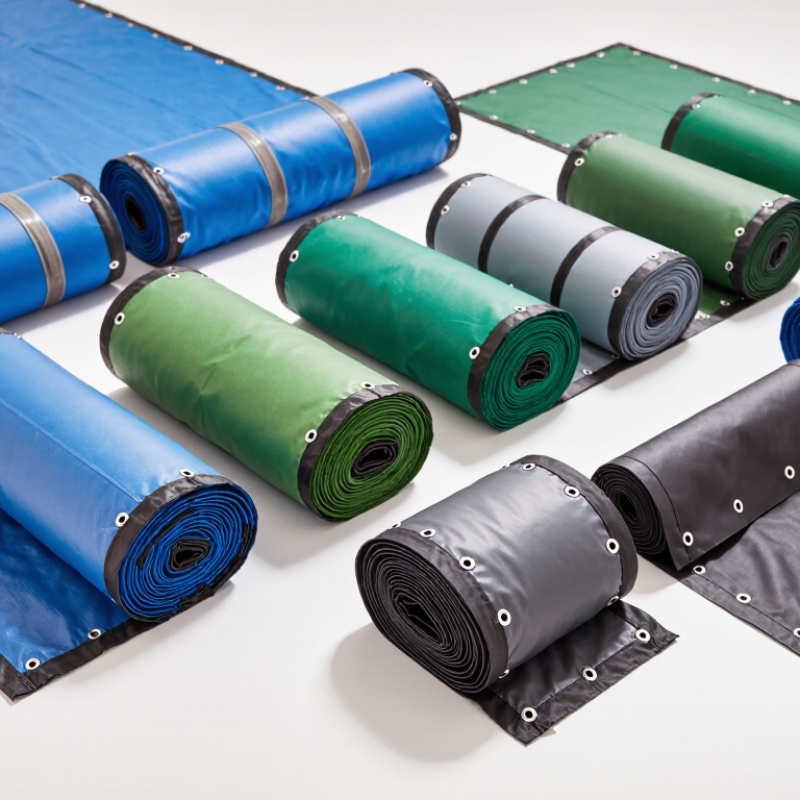
Who Are the Top 10 Shipping Tarp Manufacturers in China?

What Shipping Tarps Are and How They Are Used

Shipping tarps are durable covers that protect cargo from rain, road spray, dust, and direct sunlight during transport or temporary outdoor storage. Many use coated woven fabric, reinforced edges, and metal or polymer grommets. The coating helps shed water, while the weave resists abrasion and tearing. No tarp is indestructible.

On a flatbed truck, workers spread the tarp across the load and secure it with ropes or straps through the grommets. A snug fit matters. Loose fabric can flap in the wind, rub against cargo, and wear through at contact points. Tarps help keep lumber, machinery, boxes, and bagged materials cleaner, but they do not replace suitable packaging or proper load restraint. Before use, check for pinholes, split seams, and damaged eyelets. After unloading, let the tarp dry before folding it; trapped moisture can encourage mildew. Select a size and construction suited to the cargo and route. Thickness alone can be misleading. Edge reinforcement and careful fastening matter too.

How to Evaluate Chinese Shipping Tarp Manufacturers

Evaluating a Chinese shipping tarp manufacturer takes more than comparing catalog photos and quoted prices. Ask for the fabric specification, including material, weight per square meter, coating type, and stated UV resistance. Clear answers matter. If specifications change between the quotation and sample, pause and ask why.

Request a production sample and inspect it in ordinary daylight. Check whether the coating feels even, edges are reinforced, and grommets sit firmly without tearing the fabric. Measure the sample against the drawing, then look closely at seams after folding and unfolding it several times. A neat sample is useful, but it cannot prove every production batch will match. Ask how the factory records incoming-material checks, in-process inspections, and final measurements. Request relevant test reports, and confirm which product and test method they cover.

Factory visits or live video calls can help verify equipment, storage, and workflow, though neither guarantees consistent quality. Ask about monthly capacity, lead times, packaging, and how defects are handled. Get tolerances and acceptance criteria in writing. Vague promises are hard to act on later. I would also compare responses to a small technical question; careful, specific replies can reveal more than a polished brochure. Still, communication is only one signal, not proof. A rushed decision based on price alone can become an expensive lesson.

Who Are the Top 10 Shipping Tarp Manufacturers in China? - How to Evaluate Chinese Shipping Tarp Manufacturers

Use these ten evidence-based criteria to compare suppliers. They are evaluation dimensions, not a ranked list of named manufacturers; confirm all claims directly with each supplier.

No. Evaluation Dimension What to Check Useful Evidence
1 Product suitability Confirm the tarp is designed for the intended cargo, transport conditions, and exposure to weather or abrasion. Product specifications, technical drawings, and a sample matched to the intended use.
2 Material specification Check the stated base fabric, coating or lamination, thickness or weight, and construction details. A written material specification and test results for the quoted product, where available.
3 Dimensions and customization Verify available sizes, tolerances, edge finishing, reinforcement, eyelets, and custom configurations. Approved drawings or a sample specification showing measurements and construction.
4 Performance testing Identify which performance properties matter for the application, such as tensile strength, tear resistance, or water resistance. Test reports that identify the tested material, method, date, and results. Check whether testing was performed by an independent laboratory.
5 Quality control Ask how incoming materials, production steps, finished goods, and nonconforming products are inspected and recorded. Documented inspection procedures, sample inspection records, and a clear process for handling defects.
6 Production capability Determine whether the supplier can meet the required product configuration, order quantity, and production schedule. A production plan, confirmed lead time, and a factory audit or live production review when practical.
7 Compliance and traceability Check the requirements of the destination market and whether product batches and materials can be traced. Applicable declarations, certificates, or test reports, verified for scope, validity, and product relevance.
8 Packaging and export readiness Confirm packing method, labeling, shipment documentation, and the agreed delivery terms. A written packing list, packaging details, and a clear quotation specifying delivery terms.
9 Commercial transparency Compare quotations on the same specification and clarify minimum order quantity, tooling or setup charges, payment terms, and exclusions. An itemized quotation and written confirmation of all order terms.
10 Communication and after-sales support Assess response clarity, willingness to resolve technical questions, and the process for claims or replacement requests. Written response commitments, warranty terms if offered, and a documented complaint-handling process.

Comparison tip: Request comparable samples and specifications from shortlisted suppliers, then verify claims against the actual product and purchase documents before placing an order.

Profiles of 10 Leading Shipping Tarp Manufacturers in China

A useful profile of ten Chinese shipping-tarp manufacturers should compare production strengths, not just factory size. One may specialize in PVC-coated polyester and welded seams; another in lighter PE-woven covers. Others may focus on oversized sheets, reinforced corners, UV-resistant coatings, cold-weather flexibility, custom colors, short production runs, export packaging, or documented quality checks. These are practical distinctions, not proof that one supplier is universally best.

Demand provides context. UNCTAD’s Review of Maritime Transport 2024 reports that maritime trade grew 2.4% in 2023, reaching 12.3 billion tonnes. That figure describes seaborne trade, not tarp sales, so it should not be treated as a direct market forecast. Still, cargo protection remains a practical purchasing concern.

Ask each manufacturer for fabric weight, tensile and tear-strength results, seam specifications, and inspection records. Check a physical sample, too: a neat surface can hide weak stitching.

One limitation is that published factory claims are not always independently verified. Buyers should compare like-for-like test results and confirm production details before ordering.

Comparing Their Materials, Products, and Production Capabilities

A credible comparison of ten Chinese shipping-tarp manufacturers should start with material, not catalog size. PVC-coated polyester is suited to repeated handling and wet conditions, while polyethylene woven tarps are lighter and often more economical. Mesh fabrics allow airflow but provide less weather protection. Ask for fabric weight, coating details, and test records. Numbers on a product sheet need context.

Products vary from flatbed covers and lumber tarps to custom-sized sheets with reinforced edges. Inspect seam construction, corner patches, grommet spacing, and the feel of the hem. Small details matter. A strong production facility should explain its cutting, heat-welding or sewing process, inspection steps, and capacity for repeat orders. Request a sample and check dimensions, finish, and packaging before approving a large run. No factory is perfect, and a smooth sample does not guarantee every batch will match. Compare documented quality controls, realistic lead times, and clear responses to technical questions; then verify the claims against the actual product.

How to Choose a Manufacturer for Your Shipping Tarp Needs

Choosing a shipping tarp manufacturer starts with the cargo and route, not a catalogue photo. Will the cover face salt spray, sharp edges, strong sun, or repeated folding? UNCTAD’s Review of Maritime Transport 2024 reports 858.9 million TEU in global container port throughput in 2023, up 2.4% from 2022. That scale underlines how often freight moves through demanding handling environments, though it is not a measure of tarp demand.

Ask for the fabric’s weight, coating type, UV-resistance data, and tensile and tear-test results. Request the test method and production batch details, not just a certificate image. For seams, check whether the supplier uses welding or stitching, and ask how it tests finished panels. A practical sample check helps: measure its dimensions, inspect corner reinforcement, and flex the material in cool conditions. No checklist catches everything.

The World Bank’s Logistics Performance Index 2023 assesses 139 economies and includes shipment timeliness among its measures. Use that as a reminder to check a manufacturer’s lead-time records, production capacity, and packaging process. Ask for a written tolerance range and a clear response plan for defects. A polished sample can still hide inconsistent bulk production; an on-site or third-party inspection may reveal more. Dig deeper. Compare like with like, and keep the test records with the purchase specifications.

How to Choose a Shipping Tarp Manufacturer in China

A practical buyer’s checklist for comparing manufacturers. Scores show suggested evaluation priorities on a 1–5 scale; they are not survey results or company rankings.

Verify material specifications, request samples, and confirm production capacity, inspection procedures, customization options, lead times, and warranty terms before placing an order.

Article Source: