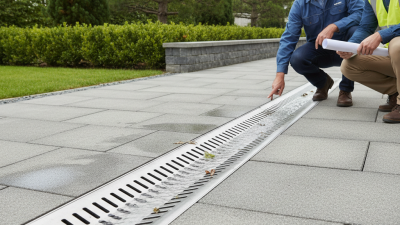
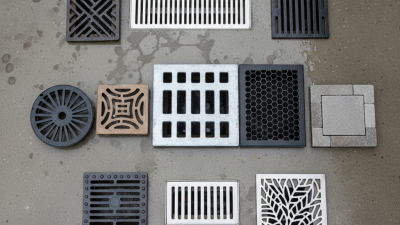
Choosing the right channel drain begins with the site, not the product catalogue. A channel drain must control water, carry expected loads, and remain serviceable after installation. That sounds simple. It is not.
ASCE’s 2021 Report Card for America’s Infrastructure rated stormwater infrastructure C−, highlighting widespread capacity and maintenance concerns. NOAA’s Atlas 14 precipitation-frequency data also shows why local rainfall intensity matters. A drain designed for yesterday’s storm may struggle during today’s heavier downpour. These reports support a practical lesson: hydraulic calculations should guide selection, rather than appearance alone.
Start by measuring the drainage area, surface slope, rainfall intensity, and discharge point. Then check the required load class under BS EN 1433 or the relevant local standard. A residential patio may need a pedestrian-rated grate, while a warehouse entrance may require a heavy-duty ductile iron system. The channel width, outlet size, invert depth, and grate opening must work together. One weak detail can restrict the entire system.
Think about maintenance too. Leaves, gravel, and sediment collect near entrances. A narrow grate can look elegant but clog quickly. Access points and removable grates can reduce that risk. Material selection matters in coastal or chemically exposed environments. Polymer concrete, stainless steel, and galvanized steel do not perform identically.
No single drain wins every site. This guide also acknowledges an uncomfortable point: specifications can be correct yet installation can still fail. Poor falls, weak bedding, or unsealed joints often undermine good design. The right channel drain balances water flow, loading, durability, local standards, and realistic maintenance habits.

A channel drain is not merely a narrow trench with a decorative grate. Its main function is to intercept sheet flow before water reaches a doorway, ramp, or slab edge. The drain then carries water toward a safe outlet. In practice, performance depends on hydraulic capacity, channel slope, grate opening, and maintenance access. A perfectly sized channel can still fail when leaves cover its grate. That detail is often underestimated.
Selection should begin with the application. A shower or courtyard needs different loading and hygiene considerations than a loading bay. For vehicle areas, verify the grate’s tested load class and expected wheel path. For exposed paving, use local rainfall data rather than visual judgment. NOAA Atlas 14 provides precipitation-frequency estimates, including 1%-annual-chance rainfall events. FHWA’s HEC-22 method evaluates drainage area, rainfall intensity, gutter flow, inlet capacity, and bypass flow. These are practical checks, not paperwork.
The U.S. Environmental Protection Agency reports that urbanization can increase runoff volume by two to six times compared with natural terrain. This makes controlled collection important beyond property protection. A sediment basket or accessible outlet may reduce blockages, but it cannot replace inspection. Confirm invert levels, outlet size, waterproofing, and cleanout access on site. One uncomfortable lesson is that more capacity is not always better. A deeper channel may complicate construction and create a trip hazard. Review actual falls, thresholds, and maintenance habits before ordering.
Channel drains should be selected according to the expected traffic load and installation location. The chart shows the load ratings defined by EN 1433, helping match each drainage class with a typical application.
Load ratings are nominal test loads defined by EN 1433. Hydraulic capacity, channel width, outlet size, installation depth, and local site conditions should also be checked before selection.
Choosing a channel drain starts with the site, not the product catalogue. Walk the area during rainfall if possible. Note ponding depth, flow direction, soil type, slope, and nearby entrances. A garage apron, loading yard, and pool deck face different drainage demands. The U.S. Geological Survey’s National Water Information System can reveal local rainfall and stream patterns. NOAA Atlas 14 provides precipitation-frequency estimates for many regions. Use these records instead of relying on an average storm.
Hydraulic capacity depends on rainfall intensity, catchment area, channel slope, and outlet restrictions. The FHWA HEC-22 Urban Drainage Design Manual recommends evaluating inlet spacing, spread, bypass flow, and surface flow paths. A narrow channel may work beside a doorway but fail across a wide vehicle route. It can fill with leaves quickly. That detail matters. ASCE’s 2021 Infrastructure Report Card rated U.S. stormwater infrastructure D, highlighting aging systems and maintenance pressure. Therefore, connect the drain to a verified discharge route, not an assumed one.
Traffic loading also changes the specification. Pedestrian areas need different grates from driveways or industrial yards. Check the required load class under EN 1433 or the applicable local standard. Confirm grate access, sediment cleaning, freeze-thaw exposure, and chemical contact. I would leave a small design margin rather than size directly to the calculated flow. Calculations are useful, but real sites are rarely clean or perfectly level. Recheck the outlet after installation. A beautiful channel still fails when its downstream pipe is undersized.
How to Choose the Right Channel Drain for Your Project?
Material affects durability, handling, and maintenance. Polymer concrete offers high strength and resists many outdoor conditions. It can feel heavy during installation. PVC is lighter and easier to cut, but it may need careful bedding support. Stainless steel suits kitchens, pools, and exposed architectural areas. Galvanized steel costs less, though scratched coatings may develop corrosion. Always check chemical exposure, temperature changes, and cleaning methods before choosing.
Size must match the water volume and available space. A narrow drain may suit a shower entrance or small patio. Wider channels handle stronger runoff from driveways and loading areas. Measure the catchment area, local rainfall, and outlet capacity. Do not select by width alone. A shallow channel with a blocked outlet still performs poorly. A slight fall toward the outlet helps, but excessive slope can disturb surface finishes.
Load ratings show where the drain can operate safely. A15 generally suits pedestrians and garden areas. B125 is more suitable for residential driveways. C250 and D400 serve heavier traffic zones when the surrounding concrete is properly designed. These classes are not decorative labels. Verify the tested standard, grate fixing, and installation instructions. One overlooked detail is joint alignment. Uneven joints can collect grit and create movement. It is tempting to choose the strongest grate everywhere, but that may increase cost without improving drainage. Recheck the design after excavation begins. Site levels often differ from drawings.
| Drain Material | Typical Construction | Common Nominal Widths | Typical Depth Range | Key Advantages | Limitations and Selection Notes | Common Applications |
|---|---|---|---|---|---|---|
| Polypropylene or recycled polymer | Injection-moulded channel body with a separate grate or slotted cover | 100, 150, 200, and 300 mm | 70–250 mm | Lightweight, easy to cut and install, resistant to many salts and common chemicals, and generally economical | Thermal movement and deflection should be considered. The surrounding concrete and grate connection are essential for higher load classes. | Residential driveways, patios, gardens, pedestrian areas, and light-duty parking areas |
| Polymer concrete | Mineral aggregate bound with polymer resin, normally supplied with a metal or composite grate | 100, 150, 200, 300, and 400 mm | 90–350 mm | High compressive strength, relatively low water absorption, good dimensional stability, and strong resistance to freeze-thaw conditions | Heavier than plastic systems and less tolerant of poor handling or uneven bedding. Correct concrete surround is required for rated loads. | Commercial paving, car parks, service yards, industrial floors, and road edges |
| Glass-fibre-reinforced concrete | Precast concrete channel reinforced with glass fibres, usually paired with a ductile iron or steel grate | 100, 150, 200, 300, and 400 mm | 100–400 mm | Rigid structure, good fire performance, durable mineral-based body, and compatibility with heavy-duty installations | Requires careful lifting and jointing. Cracking risk increases when the channel is installed on an unstable or poorly compacted base. | Commercial areas, loading zones, industrial yards, and high-traffic pavements |
| Galvanized carbon steel | Pressed or fabricated steel channel with a zinc coating and removable steel grate | 100, 150, 200, and 300 mm | 75–300 mm | Good strength-to-weight ratio, quick assembly, and suitable for many indoor and moderately corrosive environments | Cut edges, scratches, standing water, and aggressive chemicals can reduce corrosion protection. Verify coating requirements for coastal or industrial exposure. | Workshops, warehouses, plant rooms, commercial kitchens, and covered service areas |
| Stainless steel | Formed stainless-steel channel with a stainless grate or hygienic slotted cover | 100, 150, 200, and 300 mm | 75–300 mm | High corrosion resistance, clean appearance, easy-to-clean surfaces, and suitability for hygienic environments | Higher initial cost. The grade should match the exposure; chloride-rich environments may require a more corrosion-resistant stainless-steel specification. | Food processing, pharmaceutical areas, laboratories, commercial kitchens, pools, and coastal installations |
| Load Class | Test Load | Typical Location | Recommended Drain Characteristics | Important Installation Consideration |
|---|---|---|---|---|
| A 15 | 15 kN | Pedestrian zones, cycle paths, private gardens, and areas not accessible to motor vehicles | Polypropylene, polymer concrete, or light steel channels with suitable covers | Install on a stable base and prevent vehicle access unless a higher class is specified. |
| B 125 | 125 kN | Footways, pedestrian areas, residential driveways, and car parks used by passenger vehicles | Reinforced polymer, polymer concrete, galvanized steel, or stainless-steel systems with rated grates | The grate, channel body, concrete surround, and adjacent pavement must all support the intended class. |
| C 250 | 250 kN | Kerbside channels, road edges, and areas where traffic loads are possible but wheel loading is not concentrated in the carriageway | Rigid polymer concrete or reinforced steel systems with mechanically secured grates | Keep the channel correctly positioned relative to the kerb and avoid placing it directly in a wheel track unless approved. |
| D 400 | 400 kN | Carriageways, commercial traffic lanes, loading bays, and industrial yards | Heavy-duty polymer concrete, reinforced concrete, or steel channels with ductile iron or heavy steel grates | Use a designed concrete surround, adequate reinforcement, correct jointing, and a grate locking system. |
| E 600 | 600 kN | Industrial sites, ports, freight terminals, and areas subject to high wheel loads | Heavy-duty concrete or polymer concrete systems with engineered heavy-load grates | Confirm wheel loads, axle configuration, dynamic impact, and pavement design with the project engineer. |
| F 900 | 900 kN | Aircraft movement areas and other locations exposed to exceptionally high loads | Specially engineered heavy-duty channel systems with high-strength grates and reinforced installation details | Requires project-specific structural design, subgrade assessment, reinforcement, and inspection procedures. |
| Nominal Channel Width | Typical Outlet Sizes | Suitable Use | Selection Guidance |
|---|---|---|---|
| 100 mm | 50–110 mm | Patios, balconies, residential paths, and small driveways | Suitable where the contributing catchment is small and rainfall intensity is moderate. Confirm hydraulic capacity before final selection. |
| 150 mm | 75–160 mm | Residential driveways, medium-size courtyards, commercial entrances, and small parking areas | A practical general-purpose size for many external drainage projects, subject to outlet capacity and local rainfall data. |
| 200 mm | 100–200 mm | Large courtyards, car parks, service roads, and commercial paving | Provides greater hydraulic capacity and is often selected where runoff areas, slopes, or rainfall intensity are higher. |
| 300 mm | 150–300 mm | Industrial yards, loading areas, broad paved surfaces, and high-runoff locations | Use hydraulic calculations and consider multiple outlets, silt collection points, and access for maintenance. |
| 400 mm and above | 200–400 mm or engineered outlets | Large industrial areas, transport infrastructure, and major surface-water collection systems | Normally requires project-specific hydraulic and structural design rather than selection by width alone. |
Important: Load classes are standardized test classifications under EN 1433. The stated class applies only when the complete drainage system—including the channel body, grate, joints, concrete surround, bedding, and adjacent pavement—is installed according to the applicable manufacturer and project requirements. Hydraulic capacity depends on rainfall intensity, catchment area, channel slope, outlet size, grate opening, and maintenance condition.
Choosing the right channel drain starts with the grate, not the trench. Select a load class that matches actual traffic, including occasional vehicles. EN 1433 classifies drainage channels from pedestrian areas to heavy industrial zones. A residential driveway may need more strength than expected. Soil movement and delivery vehicles can change the calculation.
Grate openings also affect safety. In accessible routes, many codes limit openings to 13 millimeters and require alignment with travel direction. Narrow slots reduce heel and wheelchair risks, but they may clog faster. That trade-off is easy to underestimate. ASCE’s 2021 Infrastructure Report Card rated United States stormwater infrastructure D, highlighting capacity and maintenance concerns. Therefore, choose grates that can be lifted without special tools and cleaned regularly.
Outlet sizing should follow local rainfall data, not guesswork. NOAA Atlas 14 provides rainfall intensity and frequency information for drainage design across the United States. Match the outlet diameter to catchment area, slope, and expected debris. A larger outlet cannot fix a poorly graded trench. Installation details matter just as much. Set the channel on a continuous concrete bed, maintain the designed fall, and protect joints during curing. Site inspections often find grates sitting slightly high or low after paving. That small error creates standing water, noise, and trip hazards. Rechecking levels before the concrete sets is simple, though it is often skipped. Local plumbing, accessibility, and structural requirements should still control the final selection.
Choosing a channel drain starts with rainfall, not appearance. NOAA Atlas 14 provides local precipitation-frequency estimates for design storms, while FHWA HEC-22 explains how flow, slope, inlet spacing, and surface spread affect drainage performance. Use those references with local codes. A drain rated for occasional rain may struggle beside a sloped driveway or loading area.
Plan the installation around real site conditions. Confirm the catchment area, finished levels, outlet route, and likely debris sources. A small fall toward the channel helps, but poor bedding can create settlement and standing water. CIRIA’s C753 SuDS Manual stresses source control, inspection access, and maintainable drainage layouts. Keep grates flush with the pavement. Protect joints during concrete placement. Small errors matter.
Maintenance needs a practical schedule. Inspect before the wet season, after major storms, and whenever sediment becomes visible. Remove leaves, grit, and construction residue before they block the outlet. Check grates for movement and inspect concrete edges for cracking. I have seen clean channels fail because the downstream pipe was ignored. That part is easy to miss.
Do not overtrust the catalogue flow rate. Laboratory values rarely reproduce clogged grates, uneven paving, or unexpected runoff. Recheck the design after landscaping changes. Long-term performance depends on access, cleaning time, load class, corrosion exposure, and replacement planning—not just the initial purchase.