
Choosing the right Artificial Lift Technologies for your well is crucial. The decision involves various factors. Each technology has its specific applications and limitations.
Different wells require different approaches. For instance, some wells might benefit from pumping units, while others may need gas lift systems. Understanding these nuances is essential.
It’s not always straightforward. Some factors may seem trivial but can impact efficiency. Get input from experts or reference case studies. Taking time to evaluate options can yield better results.
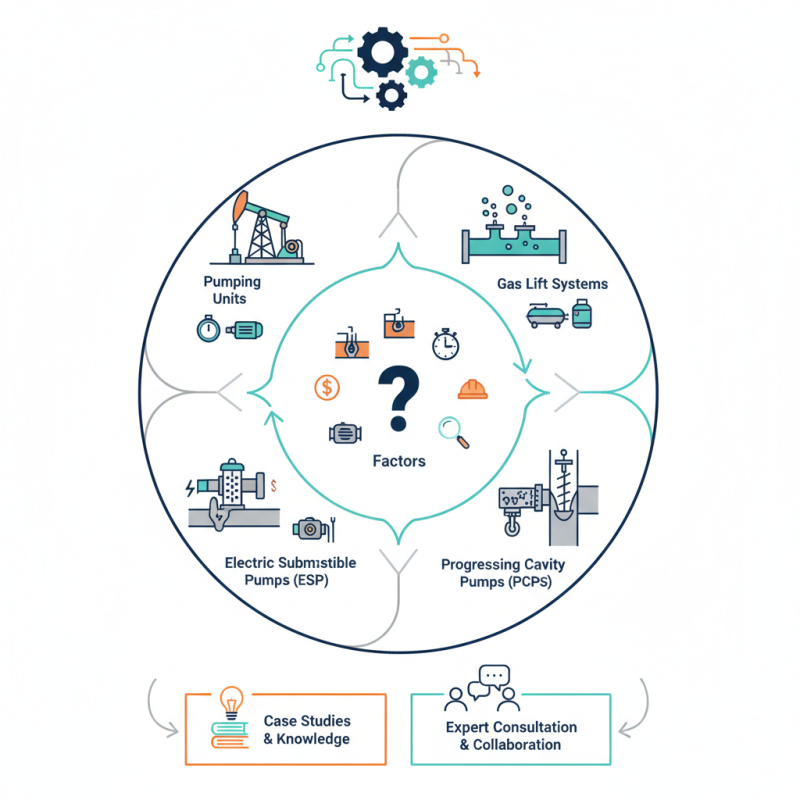
Choosing the right artificial lift technology is crucial for optimizing production in oil wells. Several factors can influence this selection. One significant factor is the well depth. Deep wells often require different technologies compared to shallow ones. Not all systems perform equally well at varying depths.
Another important consideration is fluid characteristics. The type of fluid—whether it is heavy, light, or contains gas—will dictate the choice of lift method. For example, heavier fluids may need different solutions than lighter ones. Pump efficiency also varies depending on fluid type.
Economic factors cannot be overlooked. Budget constraints and operational costs play a big role in decision-making. Sometimes, the best technology may appear too expensive at first glance, but long-term benefits could justify the initial investment. Operators often face challenges in balancing performance and cost. It’s important to analyze each option thoroughly yet remain flexible in approach.
When it comes to artificial lift, understanding the difference between conventional and advanced methods is vital. Conventional methods include beam pumps, sucker rod pumps, and gas lift systems. These techniques have been successfully used for decades. However, they may face limitations in specific conditions, such as high viscosities or deep wells.
Advanced artificial lift technologies bring innovative solutions. Electric submersible pumps (ESPs) and progressive cavity pumps (PCPs) can handle challenging fluids. They also provide higher efficiency and versatility compared to conventional options. This evolution in technology allows for greater adaptability to varied well conditions, which is essential for optimizing production.
Tips: Focus on the specific needs of your well. Consider factors such as depth, fluid characteristics, and production goals. Evaluate the initial costs versus long-term benefits. Remember to regularly assess the performance of your chosen method. Be open to adjustments between conventional and advanced technologies, as changing conditions may require different approaches.
When choosing the right artificial lift technology for your well, economic considerations are crucial. Cost analysis plays a significant role in decision-making. Various lift technologies can significantly differ in terms of installation, maintenance, and operational costs. Each method has its benefits and drawbacks, impacting overall production efficiency and profitability.
Tip: Always conduct a detailed cost-benefit analysis. Look at both initial costs and long-term expenses. A technology that seems cheaper upfront could lead to higher costs over time due to maintenance needs or inefficiencies.
Consider production rates and downtime. Some technologies might boost output but increase susceptibility to mechanical failures. Balance the short-term gains with long-term reliability.
Tip: Consult with industry professionals for insights. Their experience can shed light on hidden costs or risks associated with new technologies. Think critically about your choices. What works today might need reevaluation tomorrow as conditions change.
When selecting the right artificial lift technology, performance metrics play a crucial role. Efficient production rates are essential for maximizing well output. According to a recent industry report, wells using effective Artificial Lift Systems can experience up to a30% increase in production rates compared to non-lift methods. Understanding how to evaluate efficiency is therefore vital for operators.
Key performance indicators (KPIs) include flow rate, energy consumption, and uptime. A well-functioning system must balance energy efficiency with consistent output. A study showed that improper technology selection could lead to a 15% reduction in efficiency, causing significant financial losses. Operators should monitor these metrics closely, adjusting parameters as needed.
Technical challenges will arise. A mismatch between the well's characteristics and the lift technology can lead to suboptimal performance. It's not uncommon to see frequent adjustments in field operations. Awareness of these pitfalls is essential for long-term success. Operators must invest in ongoing training and development to make informed choices, using performance metrics as a guiding light. This approach ensures they adapt to changing conditions and improve overall production efficiency.
Artificial lift technologies are essential in optimizing oil recovery. Many operators have successfully implemented these systems, but results can vary. Case studies provide valuable insights into what works best.
In one example, a well in a mature field used electrical submersible pumps. Initial production rates improved significantly, reaching over 1,500 barrels per day. However, after six months, the production declined. The reason? A lack of addressing scaling issues in the well. Operators learned they needed better monitoring and maintenance protocols.
Another case involved a gas-lift system in a challenging reservoir. The initial setup resulted in low efficiency. Adjustments to gas injection rates improved performance, yet questions arose about the long-term sustainability. Operators were left pondering their approach. This illustrates the need for ongoing evaluation and adaptability in artificial lift technology selection. Each well is unique, and solutions must evolve.
