
How to Choose the Best Small Cement Mixer for Concrete?

Choosing the right small cement mixer for concrete projects can seem daunting. According to James Carter, a renowned expert in construction equipment, "Selecting the optimal mixer is key to achieving quality results." His words resonate deeply in the industry, emphasizing the importance of making an informed choice.

A small cement mixer is vital for many DIY enthusiasts and professionals alike. It streamlines the mixing process, making it efficient and effective. However, not all mixers are created equal. Inadequate knowledge may lead to poor decisions that affect project outcomes. Ensuring you pick the right size and power can be crucial. A mismatch can lead to frustration and wasted resources.

Consider features like drum capacity and portability. A 2-3 cubic foot mixer is often ideal for small jobs. Yet, some might opt for larger models without needing to. Reflecting on the options available is important. It’s easy to overlook these details amidst the excitement of a new project. Thoughtful consideration here will save time and enhance the final product.
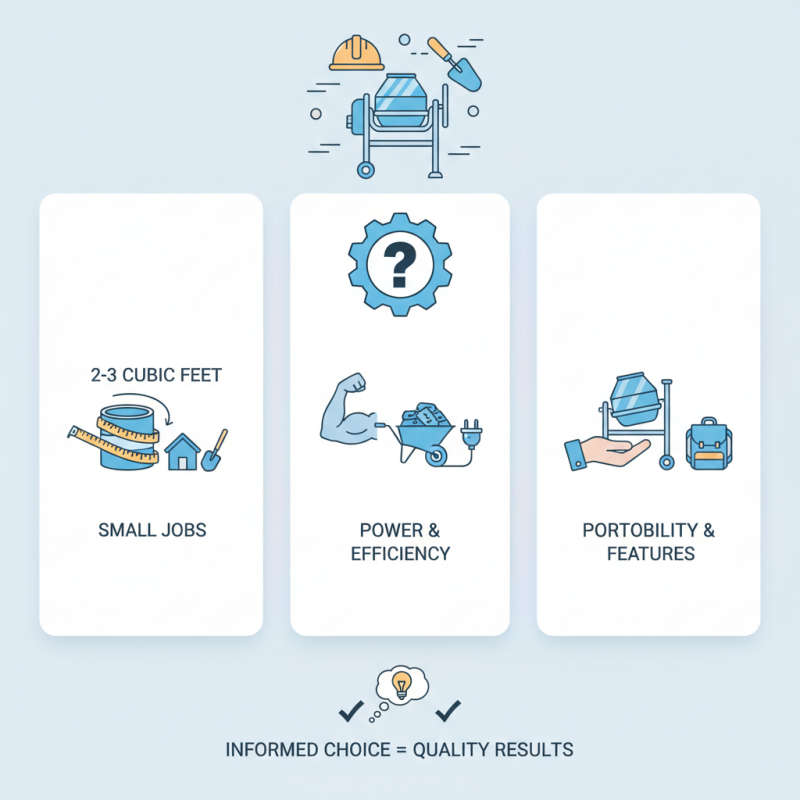
How to Choose the Best Small Cement Mixer for Concrete?

Factors to Consider When Choosing a Small Cement Mixer

When choosing a small cement mixer, several factors come into play. The size of the mixer is vital. Most small mixers range from 2 to 5 cubic feet. If your projects often require mixing small batches, a 2 to 3 cubic feet mixer works well. For larger jobs, consider a 4 to 5 cubic feet capacity. According to a 2022 Concrete Construction report, a well-sized mixer can improve efficiency by up to 30%.

Power is another critical factor. Most small mixers operate on either 110V or 220V electricity. Electric mixers are quieter and easier to maintain. However, gas-powered mixers offer portability and can handle larger jobs. The ideal choice often depends on your job site conditions. A reliable mixer should also have robust build quality. Look for reinforced frames and heavy-duty wheels for better stability.

Weight plays a role too; heavier mixers often offer more stability. But they may be cumbersome on uneven surfaces. A 2023 study from the National Association of Concrete Contractors highlighted that stability reduces spillage. Always consider the ease of assembly and disassembly, as a complex setup can lead to time loss. These details might seem minor, but overlook them, and you could face inefficiencies.

Types of Small Cement Mixers Available on the Market

When selecting a small cement mixer, understanding the types available is essential. Common options include electric mixers, gas-powered models, and manual hand mixers. Electric mixers are ideal for small, residential projects. They are user-friendly and provide consistent performance. Gas-powered models are more robust, perfect for larger tasks or outdoor environments. Manual hand mixers require significant physical effort, making them less popular but useful in specific circumstances.

Portable mixers are often a favorite for DIY enthusiasts. They combine functionality and convenience. Their compact size allows for easy transport, fitting into smaller spaces while performing efficiently. On the other hand, tow-behind models offer enhanced capacity but require a vehicle for transportation. Each type has unique benefits and drawbacks, making it vital to assess your specific needs before making a decision. Sometimes, the most enticing model may not meet the workload required, leading to frustration.

Consider the mixing capacity of the model. Smaller mixers typically hold between 2 to 3 cubic feet of concrete. This size is suitable for small projects. However, underestimating your needs can cause delays. Review the weight of the mixer, as heavier models may be hard to maneuver. It’s also important to think about durability. Some affordable models could break down quickly, leading to additional costs. Balancing your budget and project requirements is crucial for a satisfying purchase.

Key Features to Look for in a Small Cement Mixer

When choosing a small cement mixer, consider essential features. Look for a mixer with a durable drum made of high-quality materials. Steel and plastic drums each offer advantages. Steel is more robust but heavier. Plastic is lighter and less prone to rust. A reputable study from the American Concrete Institute shows the drum's material impacts the longevity of the mixer.

Check the mixing capacity. Small mixers typically range from 2 to 6 cubic feet. Choosing the right size is crucial. A larger capacity may seem appealing but can lead to overloading. This can compromise mixing quality. According to a survey on contractor preferences, many professionals recommend 3 to 4 cubic feet for most home projects.

Mobility is another key aspect. Opt for a model with wheels for easy transport. If your workspace is tight, a compact design is ideal. A lightweight mixer can also help reduce fatigue during use. Remember, safety features such as a sturdy mixer's base should not be overlooked. These factors enhance stability and prevent accidents. Always read user reviews to gauge real-life performance. This practical insight can be invaluable when making your decision.

Comparing Prices and Brands of Small Cement Mixers

When selecting a small cement mixer, pricing and brand reputation are crucial factors. Industry reports indicate that prices can vary significantly, from around $150 to $1,200. This range often reflects the mixer's capacity and durability. A mixer priced at the lower end may be adequate for small DIY projects, but could falter under heavier use. Buyers need to weigh their project needs against cost.

Various brands compete in the small cement mixer market, each offering distinct features. A study by Construction Equipment magazine emphasizes the importance of durability and warranty when evaluating mixers. A reputable brand will often provide solid customer support and warranty options. Interestingly, many users report that investing in a high-quality mixer saves money over time through decreased maintenance costs and better performance.

However, not all perceived quality translates into user satisfaction. Customer reviews can be mixed, even for well-known brands. Some consumers find that seemingly trusted models underperform. This indicates the necessity for careful research and personal assessments. Checking multiple sources for user feedback can help consumers make a more informed choice. Balancing price, performance, and reliability should guide the final decision.

Comparison of Small Cement Mixer Prices and Capacities

Maintenance Tips for Your Small Cement Mixer

Maintaining a small cement mixer is vital for optimal performance and longevity. Regular maintenance can prevent costly repairs. Reports indicate that proper upkeep can extend a mixer’s lifespan by up to 30%. Inspecting components like the drum and paddles is essential. Abrasions can cause uneven mixing and reduce efficiency.

**Tip:** Always clean the drum after each use. Leftover concrete can harden and become challenging to remove, impacting future projects.

Another critical area is lubrication. Failing to lubricate moving parts can lead to wear and malfunction. A study from the Concrete Equipment Association shows that unmaintained equipment loses up to 20% of its efficiency.

**Tip:** Check the lubricant levels weekly. Even during light usage, regular checks can save you from bigger problems later on.

Lastly, storage matters too. A well-kept storage area protects your mixer from environmental damage. Dirt and moisture can affect performance. Keeping your mixer clean preserves its reliability for future tasks.

How to Choose the Best Small Cement Mixer for Concrete? - Maintenance Tips for Your Small Cement Mixer

Parameter Description Maintenance Tips
Drum Capacity Typically ranges from 2 to 5 cubic feet Clean immediately after use to prevent concrete buildup.
Power Source Electric or gasoline options available Check fuel and electrical connections regularly for issues.
Weight Heavier models offer stability; lighter models are portable Ensure it's easy to lift or move without injuring yourself.
Mixing Speed Variable speeds for different consistency requirements Regularly check motor performance; replace brushes as needed.
Material Quality Opt for steel or high-grade plastic for longevity Inspect for rust or cracks frequently; treat or repair as needed.
Ease of Use Features like tilting drum and user-friendly controls Read user manuals and practice best operating procedures.