
A U40b Glass Insulator is a familiar component in overhead power networks, but choosing one requires more than checking its rated voltage. Buyers should examine mechanical strength, creepage distance, glass quality, metal fittings, and consistency between production batches. Those details matter when insulators face wind, rain, pollution, and years of service on exposed lines.
The International Energy Agency’s 2023 report, Electricity Grids and Secure Energy Transitions, says annual grid investment needs to exceed USD 600 billion by 2030 in its pathway for clean-energy goals. That investment points to a practical challenge: expanding networks also depends on dependable components and qualified suppliers. IEC 60383-1 provides relevant specifications and test methods for ceramic or glass insulator units used on overhead lines. Standards help buyers compare products, but they do not replace factory audits, test records, or project-specific engineering review.
A clear warning is useful here. I cannot verify a published statement from a named U40B Glass Insulator specialist, so attributing a quotation would risk misleading readers. The guiding principle is simple: “Verify the test evidence, not just the catalogue.” Treat that as editorial advice, not an expert quotation. In the sections ahead, global buyers can assess Chinese manufacturers through traceable test data, production controls, export experience, and responsive technical support. A polished brochure is not proof. Neither is the lowest quote.
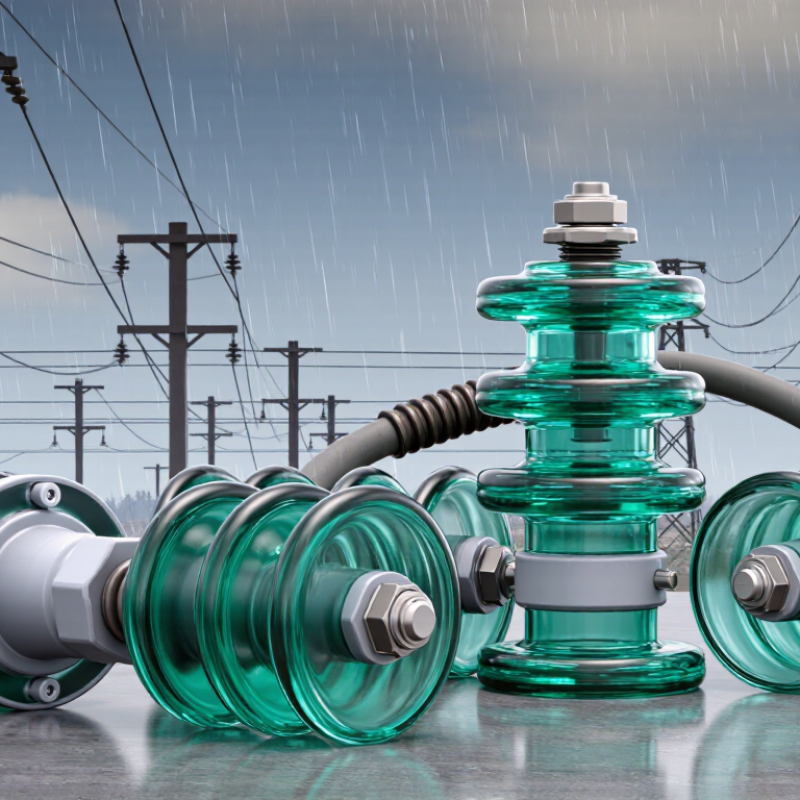
A U40B glass insulator is commonly a 40 kN class cap-and-pin unit for overhead power lines. Its toughened glass shell supports the conductor while resisting electrical stress, rain, and surface contamination. Under IEC 60305, manufacturers evaluate mechanical and electrical performance through defined tests. The U40B marking does not determine the complete line voltage. String length, pollution level, and system design matter too.
These insulators appear in suspension and tension strings on medium- and high-voltage transmission routes. A field engineer may check the glass body for cracks, the metal cap for corrosion, and the pin connection for looseness. One broken glass unit can be easier to identify than hidden internal damage. That is useful. It is not perfect.
The IEA’s Electricity Grids and Secure Energy Transitions report states that annual grid investment must rise from about 300 billion dollars to over 600 billion dollars by 2030. This expansion increases demand for consistent, traceable insulation components. Global buyers should request IEC test records, mechanical load results, dimensional drawings, and batch traceability from a China-based U40B manufacturer. Salt-fog testing may be necessary for coastal projects. A lower purchase price can become expensive when inspection data is incomplete.
China Best U40B Glass Insulator Manufacturer for Global Buyers?
U40B is a widely used cap-and-pin glass insulator for medium and high-voltage overhead lines. Its “40” generally indicates a 40 kN nominal mechanical failing load under IEC classification. Typical designs use toughened soda-lime glass, a galvanized iron cap, a forged pin, and carefully controlled cement bonding. The glass body provides a smooth, visible surface that helps maintenance teams detect cracks during line inspections.
Common U40B drawings show a diameter near 175 mm, a coupling spacing around 110 mm, and a creepage distance close to 185 mm. Actual values can vary by standard, supplier drawing, and pollution-class requirement. IEC 60305 defines key electrical and mechanical test principles, while the IEA’s Electricity Grids and Secure Energy Transitions report (2023) highlights the need for stronger grid infrastructure as global grid investment must rise substantially before 2030. This increases demand for traceable, field-tested components, not only low prices.
Tips: Ask for routine-test records, glass tempering evidence, zinc-coating thickness, and batch traceability. Check the complete string design, not just the U40B unit. A small caution: catalog ratings are not field reality. Salt, dust, lightning, and poor cementing can reduce service reliability. Suppliers should verify dimensions, coupling tolerances, and mechanical performance through accredited laboratory testing. That step is often overlooked.
| Data Category | U40B Specification or Design Detail | Global Buyer Reference |
|---|---|---|
| Product Type | Cap-and-pin suspension insulator | Designed for overhead transmission and distribution lines |
| Applicable Standard | IEC 60305; commonly used with IEC 60120 coupling requirements | Confirm the required national standard, routine tests, and acceptance criteria before purchase |
| Nominal Electromechanical Failing Load | 40 kN | The “40” designation in U40B refers to the nominal mechanical rating in kilonewtons |
| Insulator Class | U40B suspension unit | Suitable for assembly into strings with the required voltage and pollution-performance level |
| Insulating Material | Toughened soda-lime-silica electrical glass | Glass provides visible damage indication and stable dielectric performance when properly processed |
| Metal Hardware | Hot-dip galvanized forged steel cap and pin | Galvanizing protects steel hardware against atmospheric corrosion; coating requirements should be specified in the purchase contract |
| Cementing Material | Portland cement or approved sulfur-free cementing compound | The cement interface should resist thermal and mechanical stresses during service |
| Nominal Diameter | Approximately 175 mm | Verify dimensional tolerances against the approved drawing |
| Nominal Unit Height / Spacing | Approximately 110 mm | Used to calculate the number of units required in a suspension string |
| Nominal Creepage Distance | Approximately 185 mm | Polluted or coastal installations may require longer-creepage alternatives or additional design measures |
| Nominal Dry Arcing Distance | Approximately 85 mm | Actual flashover performance depends on string arrangement, altitude, pollution, and weather conditions |
| Power-Frequency Withstand Voltage, Dry | Approximately 65 kV | Typical reference value for a single unit; test configuration must follow the applicable standard |
| Power-Frequency Withstand Voltage, Wet | Approximately 25 kV | Wet-test results can vary with electrode arrangement and test procedure |
| Lightning Impulse Withstand Voltage | Approximately 100 kV | Use the certified test report for project-specific insulation coordination |
| Puncture Withstand Voltage | Approximately 130 kV | Puncture testing is performed under specified laboratory conditions and should not replace system-level design verification |
| Standard Coupling | Typical 16A ball-and-socket coupling | Confirm pin diameter, socket dimensions, locking device, and interchangeability requirements |
| Approximate Unit Mass | Approximately 2.5–2.8 kg | Final weight depends on hardware configuration, cementing design, and manufacturing tolerances |
| Typical Applications | Suspension and tension strings on overhead lines | Used where the required mechanical load, insulation level, pollution class, and fitting system are compatible |
| Recommended Buyer Checks | Type-test certificate, routine-test records, dimensional drawing, glass quality, zinc-coating thickness, and packing method | Request samples or inspection records before volume production and verify compliance with the destination-country grid specification |
Note: Values marked as approximate are common reference values for U40B units. Exact dimensions and electrical characteristics may vary according to the approved design, applicable standard edition, coupling configuration, and purchaser requirements.
China Best U40B Glass Insulator Manufacturer for Global Buyers?
How U40B Glass Insulators Are Manufactured and Tested
U40B glass insulators begin with carefully selected silica, feldspar, and recycled glass. Each material is weighed before mixing. This controls the final glass composition. The batch enters a high-temperature furnace, where it becomes a clear, consistent melt. Small changes in furnace temperature can create hidden weakness.
The molten glass is pressed into an insulator mould under controlled pressure. After forming, the unit passes through annealing equipment. This stage reduces internal stress and prevents sudden cracking. Tempering follows, giving the glass its characteristic mechanical strength. The finished shell is then checked for shape, chips, bubbles, and surface marks. The process is precise, but not flawless. Human inspection still matters.
Testing combines electrical, mechanical, and thermal checks. Routine inspection may include visual examination, dimensional measurement, and electrical screening. Sample units undergo tensile load testing, thermal shock testing, and puncture resistance testing. These tests simulate harsh service conditions, including temperature changes and line stress. Test records should identify the production batch, equipment settings, and measured results. A passing result is useful, but it is not the whole story. Unexpected defects may appear after transport or installation. Careful packaging, traceability, and honest reporting remain essential for dependable U40B performance.
How U40B glass insulators are manufactured and tested: the chart presents representative electrical withstand values for a U40B cap-and-pin glass insulator. Actual ratings may vary according to the applicable IEC specification, design, and purchaser requirements.
Production typically includes raw-material batching, glass melting, pressing or forming, controlled annealing, visual inspection, metal-cap and pin assembly, and dimensional verification. Finished insulators are then evaluated through electrical, mechanical, and visual checks. A typical U40B unit is associated with a 40 kN electromechanical failing load, while representative electrical reference values include 80 kV dry power-frequency withstand, 50 kV wet power-frequency withstand, 100 kV lightning impulse withstand, and 115 kV puncture withstand.
How to Evaluate Chinese U40B Glass Insulator Manufacturers
Evaluating a Chinese U40B glass insulator manufacturer requires more than comparing prices. Check its production history, technical staff, and experience with export projects. A reliable supplier should explain glass composition, tempering control, and cementing methods clearly. Ask for factory records, not only polished brochures.
Request samples from the same production line used for bulk orders. Inspect the glass surface, metal fittings, cement joints, and identification marks. The insulator should meet relevant IEC requirements, including mechanical strength and electrical performance. Ask for type-test and routine-test reports from an accredited laboratory. Confirm the testing dates and sample specifications carefully. Small differences matter.
A factory audit can reveal practical weaknesses. Look at furnace temperature records, incoming material checks, and storage conditions. Ask how workers control cracks, chips, and uneven cement filling. Strong manufacturers usually provide batch traceability from raw materials to shipment. They should also explain packaging for long sea transport, including separators and moisture protection. I would not rely on one successful sample alone. Production consistency is harder to prove, and this is where many evaluations become too optimistic. Request a pilot order and review rejection data before signing a larger contract. Clear communication matters too. Technical answers should be specific, measured, and supported by records.
For global buyers, selecting a U40B glass insulator involves more than checking its nominal strength. Confirm the required dimensions, coupling profile, creepage distance, and electrical ratings against the project drawings. A mismatch in the metal fitting can delay installation, even when the glass unit appears correct. Small details matter.
Export requirements depend on the destination market and utility specifications. Ask for applicable test reports, including routine checks and relevant type-test evidence, and verify that product identification matches the purchase documents. Standards such as IEC requirements may be specified, but buyers should confirm the exact edition and acceptance criteria with their engineering team. Do not rely on a certificate title alone. Review its scope, test samples, and issuing laboratory.
Procurement checks should cover batch traceability, inspection records, packaging, and shipping conditions. Glass units need secure separation to reduce impact damage during transport; request clear packing photos before dispatch. Compare quoted lead times with production and inspection schedules. I have seen paperwork receive less attention than price, and that can create avoidable delays. A practical checklist helps, though it may still miss a project-specific requirement. Ask the supplier to confirm each point in writing before placing the order.
