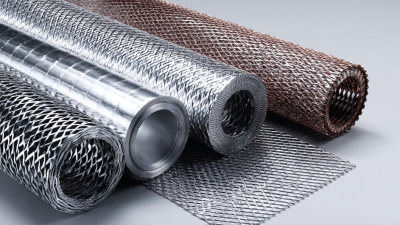
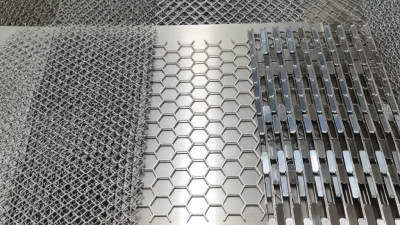
Best Expanded Metal Manufacturer in China for Buyers?
Choosing the best expanded metal manufacturer in China requires more than comparing catalog prices. Buyers need evidence, practical experience, and dependable communication.
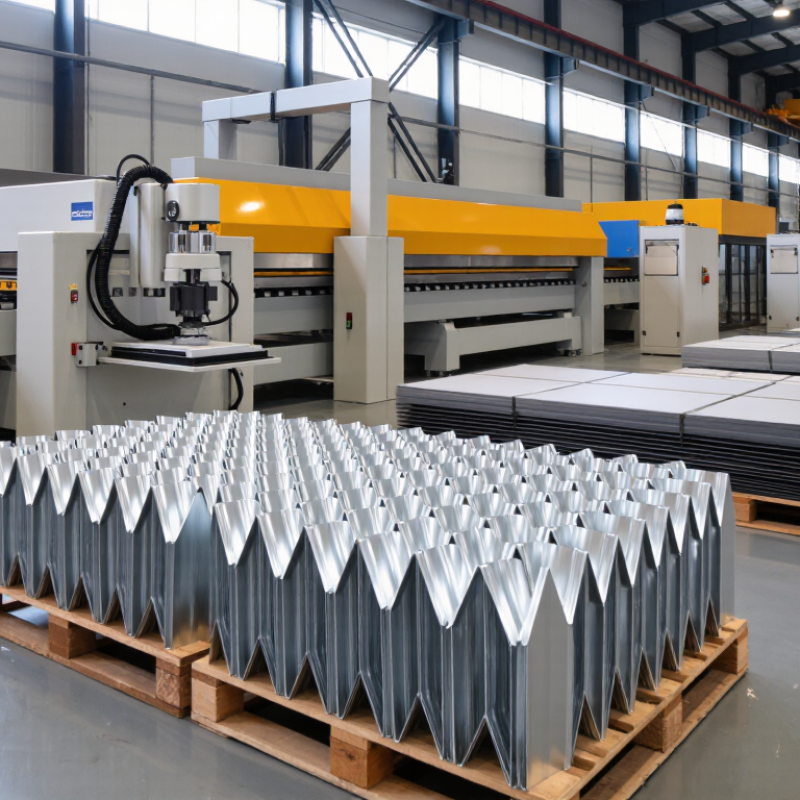
An experienced industry voice, David A. Waller, offers a useful reminder: “The best mesh is not the cheapest sheet; it is the sheet that performs predictably.” That principle matters on real projects. A factory floor may show bright aluminum sheets, sharp diamond openings, and neatly stacked pallets. Yet appearance alone proves little. Serious buyers should examine raw material certificates, mesh measurements, strand width, sheet thickness, and production tolerances. Request samples. Measure them after delivery.
A capable Chinese manufacturer should explain how it controls leveling, cutting, surface treatment, and packaging. It should also understand different applications, including walkways, machine guards, façades, filters, and security panels. Technical answers should be clear, not rushed. Good communication is part of product quality.
Look for traceable inspection records. Ask whether the supplier can repeat the same opening size across large batches. Confirm export packing, lead times, and response procedures before placing an order. Small details matter. A crushed corner can delay installation. A slight dimensional error can create expensive fitting problems.
Still, no ranking is perfect. A manufacturer that suits a construction project may not suit a filtration order. Buyers should compare verified capabilities against their own drawings and service conditions. This guide examines those differences carefully, using practical criteria instead of attractive claims. The strongest choice is not always the largest factory. It is the supplier that delivers consistent expanded metal, honest documentation, and reliable support when something needs clarification.
Expanded Metal Basics: SWD, LWD, Strand Width, and Open-Area Ratio
Expanded metal starts as a solid sheet that is slit and stretched into connected diamond-shaped openings. That process creates a mesh without woven joints. The pattern looks simple. Yet ordering errors often begin with direction labels. SWD means the short way of the diamond, while LWD means the long way. Both dimensions are typically measured center to center between corresponding points; confirm the drawing’s measurement convention.
Strand width is the width of the metal strip forming each side of an opening. It is not the sheet thickness. A wider strand generally makes the mesh look heavier and reduces the open space. Check both width and thickness on the specification sheet. I would not rely on a catalog label alone.
Open-area ratio is the percentage of the sheet made up of openings. It affects airflow, light transmission, and visibility through a panel. It can mislead. Two meshes with similar ratios may still differ in diamond shape, strand width, and stiffness. When comparing suppliers, request SWD, LWD, strand width, thickness, and open-area ratio together. A sample helps reveal burrs, uneven strands, and orientation that a drawing may not show. Confirm which way the LWD runs before cutting or installing panels.
Expanded Metal Basics: SWD, LWD, Strand Width, and Open-Area Ratio
Illustrative expanded-metal dimensions (mm); values show a generic example, not a product specification.
SWD is the short-way dimension of a diamond opening, while LWD is its long-way dimension. Strand width measures the metal strip forming the mesh. Open-area ratio is the percentage of the sheet occupied by openings; it depends on the mesh geometry and should be confirmed from the actual product drawing or specification.
How Expanded Metal Is Made: Sheet Slitting, Stretching, and Mesh Formation
Expanded metal begins as a solid sheet, not a collection of woven wires. A press cuts a repeated pattern of short slits into the material. The cuts must be consistent; uneven spacing can distort the openings later. No metal is removed during this process, which helps preserve material while creating a mesh structure.
The slit sheet moves through an expanding machine. As the equipment pulls it, the metal stretches and the openings widen into diamonds or other specified shapes. The uncut sections become connected strands and joints. Their width, thickness, and direction affect strength, flexibility, and airflow. Small details matter here. A setup error can leave one side more open than the other.
After stretching, workers may flatten the mesh or leave it raised, depending on its intended use. Edges are trimmed, and inspectors check dimensions, strand consistency, and visible defects. A ruler and a close look can catch problems, but neither replaces suitable measuring tools. Buyers should compare the stated opening size with an actual sample. A drawing may not show every production variation, and that is worth discussing before ordering.
How to Compare Mesh Specifications: SWD, LWD, Thickness, and Tolerances
Best Expanded Metal Manufacturer in China for Buyers?
When comparing expanded metal, start with the diamond, not the quoted price. SWD means the short way of the opening; LWD means its long way. These dimensions are commonly measured from center to center, so confirm the supplier’s measurement method. A small difference changes open area, airflow, and how the mesh fits a frame.
Thickness refers to the unexpanded sheet metal, while strand width describes the remaining metal between openings. They are not interchangeable. Ask for both values, plus the material grade and the direction of the LWD. Check a physical sample with calipers; thin strands can look uniform in a photo but feel quite different in hand. Small details matter.
Tolerances need equal attention. Specify acceptable variation for SWD, LWD, thickness, sheet width, and length, rather than relying on “standard tolerance.” Also state whether dimensions apply before or after flattening, since flattening can alter the mesh profile. It is easy to focus on one number and miss the finished fit. I may be overemphasizing this, but a clear drawing and one approved sample can prevent costly surprises. Ask the manufacturer to record measured values from the production batch, not just repeat nominal specifications.
Best Expanded Metal Manufacturer in China for Buyers? — How to Compare Mesh Specifications: SWD, LWD, Thickness, and Tolerances
| Specification |
Light-Duty Example |
General-Purpose Example |
Heavy-Duty Example |
What Buyers Should Confirm |
| SWD (Short Way of Diamond) |
12.5 mm |
25 mm |
50 mm |
State whether the dimension is measured center-to-center and show the orientation on the drawing. |
| LWD (Long Way of Diamond) |
25 mm |
50 mm |
100 mm |
Identify the long-diamond direction relative to the sheet length, width, and any required installation direction. |
| Nominal sheet thickness |
1.0 mm |
2.0 mm |
3.0 mm |
Specify the base-sheet thickness and how it is to be measured. Do not confuse it with the finished mesh’s overall raised thickness. |
| Nominal strand width |
1.5 mm |
3.0 mm |
5.0 mm |
Include strand width on the drawing; it affects open area, stiffness, and weight. |
| Dimensional tolerance |
Set an explicit acceptance range for SWD, LWD, thickness, strand width, and finished sheet size in the purchase specification. |
There is no single tolerance that applies to every product and process. Agree on the measurement method, sampling plan, and allowable deviation before production. |
| Material and finish |
Specify the material grade and condition, plus any coating, galvanizing, or other finish required. |
Confirm whether dimensions and inspection apply before or after finishing; coatings may affect measured dimensions. |
| Drawing and inspection record |
Request a dimensioned drawing and a report showing the measured mesh and sheet dimensions. |
Check that the drawing, sample, production lot, and inspection report use the same SWD/LWD definitions and units. |
Note: The mesh sizes above are illustrative specification examples, not a manufacturer’s catalog data or a universal standard. Confirm the exact pattern, material, dimensions, and tolerances with the supplier in a written drawing and purchase specification.
Which Standards Matter: ASTM F1267 and ISO 9001 Quality Management
For buyers comparing expanded metal manufacturers in China, ASTM F1267 matters when the product is intended for industrial grating. The standard sets requirements for expanded-metal grating, but it does not replace project-specific checks. Confirm the applicable edition, material grade, dimensions, and load requirements before ordering. A standard name alone is not proof that a particular shipment conforms.
ISO 9001 addresses how a manufacturer manages quality, not whether each sheet meets ASTM F1267. The ISO Survey of Management System Standard Certifications reported more than 1.2 million ISO 9001 certificates worldwide in 2022. That scale makes certification useful as a screening tool, not a guarantee. Ask to see a current certificate, verify its scope covers the relevant production site, and review inspection and corrective-action records.
Practical checks should reach the shop floor. Compare measured sheet thickness, strand width, and opening size against the approved drawing. Request traceable material records and inspection results for the actual production lot. A neat certificate cannot reveal every process weakness. I would still ask how operators handle out-of-tolerance sheets, and whether rejected material is separated and documented. Those details can expose gaps that a factory audit summary may miss.
How to Assess Chinese Manufacturers: Test Reports, Capacity, and Export Records
A reliable expanded metal manufacturer should provide evidence that matches the product you plan to buy. Request recent test reports for the same material grade, sheet thickness, and production method. Check mesh opening, strand width, sheet dimensions, and coating thickness where applicable. Look closely. A report with impressive values is less useful if it describes a different specification or an old sample.
Ask how quality checks work on the production floor. Can staff show calibrated measuring tools, inspection records, and batch labels beside finished sheets? Confirm the factory’s monthly capacity, available sheet sizes, and current production load. A large machine count alone does not prove steady output. Ask for a realistic lead time, including flattening, finishing, and packing. Small details matter.
Export records offer another practical check. Request redacted shipping documents or references that show experience with similar products, packaging, and destination regions. Compare these with the proposed packing list and delivery schedule. No checklist catches everything; even a careful review may miss a weak process on a busy production day. A sample inspection can help, but samples may not represent every batch. Ask how the supplier traces material from receipt through final packing, then verify the answer against actual records.