
Choosing the right Bellows Valves supplier can influence plant safety, maintenance costs, and production stability. These valves protect sensitive processes from external leakage. They are common in semiconductor, pharmaceutical, chemical, vacuum, and energy applications.
This guide reviews ten suppliers serving global buyers. The assessment considers manufacturing experience, material options, pressure ratings, weld quality, and documentation. It also examines delivery capability, technical support, customization, and after-sales service. Stainless steel bellows, orbital welds, cleanroom packaging, and helium leak testing may matter greatly in demanding systems. A supplier with broad product coverage is not always the best choice. Sometimes, a smaller specialist provides faster engineering support and more careful inspection.
The comparison draws on publicly available technical information, industry experience, and practical purchasing concerns. Certifications, test reports, and traceability records deserve close attention. So does communication. A delayed answer about flange dimensions can disrupt an entire installation. Buyers should verify current specifications directly with each manufacturer before placing an order. Product lines and certifications can change.
No supplier is perfect.
Pricing alone can mislead. A low initial quote may exclude testing, custom welding, spare parts, or export packaging. Meanwhile, a premium supplier may offer stronger lifecycle value through longer service intervals. This article is intended as a reliable starting point, not a substitute for application-specific engineering. Review the process media, temperature range, vacuum level, cycling frequency, and installation environment carefully. The best Bellows Valves supplier is the one that matches real operating conditions, not merely the most visible brand.
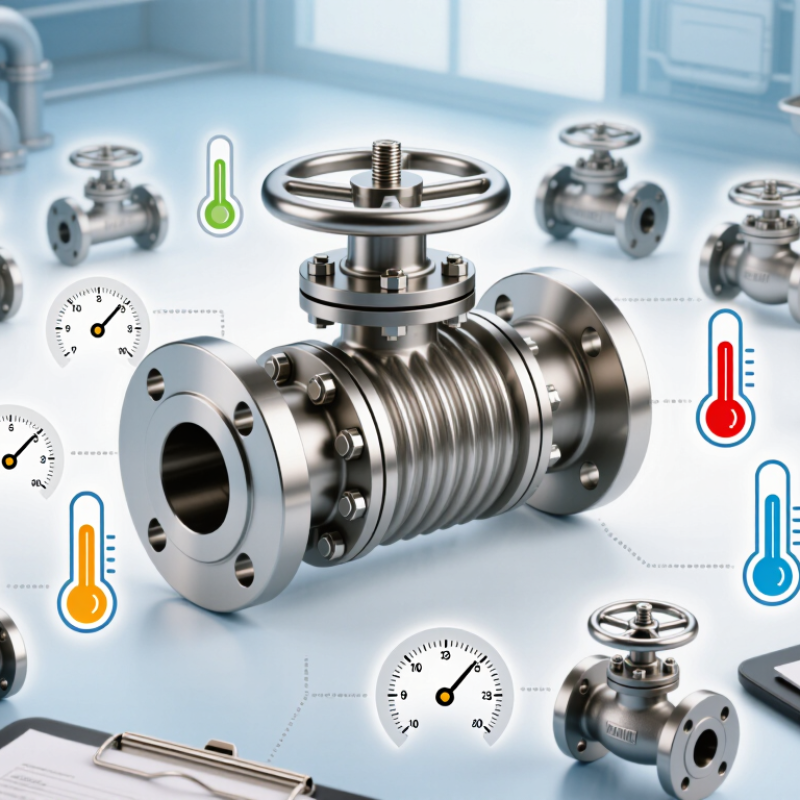
Bellows valves are shutoff valves designed to prevent process fluid from escaping through the stem. Their key component is a thin, welded metal bellows. It expands and contracts as the stem moves, while remaining sealed from the atmosphere. The valve body, bonnet, stem, bellows, seat, and actuator form the main structure. In operation, the stem presses the plug against the seat. Flow stops when the sealing surfaces meet. When the stem retracts, fluid passes through the opened seat. Simple in theory. Real service is less forgiving.
The bellows carries repeated movement, pressure, and temperature changes. Incorrect sizing can shorten its fatigue life. ISO 15848-1 provides testing methods for fugitive emissions from industrial valves, while ASME B16.34 covers pressure-temperature ratings and construction requirements. Grand View Research’s 2024 industrial valves analysis estimated the global market at more than USD 78 billion in 2023. This wider market data explains rising demand, but it does not prove every bellows valve is suitable. Selection still depends on medium, pressure, temperature, cycling frequency, and installation quality.
Tips: Request material certificates, pressure-test records, and fugitive-emission results. Check whether the test conditions match your plant. A valve tested with clean gas may perform differently with corrosive vapor. Inspect the bellows for scratches before installation. Keep the pipe aligned, and avoid using the valve as a support point. Maintenance teams should record cycle counts, leakage observations, and unusual stem resistance. The overlooked detail is often the expensive one.
For global buyers, bellows valve suppliers should be judged by measurable performance, not polished certificates. ASME B16.34 defines pressure-temperature ratings, materials, and design requirements for industrial valves. However, compliance alone does not prove dependable service. Request pressure tests, weld records, material certificates, and production traceability for every critical component.
Fugitive emissions deserve close attention. The IEA Global Methane Tracker 2024 estimated that the fossil fuel sector released about 120 million tonnes of methane in 2023. A supplier should therefore provide test results under ISO 15848-1 or an equivalent standard. Ask for helium leak rates, thermal cycling results, and stem movement data. A valve may pass one test and weaken after repeated cycles. Real operating history matters.
Check whether the supplier performs shell, seat, vacuum, and bellows fatigue testing. EN 12266 leakage classifications can support a clearer comparison between suppliers. Documentation should identify test pressure, duration, temperature, media, and instrument accuracy. Vague reports create avoidable risk. Very avoidable.
Experienced buyers should also inspect welding procedures and operator qualifications. Bellows geometry, material thickness, and forming quality can affect fatigue life. Do not rely on a single sample.
Compare batch records and independent inspection findings. This part is often overlooked. Supplier rankings can change when maintenance data, delivery consistency, and failure investigations are included. The evaluation is not perfectly clean, but transparent evidence makes it more reliable.
Global buyers often compare bellows valve suppliers by engineering depth, production control, and service response. The strongest candidates usually provide material certificates, pressure-test records, and traceable serial numbers.
A European precision supplier focuses on welded bellows for high-purity process lines. Its strength is clean manufacturing and detailed documentation.
A North American producer serves vacuum and thermal systems. It offers practical customization, although lead times may vary.
An East Asian manufacturer combines competitive pricing with automated welding. Buyers should inspect quality records before placing large orders.
A German specialist emphasizes cryogenic valve assemblies and low-temperature testing. Its technical guidance is valuable for demanding applications.
A Japanese supplier is known for disciplined inspection and compact designs. Communication may require extra planning.
A South Korean supplier develops valves for semiconductor facilities and controlled environments. It provides strong contamination-control practices.
An Indian manufacturer supports industrial steam and chemical systems. Its broad capacity can benefit regional projects.
A Swiss supplier concentrates on miniature valves and precision instrumentation. This option suits limited installation space.
A British engineering company offers custom solutions for research equipment. Its small-batch flexibility is useful, but prices may be higher.
A Middle Eastern supplier provides regional stocking and maintenance support. Local availability can reduce downtime.
An Australian manufacturer serves mining, water, and remote processing sites. Its rugged designs fit harsh conditions.
No supplier is perfect. Some catalogs look impressive but lack application evidence. Buyers should request sample drawings, fatigue data, warranty terms, and references from comparable projects. Factory audits can reveal ordinary problems, including unclear storage practices or inconsistent labeling. Those details matter. A careful evaluation should balance price, lifecycle reliability, delivery capability, and technical support.
A credible review of ten bellows valve suppliers should examine more than catalog size. Experienced buyers compare pressure ratings, temperature limits, body materials, and bellows construction. Weld quality matters greatly, especially in vacuum and high-purity service. Ask for test records, material certificates, and sample inspection data before placing a large order.
Supplier capability becomes clearer during technical discussions. Strong manufacturers explain cycle-life testing, helium leak testing, surface finishing, and dimensional control without vague promises. Their engineering teams should adapt valve ends, actuation methods, and sealing materials to the application. A polished catalog can still hide weak documentation. That deserves attention.
Industry coverage also separates reliable suppliers from general distributors. Some support semiconductor and pharmaceutical plants with clean packaging and strict traceability. Others focus on chemical processing, energy systems, or laboratory vacuum equipment. Check installation guidance, spare-part access, production capacity, and response times across regions. Delivery records are useful evidence, but they are not perfect. A supplier may perform well on standard valves yet struggle with custom designs or urgent replacement orders. Speaking with recent customers can reveal those gaps more honestly.
Comparative benchmark of the key capabilities global buyers typically evaluate when selecting bellows valve suppliers. Scores use a 100-point scale across product quality, customization, certification support, delivery capability, and industry coverage.
Product quality and leak-control performance are the most important evaluation areas, while certification support and industry coverage help reduce qualification risk for international projects.
Selecting among ten suppliers requires evidence, not attractive catalogs. The global industrial valves market was valued at about US$79.7 billion in 2023 and may reach US$102.5 billion by 2028, according to MarketsandMarkets’ 2023 report. This growth expands choice, but it also increases comparison risk. Bellows valves should match the media, temperature, pressure, cycle frequency, and leakage limits. Ask for material certificates, welding procedures, helium leak results, and testing under ISO 15848-1. Ask for evidence.
During supplier audits, inspect clean assembly areas, calibrated instruments, and serial-number traceability. A useful trial order includes one production sample, a dimensional report, packing photographs, and a witnessed pressure test. Check whether the supplier can explain bellows forming, stroke limits, fatigue assumptions, and failure containment. Do not accept “zero leakage” without test conditions. Compare total landed cost, not unit price. Include tooling, validation, freight, customs, spare parts, and service response. The World Bank’s 2023 Logistics Performance Index shows major differences in customs, infrastructure, and delivery reliability across markets. Request recent delivery data for your route.
One weakness deserves attention: published forecasts rarely separate bellows valves from the wider valve category. Buyers should verify niche claims through customer references and independent inspection. A supplier may look technically strong yet struggle with drawings or after-sales support. Choose the one that documents limitations clearly. That detail often signals reliability.
| Rank | Anonymous Supplier Profile | Primary Buyer Region | Typical Valve Types | Common Size Range | Typical Pressure Capability | Typical Temperature Capability | Common Body and Bellows Materials | Relevant Compliance Requirements | Customization Strength | Indicative Lead Time | Best Fit for Global Buyers |
|---|---|---|---|---|---|---|---|---|---|---|---|
| 1 | Profile A | North America and Europe | Globe, gate, angle, and instrument bellows-sealed valves | 1/4 in to 12 in; DN8 to DN300 | Vacuum to approximately 6,000 psi / 414 bar | Approximately -196°C to 538°C | 316L stainless steel, carbon steel, alloy steel; 316L or nickel-alloy bellows | ISO 9001 quality systems; ASME B16.34 and API 602 design expectations where applicable | High: end connections, actuation, cavity control, and testing packages | 6–12 weeks for standard configurations | Refineries, chemical plants, and critical emission-control services |
| 2 | Profile B | European Union and Middle East | Forged globe, gate, and cryogenic bellows valves | 1/2 in to 16 in; DN15 to DN400 | Class 150 to Class 2,500; selected designs up to 420 bar | Approximately -196°C to 425°C | Austenitic stainless steel, low-temperature carbon steel, duplex steel | EN 12516, pressure testing to EN 12266, ISO 15848-1 fugitive-emission options | High: cryogenic extensions, welded ends, and low-emission packing systems | 8–14 weeks | LNG, industrial gases, hydrogen-ready projects, and power generation |
| 3 | Profile C | East Asia and Southeast Asia | Cast and forged globe valves with welded bellows | 1/2 in to 24 in; DN15 to DN600 | Class 150 to Class 1,500; approximately 250 bar maximum for selected models | Approximately -29°C to 400°C | Carbon steel, stainless steel, chrome-moly alloy steel; stainless bellows | ISO 9001; ASME B16.34, API 598, and project-specific inspection plans | Medium to high: standard dimensions with optional materials and actuators | 4–10 weeks for standard products | Large-volume industrial procurement and general process applications |
| 4 | Profile D | Global semiconductor and electronics markets | High-purity diaphragm and bellows-sealed isolation valves | 1/4 in to 4 in; DN8 to DN100 | Vacuum to approximately 300 psi / 20.7 bar | Approximately -40°C to 150°C | Electropolished 316L stainless steel; nickel-alloy or stainless bellows | ISO 9001; cleanroom assembly, helium leak testing, and customer-defined surface-finish controls | Very high: orbital-welded tubing, surface finish, cleaning, and packaging | 8–16 weeks | Ultra-high-purity gas, vacuum, and contamination-sensitive systems |
| 5 | Profile E | South Asia and Africa | Bolted-bonnet globe and gate valves | 1 in to 12 in; DN25 to DN300 | Class 150 to Class 600; approximately 100 bar maximum for common models | Approximately -29°C to 350°C | Carbon steel, stainless steel, and alloy steel; welded stainless bellows | ISO 9001; API 598 or EN 12266 pressure-testing options | Medium: common standards, trims, flanges, and coating options | 5–9 weeks | Cost-sensitive water, steam, chemical, and utility projects |
| 6 | Profile F | Latin America and North America | Low-emission globe and control-service bellows valves | 1/2 in to 10 in; DN15 to DN250 | Class 150 to Class 900; approximately 150 bar maximum | Approximately -46°C to 450°C | Stainless steel, carbon steel, alloy steel; multi-ply stainless bellows | ISO 15848-1 testing options; ASME B16.34 and API 598 where specified | High: low-emission testing, live loading, and actuator integration | 7–13 weeks | Hydrocarbon processing and regulations requiring fugitive-emission control |
| 7 | Profile G | Europe and Central Asia | Steam, thermal-oil, and high-temperature globe valves | 1/2 in to 8 in; DN15 to DN200 | PN16 to PN100; selected forged models up to PN250 | Approximately -10°C to 550°C | Carbon steel, stainless steel, chrome-moly steel; stainless or nickel bellows | EN 12516, EN 12266, ISO 9001, and material traceability documentation | Medium to high: high-temperature trims and welded-bellows arrangements | 6–12 weeks | Boilers, district heating, thermal processing, and power plants |
| 8 | Profile H | Middle East and Southeast Asia | Jacketed, angle-pattern, and process isolation valves | 1 in to 16 in; DN25 to DN400 | Class 150 to Class 600; approximately 100 bar maximum | Approximately -20°C to 350°C | Stainless steel, carbon steel, lined-body options; stainless bellows | ISO 9001; API 598 or EN 12266; project inspection and coating requirements | High: jacket connections, special trims, drains, vents, and custom dimensions | 8–15 weeks | Polymer, fine chemical, pharmaceutical, and heat-sensitive processes |
| 9 | Profile I | Worldwide aftermarket and maintenance buyers | Replacement globe, gate, and small-bore bellows valves | 1/4 in to 6 in; DN8 to DN150 | Vacuum to Class 600; approximately 100 bar maximum | Approximately -40°C to 300°C | 316 stainless steel, carbon steel, brass for compatible low-risk services | ISO 9001; pressure and seat testing according to the selected standard | Medium: dimensional matching, replacement trims, and documentation support | 2–6 weeks for stocked or repeat configurations | Urgent maintenance, plant shutdowns, and replacement procurement |
| 10 | Profile J | Oceania and offshore engineering markets | Compact forged, offshore, and subsea-compatible bellows valves | 1/2 in to 8 in; DN15 to DN200 | Class 150 to Class 1,500; approximately 250 bar maximum | Approximately -46°C to 400°C | Duplex stainless steel, 316L stainless steel, nickel alloys, alloy steel | ISO 9001; NACE material requirements and project-specific offshore inspection plans | High: compact layouts, corrosion-resistant materials, and special end connections | 10–18 weeks | Offshore platforms, corrosive environments, and remote-site projects |
