
Choosing the best Agricultural Forklift in China requires more than comparing lifting capacity or purchase price. Farm conditions change daily. A machine crossing a dry warehouse floor may struggle in wet soil, gravel, or uneven orchard lanes. Tire design, ground clearance, turning radius, mast visibility, and service access matter greatly.
Fortune Business Insights estimates that the global forklift truck market was worth approximately USD 74.98 billion in 2023. Its report projects continued growth through 2032, driven by warehouse expansion, manufacturing, and electrification. However, most market reports group agricultural equipment with broader material-handling categories. That limitation deserves attention. Data may show market momentum, but it does not identify the best machine for a muddy Chinese farm.
Farm mechanization specialist Professor Scott Shearer emphasizes a practical principle: “Match the machine to the field, not the brochure.” His view reflects real operating experience. A diesel Agricultural Forklift may suit long outdoor shifts and heavy loads. An electric model can offer quieter operation and lower local emissions. Yet charging access, battery protection, and winter performance can change the decision.
The best choice is rarely universal. It depends on fruit crates, fertilizer bags, feed pallets, or harvested grain. Operators should test the forklift with real loads. They should inspect braking, steering, mast stability, and after-sales response. Chinese manufacturers offer competitive pricing and increasingly capable designs, but specifications still require careful verification. A polished brochure is not proof. The strongest comparison combines published data, field trials, dealer reliability, and the operator’s honest feedback.
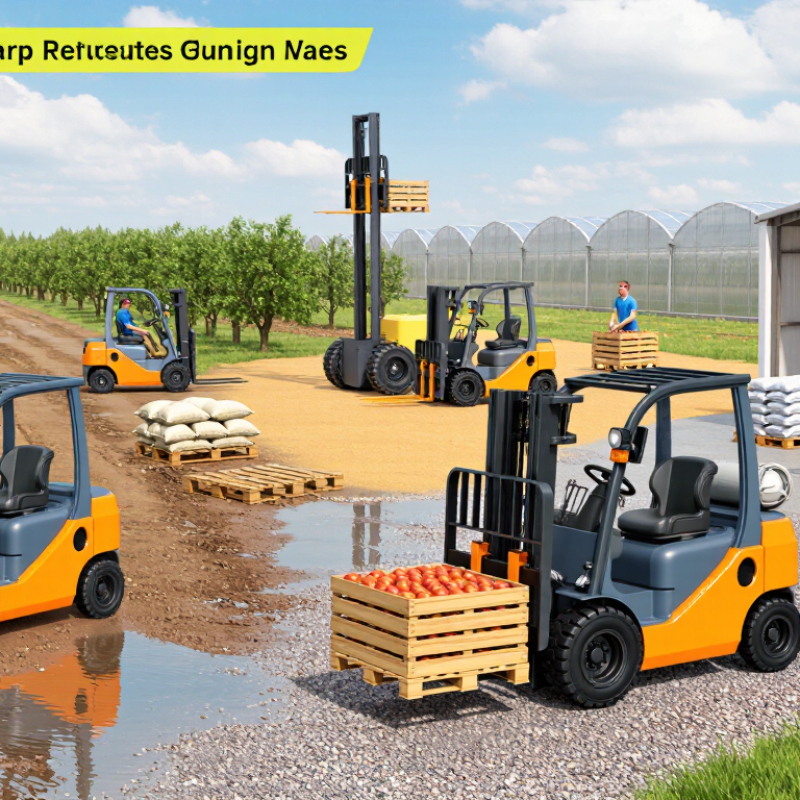
A suitable agricultural forklift must match Chinese farm conditions, not just advertise a high lifting capacity. Many farms have narrow concrete lanes, uneven soil, crowded sheds, and seasonal mud. Compact dimensions, four-wheel drive, high ground clearance, and a tight turning radius are therefore practical advantages. A 2.5-ton rating may become unsafe when a wet load shifts forward. Always check the real load chart with the intended attachment.
China’s Ministry of Agriculture and Rural Affairs reported that the crop cultivation and harvesting mechanization rate reached 73.4% in 2022. The figure shows stronger equipment demand, but it does not prove that every forklift suits farm work.
China Industrial Vehicle Association statistics recorded more than 1.1 million industrial vehicle sales in 2023. That market scale is useful context, yet agricultural users face harsher dust, water, and slope conditions.
Field experience suggests checking mast visibility, hydraulic sealing, tire flotation, and operator access before comparing engine power. Electric models can work well inside food storage buildings, where noise and exhaust matter. Rural charging access may still be inconvenient. Diesel units offer longer working cycles, but fuel storage and emissions require careful management.
Sometimes, the cheapest choice becomes expensive after one harvest. I would also test the forklift on the farm’s actual ramps and soil. Brochures rarely show that part.
International safety guidance, including ISO 3691-1, supports stability checks, trained operators, and controlled travel speeds.
Choosing the best agricultural forklift in China depends on terrain, load shape, and daily working conditions. Different forklift types suit different farm tasks.
Counterbalance forklifts handle palletized feed, fertilizer, and boxed produce.
Diesel models offer strong performance in muddy yards and outdoor storage areas.
Electric forklifts work well inside barns, cold rooms, and enclosed packing spaces. They create less noise and no direct exhaust emissions.
Rough-terrain forklifts use larger tires and higher ground clearance. They can cross uneven soil, but their turning space is often greater.
Telescopic handlers lift materials higher and reach farther than standard forklifts. This helps when loading hay, stacked produce, or materials near storage buildings.
Tractor-mounted forklifts can be practical for farms needing flexible field transport. Their stability depends heavily on the tractor and load position.
Tips:
Check the heaviest real load, not an ideal estimate. Measure aisle width and door height before ordering. Ask for service records, spare-parts availability, and operator training. A short test on wet ground can reveal more than a polished specification sheet. Fuel savings may look attractive, yet battery charging space can become a hidden difficulty. I have seen buyers focus on lifting height and overlook tire grip. That mistake deserves more attention. Also inspect visibility from the seat, especially when carrying tall pallets. Stable handling matters more than impressive numbers.
What Is the Best Agricultural Forklift in China?
How to Compare Agricultural Forklift Performance and Features
The best agricultural forklift depends on terrain, load type, and daily working hours. A machine for flat grain warehouses may struggle in muddy orchards. Compare rated capacity at the actual lift height, not only the headline capacity. For example, a 2,500-kilogram forklift may safely lift much less at five meters. Check the load chart carefully. Measure braking distance on wet concrete, then test steering around narrow storage lanes. Small details matter.
Engine response, ground clearance, and tire design strongly affect field performance. Pneumatic tires usually handle uneven farm roads better than solid tires. However, they may require more maintenance. Test the forklift with fertilizer bags, wooden crates, and a loaded pallet. Watch for mast shaking, hydraulic delays, and poor visibility. Fuel or battery consumption should be recorded across several work cycles. One short demonstration is not enough. I once trusted a quiet hydraulic system too quickly; heat appeared after several hours.
Tips: Ask for service records, inspection certificates, and verified load charts. Check spare-part availability near the farm. Confirm that operators can adjust the seat, controls, and mirrors safely. Compare warranty terms in writing, including response times. A low purchase price can become expensive when downtime reaches harvest season. Get feedback from mechanics and experienced drivers, not only sales staff. No checklist is perfect. Leave room for real-world testing.
How to Compare Agricultural Forklift Performance and Features
The chart compares representative rated load capacities and maximum lift heights for common agricultural forklift classes. Compact models are suitable for narrow barns and light pallet work, while rough-terrain and heavy-duty models provide greater capacity for uneven yards, bulk materials, and large agricultural loads. Actual specifications vary by configuration, attachments, mast type, and operating conditions.
When evaluating an agricultural forklift in China, safety documents deserve more attention than paint or lifting capacity. Ask for the rated load chart, stability-test records, inspection reports, and operating manual. The load rating should match the actual load center, especially when carrying uneven crates or wet feed. A credible supplier should identify applicable Chinese GB requirements and relevant international standards, such as ISO 3691-1 for industrial truck safety. For rough outdoor work, check whether the design addresses uneven ground, rollover protection, visibility, and seat-belt performance.
Inspect the machine in person when possible.
Test the service brake, parking brake, steering response, horn, lights, reverse alarm, and emergency controls. Examine the mast chains for rust, uneven tension, or damaged links. Hydraulic hoses should show no swelling or oil stains. Tires need sufficient tread, not just acceptable pressure. Guards must remain firmly attached. A clean forklift can still hide fatigue beneath its surface. That is easy to miss.
Maintenance standards should include documented service intervals, daily inspection sheets, approved replacement parts, and trained technicians.
Ask how quickly common filters, brake components, and hydraulic seals can be supplied. Check battery charging protection or engine emission controls, depending on the power system. Keep records of every repair and operator training session. I would not rely only on a supplier’s checklist; an independent inspection is wiser for heavy seasonal use.
Even experienced buyers sometimes underestimate dust, mud, and overloaded attachments. That mistake becomes expensive.
What Is the Best Agricultural Forklift in China?
Choosing the best agricultural forklift starts with the working site, not the advertised lifting capacity. China’s farms may include muddy yards, narrow greenhouses, cold storage rooms, and uneven loading areas. Measure aisle width, ground clearance, ramp angles, and average load weight before comparing models. A machine rated for 3 tonnes may perform poorly on soft soil. Tire design matters greatly.
The World Industrial Truck Statistics report recorded more than 2 million forklift deliveries worldwide in 2023. This figure reflects strong demand, but it does not identify the right machine for every farm. Select a diesel, electric, or rough-terrain configuration according to ventilation, duty cycles, and fuel access. Electric units suit enclosed spaces and quieter operations. Diesel units can offer longer outdoor working periods. Battery charging time is easy to underestimate.
Safety deserves practical attention. OSHA reports about 85 annual forklift-related workplace fatalities in the United States, with thousands of serious injuries. Use load backrests, visible warning systems, trained operators, and regular brake inspections. Check compliance with applicable Chinese standards and ISO 3691-1 requirements. Ask for service response times and spare-parts availability. A cheaper purchase can become expensive during harvest. I would still test the forklift with wet tires, palletized produce, and a real loading route. Laboratory figures rarely show every farm problem.
